The blues are part of a large family tree of American musical genres. Jazz, rhythm and blues, rock and roll, even hip hop are all descendants of the music born in the Mississippi Delta.
What tends to be overlooked, however, is the role that women played in establishing the roots of the genre. Icons like Bessie Smith, Odetta, Billie Holiday and Etta James helped to cement the blues legacy over its 150-year history.
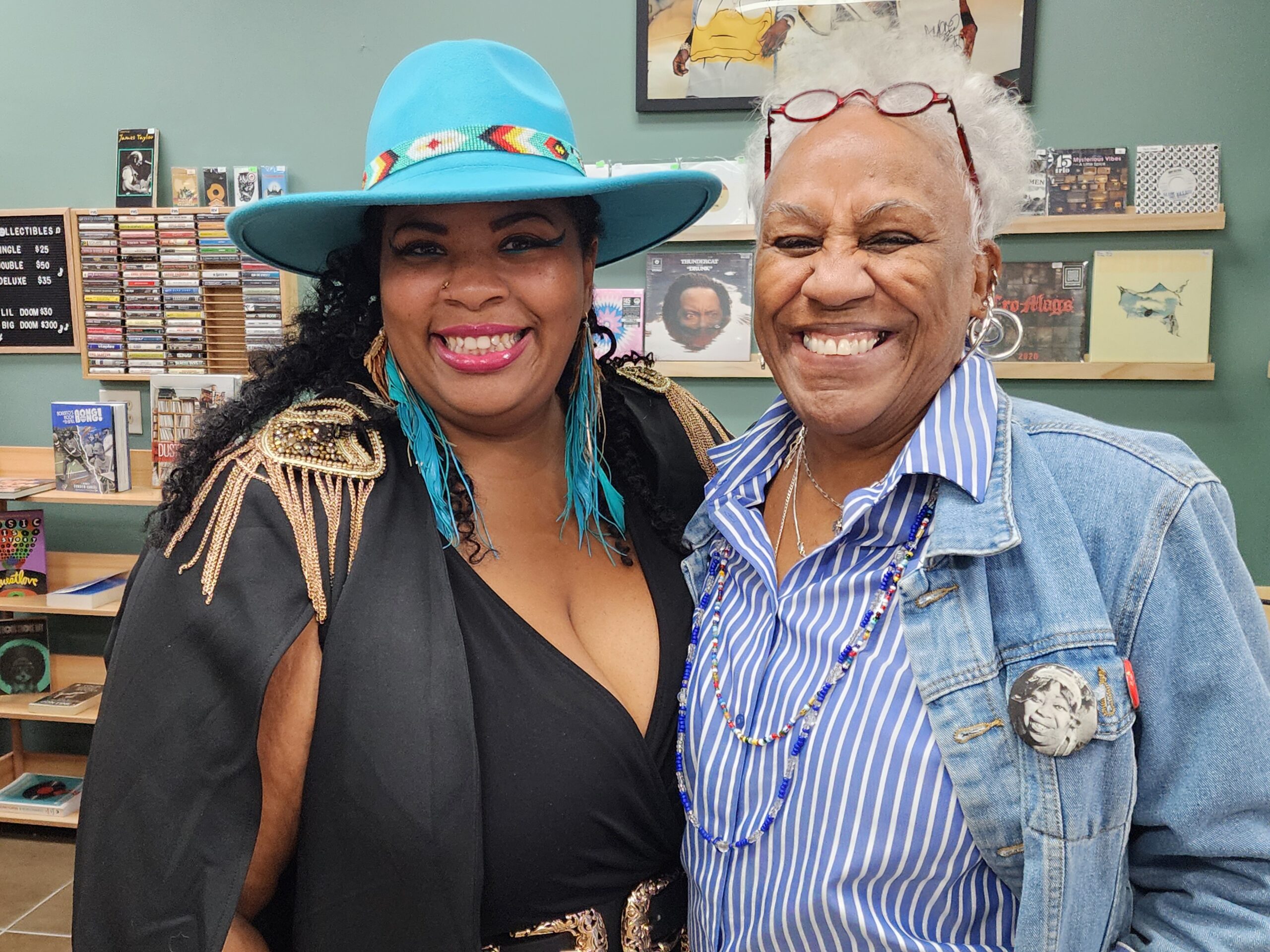
In this region, two women in particular continue to nurture the blues tradition. Separated by generations, Gaye Adegbalola and Carly Harvey have added pieces of themselves — and their experiences and cultures — to the lineage of the blues.
Finding humor in life’s painful moments
Born and raised in Fredericksburg, the trajectory of Gaye Todd Adegbalola’s life leaned toward becoming an educator. She taught science in the Fredericksburg City Public School system for 18 years. According to Adegbalola, her career in music started in 1979 as a necessity to earn money to supplement her teaching income.
Music was a constant in her life. Adegbalola cites her musical influences from the classic blues of the 1920s and ’30s, which had touches of vaudeville. She brought that element to her band Saffire —The Uppity Blues Women, which ran for 25 years before its dissolution in 2009.
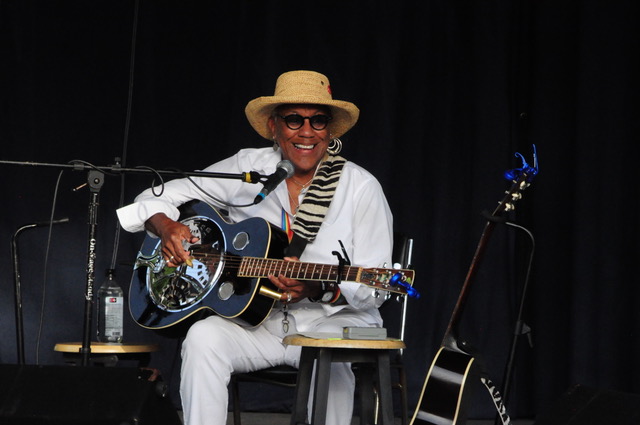
Gaye Adegbalola. (Photo courtesy of the artist.)
The group played all over the world, offering original songs about love and loss that look through the prism of humor in pain. An example of this is her original song “(No Need) Pissin’ On A Skunk,” which looks at a purveyor of pain as the titular animal — allowing one to let go of the infliction.
“My music can be characterized by my humor,” she said. “Because I find a lot of humor in the pain of day-to-day living. Blues is like the poor person’s psychiatrist and what you want to do is give people a way to look at pain in the face.”
Another song, “Big Ovaries Baby” is written as a feminist empowerment anthem in that it equates ovaries to men’s gonads. But her biggest hit, “Middle Aged Blues Boogie” is a song about looking for love in the arms of a younger man. According to Adegbalola, this song earned her enough money to put her son through college.
However, she maintains that monetary success is an outlier, as many blues musicians don’t tend to become rich through their music. One of her more notable successes was that Saffire put out the music on Alligator Records, considered one of the top labels releasing blues music.
As a grand dame of blues music, Adegbalola has gotten a lot of notice for not just her musical achievements but also for her activism in Black, women’s and LGBTQ rights. Recent recognitions include getting interviewed for a video on the Vox Fem website, becoming the head organizer for the Harambee 360 festival and participating in the Fredericksburg Area Museum’s “Living Legacies” exhibit on African American history in the area.
Where many artists of her age are looking to slow down, Adegbalola is picking back up where she left off with renewed energy. Coming off the most recent of five cardiac procedures, she’s looking forward to performing again. In addition, she plans on writing her memoirs and will participate in an upcoming lecture at FAM about women in blues.
Adegbalola also said that she wanted to be an example to the women who will come up through the genre of the blues. One woman of another generation who sees her as a hero is singer Carly Harvey.
Adding personal touches
While based in Washington D.C., Harvey has performed throughout Northern Virginia. Her most recent performance was at Bumrush Vinyl Records in Fredericksburg on Oct. 18. Raised by her musician parents, Harvey grew up in an eclectic household that listened to everything from Led Zeppelin to Parliament-Funkadelic to the blues.
In addition to her African American heritage, Harvey is a descendant of American Indigenous peoples, specifically the Eastern Band Tsalagi (Cherokee) and the Tuscarora. The singer said she grew up going to pow wows and listening to Native American music.
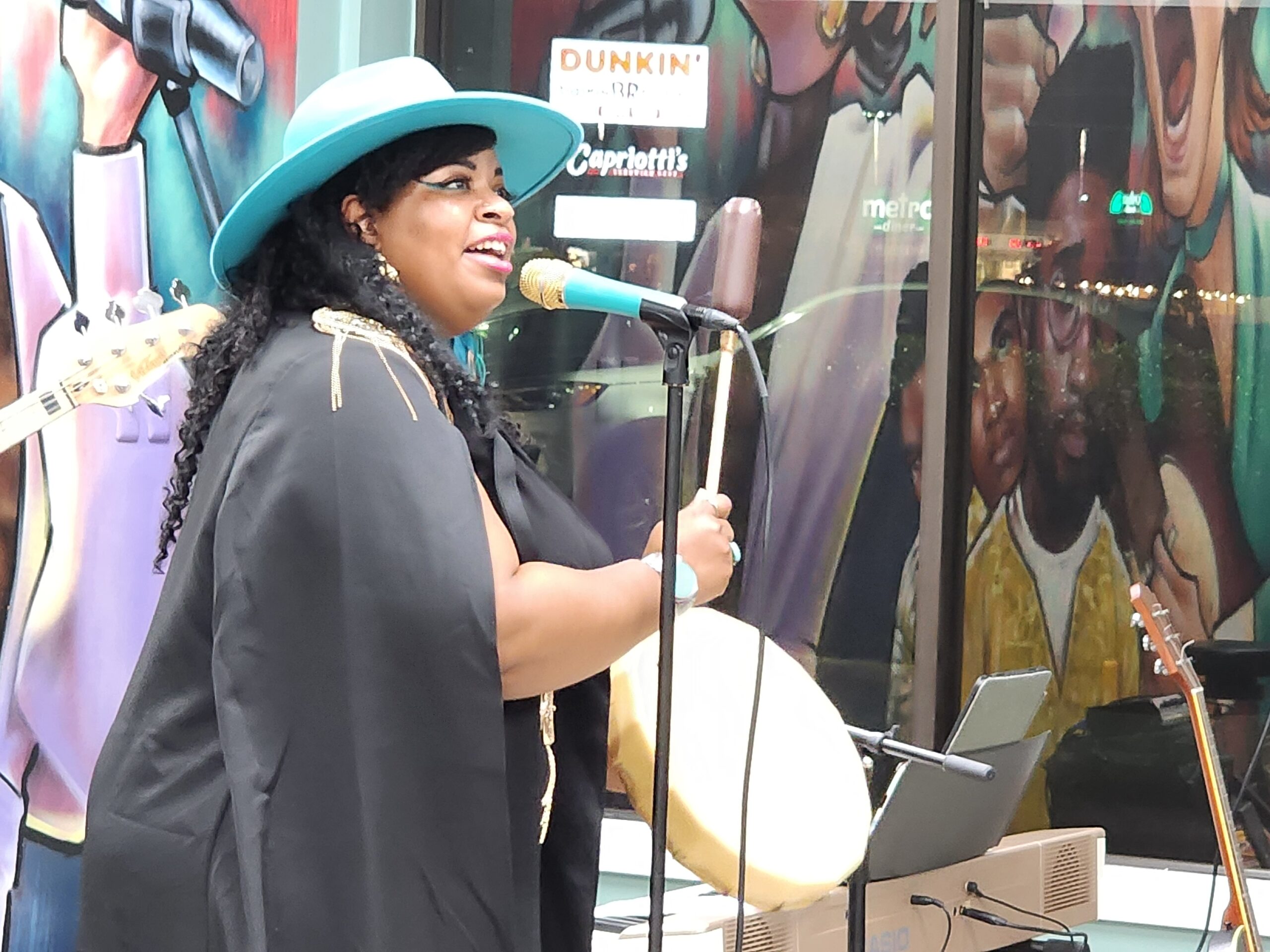
Carly Harvey performing at Bumrush Vinyl Records on Oct. 18.
By the time she was 9, Harvey was teaching herself Carole King songs on the piano and giving them her own unique twist. At the age of 18, Harvey began performing professionally at local coffee houses near her college. The singer offers a blend of jazz, rhythm and blues, funk and blues and later added the music of her indigenous background to the mix.
“I always knew I was going to grow up to be a musician,” she said. “There were always other things I wanted to be, but it was always I was to be this and a singer.”
An example of how she blends these genres comes from her latest album “Kamama.” The song “Native Scat” combines jazz-style scatting with indigenous chanting over the sounds of a wailing blues guitar and drums.
Harvey said that while the words in the chanting are not translatable, they do carry an energy that crosses over language. According to the singer, this comes from several different tribes being placed together after events due to The Indian Removal Act and the Trail of Tears.
“When you are singing blues in an authentic way, you are carrying the weight of experiences,” she said. “Whether you feel some of them or not and have moved on, that’s felt in the energy of how you carry the music.”
At 40, Harvey’s experiences are taking her to new places. She recently appeared on episodes of “The Voice” and gave a lecture on the blues at the Massachusetts Institute of Technology during a tour through New England. She will be supporting Selwyn Birchwood’s European tour in France, Belgium and the Czech Republic.