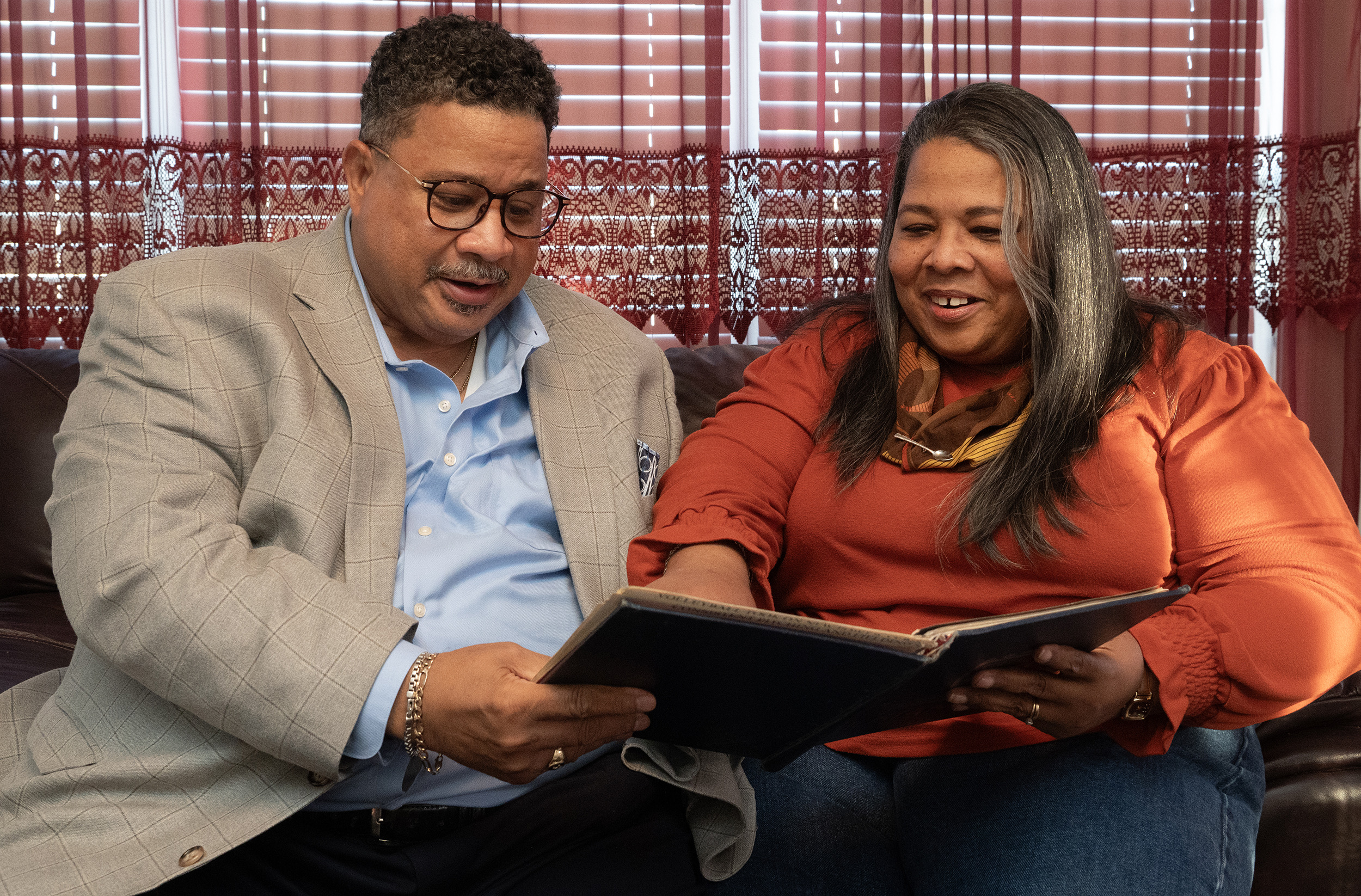
When Wanda Woodson Wallace learned that she’d met the requirements to graduate from Bowling Green Senior High School in 1977, she immediately sought out her first-grade teacher, Florence Valentine.
Wallace and her brother, the Rev. Ernest Woodson, arrived in Caroline County from Detroit in 1965 amidst a nationwide battle to integrate public schools.
The siblings were the first Black students to enter Bowling Green Elementary School in ‘65, and Wallace said Valentine’s kind and loving nature shielded her from much of the vitriol associated with the integration experience.
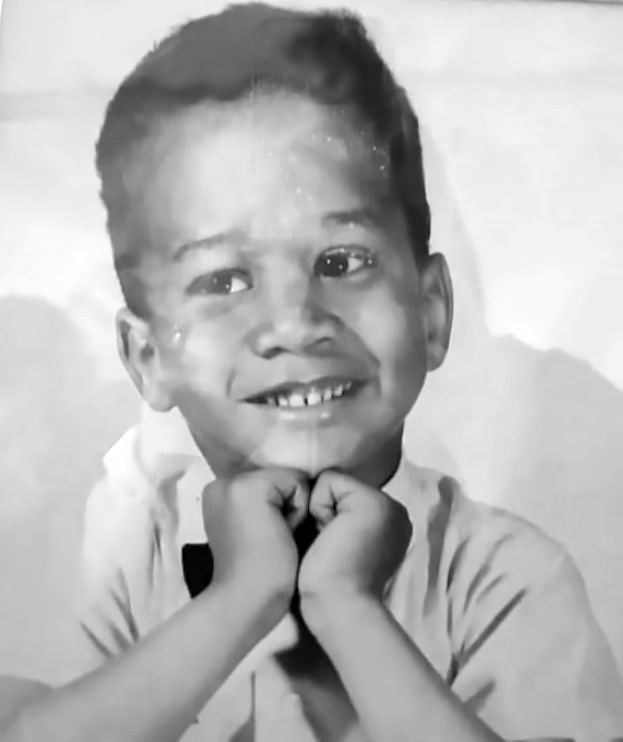
A photo shows Ernest Woodson in the mid-1960s.
Valentine, who was white, gave Wallace a small silver spoon as a graduation gift, and the former pupil still wears it proudly each day, clipped to a shirt or scarf.
“If I talk about her too much, I actually will cry,” Wallace said. “I just loved her that much … She wasn’t very tall in stature, but her love stood taller.”
This year represents the 60th anniversary of the integration of Caroline County Public Schools. A court order forced the county to implement “freedom of choice” in education, a desegregation plan in the 1960s that allowed students to choose which public school to attend.
Some of the 13 Black students whose families chose to integrate Caroline High School said they aren’t surprised that school or county officials have never recognized their sacrifice.
“Is that a joke?” CHS alum Bryan McReynolds said of being honored or recognized. “They barely acknowledged us when we were there. That’s one of those things where you can’t make somebody do the right thing. They have to have it in their heart to do the right thing.”
‘I never came back’
Calvin Taylor served on the Caroline Board of Supervisors and the school board for decades. Taylor, who now chairs the school board, said he does not recall any official recognition of the students whose families voluntarily integrated the schools, particularly the 13 who left Union High (the county’s Black school during segregation) for Caroline High.
“I think that would be a good thing to do, I just never thought about it,” Taylor said. “If we could get a list of the names of the students who went there, that might be something the NAACP might want to do in conjunction with the school system. I think to recognize those students as being the first to integrate the public schools in the county would be a good thing to do.”
Beryl Jackson, one of the 13 who integrated CHS, said identifying the students is as simple as looking through the 1966 yearbook, which is available to view at the Caroline Historical Society in Bowling Green.
Jackson said she was hesitant to leave Union after her freshman year because she was an honor student, who’d made plenty of friends and participated in several extracurricular activities. She said there was no motivation to integrate other than for the greater good of the community, since Union did not have inferior facilities or teachers.
The marching band was widely recognized as one of the best in the state. Jackson played the trumpet, noting that the band performed Tchaikovsky’s 1812 Overture, among other impressive feats.
“Why would I want to leave that and go to the unknown?” Jackson said. “And from what you had seen around the country when integration took place, it was nothing but an ass whipping. So, why would I volunteer for that?”
The Black students interviewed for this story said Union was a larger school, and its teachers were nurturing and highly educated — in part because it was difficult for Blacks to obtain other jobs in that era. Jackson noted that one of her teachers, Reginald Beverly, was instrumental in constructing the 1,700-mile Alcan Highway in Alaska, and another, James Luckie, “should’ve been at MIT.”
“He was a genius,” Jackson said.
Still, entering her sophomore year, Jackson decided to make the move, along with her two nephews, Alphonso Jackson Jr. and Wayne Jackson. Beryl Jackson said her mother “guilt tripped” her but allowed her to make the final decision.

A 1965-66 Caroline High yearbook page displays photos of Alphonso and Beryl Jackson, two of the 13 students who integrated the school back in 1965. (Photo by Taft Coghill Jr.)
“At 14, turning 15, being a female, like I told my nephews, I had it different from them,” Beryl Jackson said. “I had to worry about my hair. I was an athlete. So, it was all those kinds of things that are different between male and female. I didn’t have anybody to come home, call and talk about what went on at school that day, what guy you might have a crush on … It was, like, lonely.”
Several years ago, Jackson contributed an editorial detailing her experience to the now-defunct Caroline Progress newspaper. The former radio newscaster, who now lives in Texas, regularly shares the hardships she went through on social media.
She’s called the school division over the years to see if there is any racial tension because she wants to know if the decision she made paid off. She has no regrets and said that her action was necessary because no white students decided to enter Union to integrate.
“I’m glad I did what I did, but Caroline County has never thanked us for the bullshit that we went through, so y’all can have what you have now,” Jackson said … “I was 14 years old when I left [Union]. Some were saying, ‘Have a good summer,’ but I never came back.”
Students endure hardships
Beryl Jackson and friend Pierpoint Williams would sing songs by The Temptations to each other to stay calm in class at their new school.
McReynolds remembers spitballs flying into the back of his neck, shot by his new classmates.
Wayne Bates often thinks about being the only Black player on the CHS football team and being surrounded by white teammates after enduring a hard hit at practice.
Wayne Jackson said he was challenged to one fight and recalls breaking a desk during a second fight while watching Martin Luther King Jr.’s funeral during class in 1968.
Wayne Jackson also has unpleasant memories of the nicknames white students would call the Black students in place of the N-word.
“I didn’t have a problem with the teachers and most of the students,” Wayne Jackson said. “But it was always that 1% that were knuckleheads.”
While playing a basketball game at Colonial Beach, Beryl Jackson was tripped by a fan and suffered a sprained ankle. She also recalls being spat on during a school bus ride.
The elementary level wasn’t without issues, either.
Woodson and Wallace remember that the year after integration, a private school opened in Bowling Green, and many white students departed to attend there. Others moved out of the district.
Despite an overall positive experience, Wallace also lamented that she had to repeat the third grade when orthopedic surgery left her in nearly a full body cast for a year. Her mother hired a tutor to keep her up to date on her coursework, and she completed her lessons with all A’s. However, the school’s principal ruled that she did not attend school enough and decided she should be retained.
“This is where integration hit you, punched you in the stomach,” Wallace said. [The principal] did not hear it. His reasoning was, ‘She did not come to school, she will not pass.’”
A freedom fighter
Wayne Jackson’s father, Alphonso Jackson Sr., served as the president of the local branch of the NAACP and president of the Union Elementary School PTA. He later became president of the Union High PTA.
Wayne Jackson said he grew up “like brother and sister” with Beryl Jackson, even though she was his mother’s sister. He recalls prominent civil rights leaders attending local NAACP meetings in the county. At the time, there were senior and junior branches of the NAACP, and the national leaders encouraged the local parents to have their children break the color barrier and integrate schools.
School officials distributed letters in the summer of ‘65 alerting white and Black families of the court order that forced the county to implement freedom of choice.
“I was 12 or 13 at the time,” Wayne Jackson said. “My brother, along with Beryl and I, volunteered to integrate the schools at Caroline High.”
Jackson said he did so because fighting for civil rights was the right thing to do. He said he knew that Black residents being forced to sit upstairs at the movie theatre in Bowling Green or drink from separate water fountains was not right, and he wanted to be a part of the solution.
“I was a member of the NAACP, and I’m a person that will go for my rights,” Wayne Jackson said. “At the time, it was all about integration.”
Wayne Jackson said he enjoyed being the point guard for the CHS basketball team. He and Beryl Jackson were also the first Black students to join the CHS band. Beryl Jackson was the first Black student on the girls basketball team. She also competed in track and field.
She said one thing that perplexes her is that the current Caroline High School took over the name of a segregated school. She believes there should be a school named after Union High, as well, noting that it was Union students who chose to integrate, not the other way around. The current Caroline High opened in 1977, combining Bowling Green and Ladysmith high schools.
“Why should the oppressor get to keep the name and rewrite history like this was a warm and fuzzy place?” Beryl Jackson said. “No, it wasn’t warm and fuzzy — not for me … They say they don’t have any race issues now. I said, ‘That’s because I had them all, so you wouldn’t have to worry about it.’”
Suffering in silence
McReynolds attended a two-room schoolhouse in the Central Point area of the county before he headed to Union Elementary, and then Union High.
He lived in Japan for two years early in his childhood, and his parents thought he and his sister, Nona, could easily adjust to the integrated school once freedom of choice began.
“My father was military … He thought we would be able to get along and acclimate to the situation,” McReynolds said.
McReynolds, who entered CHS as a freshman, said he mostly suffered in silence. He didn’t want his mother to believe she made a mistake, so he kept quiet about his unpleasant experience.
“I knew my mother thought they had done the right thing, so when anyone would ask me how I was doing there, I would say, ‘Oh it’s great,’ because I didn’t want my mother to feel she made the wrong decision,” McReynolds said. “They did it for the right reasons, so there wasn’t any wrong decision.”
McReynolds said each of the Black students had varying experiences based on where they grew up in the county. He noted that the Jacksons lived in the Bowling Green area and were more accustomed to how white residents operated, so they had fewer issues. He, however, encountered “some very cruel individuals,” including teachers and classmates.
“At Union, you could tell the teachers really cared about you, and they would do anything to help you, which was not the case for me in Caroline High School,” McReynolds said. “Nurturing, that’s a big part of a child. You get confidence. They instilled confidence when I was at Union, and Caroline High, it seemed to me, that they were trying to take away any confidence that the Black students had.”
McReynolds said CHS was punitive when students made mistakes, whereas Union administrators used indiscretions as teachable moments.
McReynolds, who was a member of the CHS junior varsity basketball team as a freshman, said sports provided an escape.
He said he wasn’t overly sensitive as a youth, noting that he began a 22-year career with the Washington, D.C. Metropolitan Police Department directly after high school. He also led a transportation department in Prince George’s County, Maryland and became an entrepreneur before retiring and moving to Florida.
Still, he believes attending CHS curtailed his growth as an individual.
“I spent four years with a limited social group of 13 people and one of them was my sister,” McReynolds said … “So, it was a clique for us when we were at Caroline.”
Integration no longer a choice
According to the 1967 CHS yearbook, Linda Johnson was the first Black student to graduate from the school.
In 1969, integration was the law, and there was no longer a choice. Students in Caroline attended Bowling Green or Ladysmith high schools. Wayne Jackson said that transition was more seamless at Bowling Green High because of the groundwork laid by the original 13, and others who followed.
“I think we taught them that we’re just people,” Beryl Jackson said. “We’re all teenagers trying to figure out where we were going in life, what we wanted to be, who we’re going to be … All of us had the same fears and insecurities.”
When integration became law, Ernest Woodson was still in elementary school. His white friends told him that he was behaving differently because his friends and family members from Union were around him. While he was typically reserved — unless he was singing along with a friend on the bus ride home — he began to come out of his shell.
“I didn’t realize it, but I was quiet [before integration was law],” Woodson said. “What she said to me penetrated my spirit. She was right because we had fun on a different level.”
Woodson and his sister came from integrated schools in Detroit, and their parents didn’t discuss race in a negative context. He had a white friend in Detroit who helped him remove his rubber boots when it rained.
Woodson did not cite many hardships integrating Bowling Green Elementary. He said that’s likely because when students are younger, they don’t have a dislike for others based on race unless it was taught to them. He said he had a great relationship with a white teacher named Ellen Thornton, who picked up on his childhood nickname and called him “Binky.”
Woodson said that at one point he was so naive, he drew a swastika on his hand after seeing the Nazi symbol on a classmate’s lunchbox.
“That’s when my mother sat me down and explained to me for one of the first times about racism,” Woodson said.
Woodson and Wallace continued to thrive in county schools, with Wallace returning to work as a Title I teacher and paraprofessional from 1980-96. Woodson worked in the correctional system, and the Spotsylvania County resident is currently a full-time substitute teacher for Fredericksburg City Schools. He often reminds his students of his place in Caroline history, even if county and school officials don’t.
“We are part of history and for no reason other than that, it should be recognized,” Woodson said. “If it ever happens, that would be an incredible honor.”