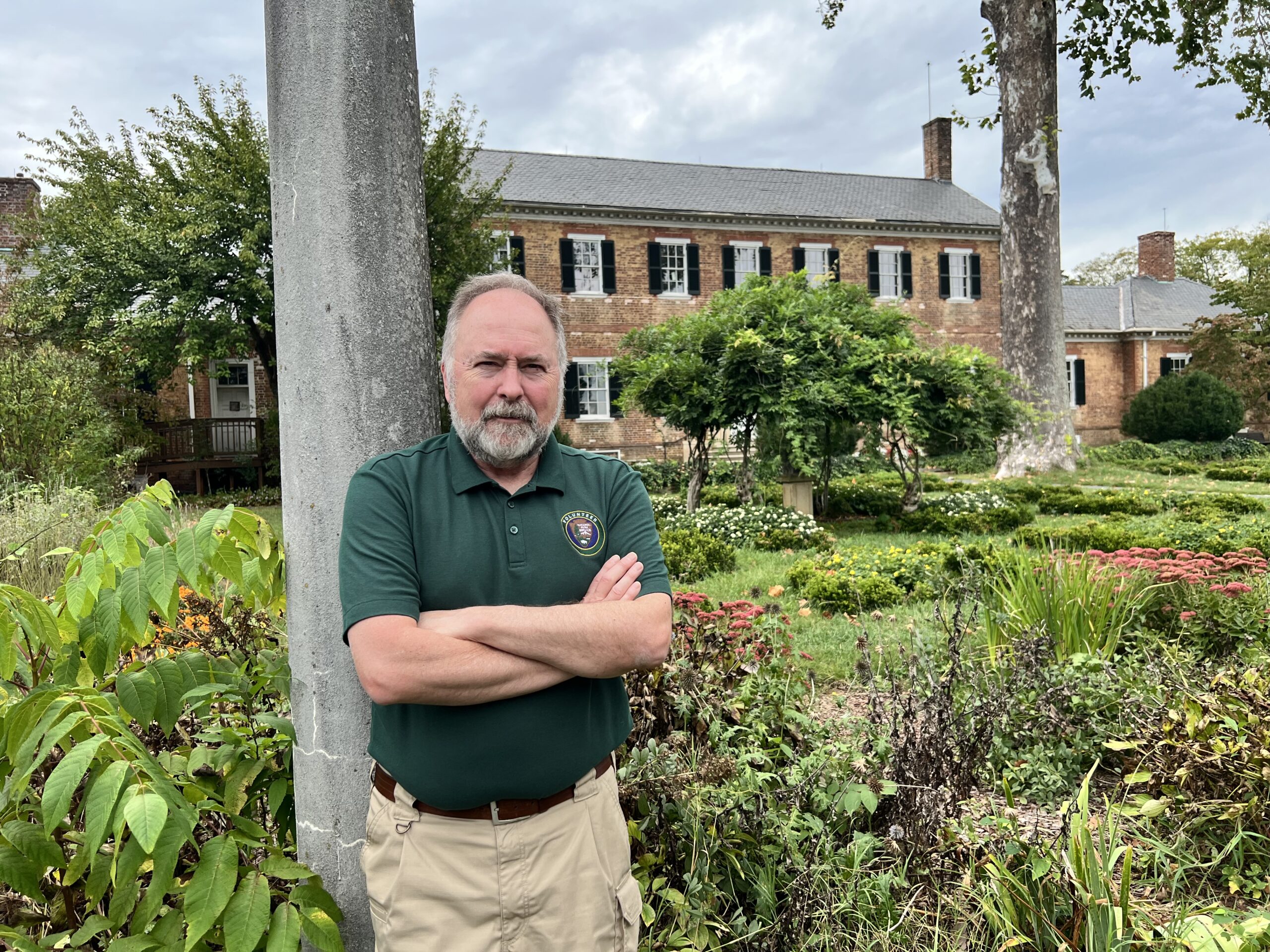
The Civil War is often described as being “brother against brother.” But Steve Morin discovered a story from the time that instead shows one brother’s love for another.
The 69-year-old Morin this year is celebrating a decade of volunteering for the National Park Service at the Fredericksburg & Spotsylvania National Military Park, and an exhibit based on his research will be unveiled Friday at Fredericksburg’s city visitor center.
It tells the story of Francis Hill, who wouldn’t stop until he could locate the remains of his brother, Horace Gilbert Hill, a lieutenant with the 111th New York Volunteer Infantry who was killed in the 1864 Battle of the Wilderness.
Lifelong history buff
Morin, a Montclair resident, began volunteering after a more-than-30-year career with the federal government and a three-year stint as an interpreter at Colonial Williamsburg.
He said recently that he’s always been interested in history. He holds a history degree from Keene State College in Keene, N.H., and spent years re-enacting with a group portraying the 5th New Hampshire unit.
Morin serves in a variety of volunteer roles with the Park Service, including contributing to transcription and research projects, and he earned a nomination for the NPS Hartzog Award for Outstanding Volunteer Service.
“He’s amazing,” said Ashley Ranalli, a local park ranger who tackles a variety of jobs, including coordinating volunteers.
Morin’s work transcribing historic documents helps to tell stories of the past all on its own.
“But what Steve did was fleshed out this massive picture,” Ranalli said of the research behind the new exhibit. “He got in contact with Nancy Rosin, who is Francis’ living descendant.”
That led to the Park Service’s ability to share never-before-seen photographs and family letters preserved for more than 150 years.
From family correspondence to historic exhibit
The exhibit has its roots in a project Morin is working on with Park Ranger Ryan Quint.
Quint sent him the diaries of Horace and Francis Hill, which the Hill family had given to the park sometime in the 1990s, Morin said.
First, he transcribed Horace Hill’s diary. It was from 1864, just before the soldier died. And it provided some interesting details, including about family life and history.
But then Morin got into his brother’s diary.
He discovered that Francis Hill had come to the Fredericksburg area several days after Horace Hill was killed to try to find him.
“And I started reading his diary, and it was really unique because it listed his schedule, the expenses he had, which were interesting from our perspective, from mine, anyways,” Morin said.
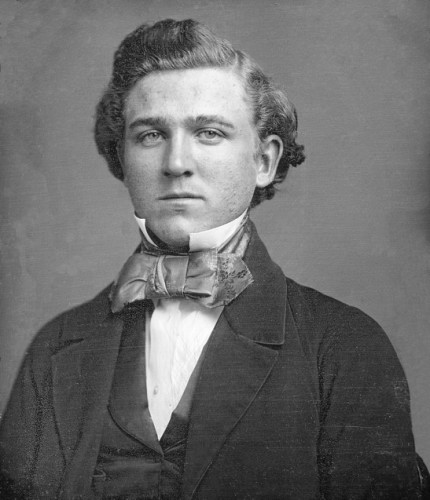
Horace G. Hill
Francis Hill also lists at least 20 hospitals he visited during his search, including in Fredericksburg, Baltimore, Alexandria, and Washington, and he records the names of almost 60 soldiers from the 111th.
“So he’s going around doing all of this research, and he’s noting stuff in his diary,” Morin said. “He’s trying to find where his brother’s buried.”
Press the Issue
An exhibition of Park Service volunteer Steve Morin’s research will be unveiled as part of First Friday on Jan. 2. From 5-7 p.m., an opening reception will be held with an interview of Morin. The exhibit will be on display until Feb. 1 at the Fredericksburg Visitor Center at the Executive Plaza, 601 Caroline St.
It wasn’t common for families of slain fighters to be able to come to battlefield areas and find their relatives, he said, unless they died at a hospital or were removed quickly from the battlefield. Someone would have to travel to the region, get the body embalmed and ship it back home.
Finding the body
First, though, you had to locate the body.
So Hill starts collecting clues, and he wants to search in Spotsylvania County, Morin said.
But the Army says no, because there are still active campaigns occurring.
Hill returns home, and that’s the point in the story when Morin gets stuck. He knows, from reading the diaries, that Hill eventually comes back to Spotsylvania and finds his brother, but Morin isn’t immediately able to find out more.
He heads to Ancestry.com and enters Hill’s name, and a picture pops up, which leads Morin to a family tree run by Rosin. A note with a picture on the site says she even opened the frame the photo was in, and a lock of hair fell out.
Morin quickly emails Rosin, and she writes back, saying she is Hill’s great-great-granddaughter.
She tells the historical detective that she has dozens of family letters, including ones about Hill’s attempt to find his brother, and shares them.
Morin starts to read through them and finds out that, when Hill went home, he started reaching out to people and discovered someone who might know something about his brother’s death, including the names of the soldiers who buried him.
Morin’s research leads to an Army lieutenant, who tells Hill that he was tentmates with his brother, and that his brother had a premonition that he was going to die.
“But we made a pact before the Battle of the Wilderness that if one of us died, the other would take care of his body and make sure it got back,” Morin recounted the letter saying. “And he says, ‘I was with him when he was shot. … He died instantly.’ He said, ‘I bent down over him. I took his sword away and gave it to a sergeant,’ and he names a sergeant.”
The lieutenant designated two soldiers to move Horace Hill’s body. But the Confederates overwhelmed them, which meant his body was behind enemy lines for two days.
Meanwhile, Francis Hill had gotten a tip about another soldier who might have been there when his brother was buried. This man, a private in the Army, says he didn’t bury Horace Hill but that he was there when the deceased was buried, and he carved his name on a burial marker.
Most importantly, he said he could find the spot where the body was buried.
Burial site
Francis Hill finds out that his brother was interred on what was known as Stephens Farm in Spotsylvania, and he’s eventually able to bring him back to New York in July 1865. The house on the farm was off the road, which is now one of the roads for Stonewall Jackson’s Flank March at the Battle of Chancellorsville.
Rosin also shared letters between the Hill brothers with Morin.
One in particular was poignant for its emotion. It’s from Horace to Francis.
“He says out of all of the horrible things I’ve witnessed, like on campaign, the thing that makes me tear up is thinking about how I didn’t ever really stop to thank you for all the things that you’ve done for me,” Ranalli said.
Two months after writing the letter, Horace Hill died. He now rests in an old graveyard in Ontario, N.Y.
And, about 10 years after his death, his brother recounted their mother’s last words, which apparently included seeking her son who was killed in combat.
Just before she died, she leaned up on her side, according to Morin, and said, as if to her offspring, “Horace, Horace G., is that you?”