From Linda Reynolds, BS, RDCS, Mary Washington Cardiology
February is Heart Month—a time to raise awareness, inspire prevention and celebrate the incredible organ that keeps us all going. For me, that meaning runs deep. As an echocardiographer, I’m blessed to work with patients and their hearts every single day, combining science, compassion and lived experience into something that feels very much like a calling.
My work: Seeing the heart in real time
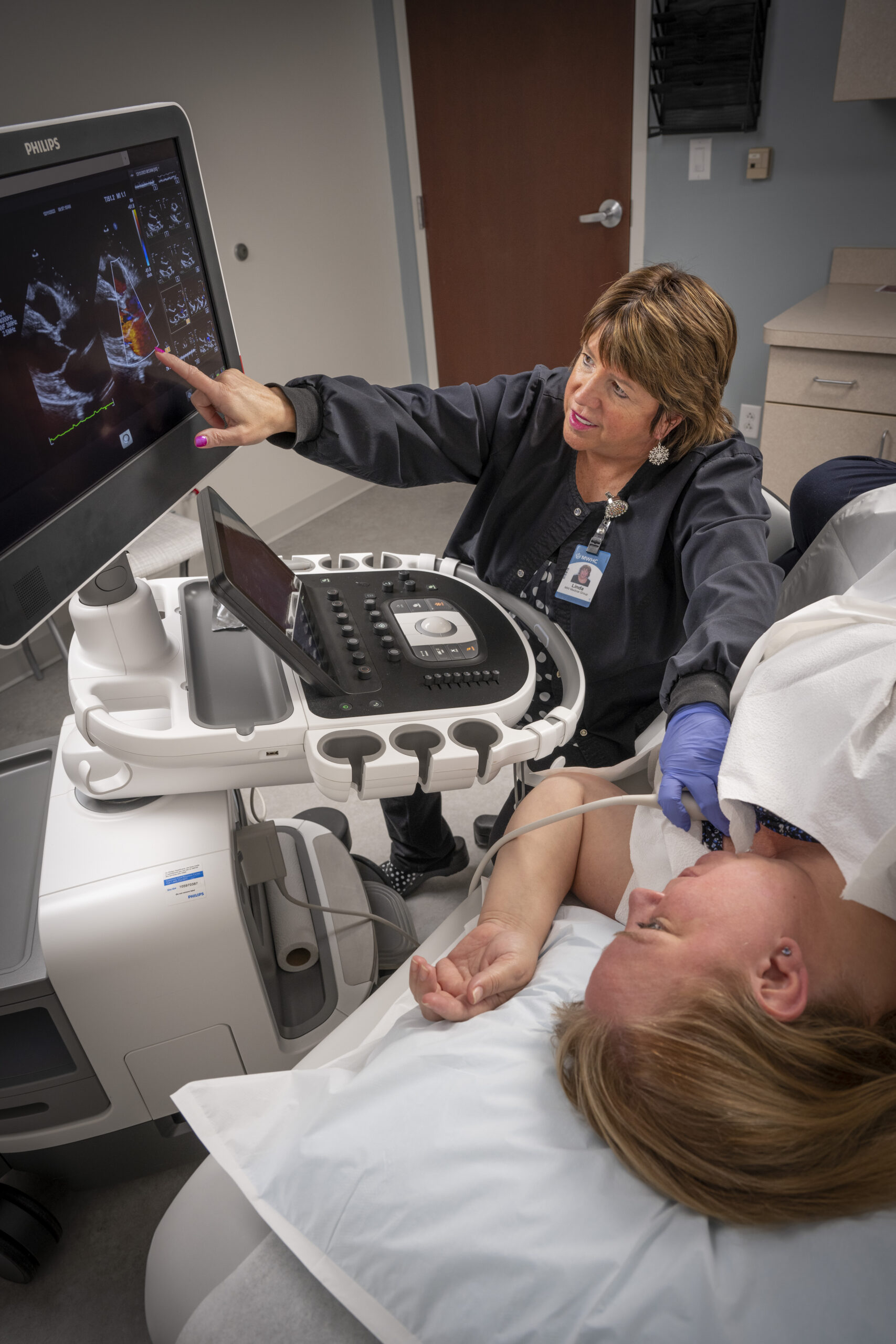
Echocardiography is a form of noninvasive ultrasound that gives us an immediate look at the heart’s structure, size, function and blood flow. One of the best parts is that this test doesn’t hurt, yet it gives providers critical information within minutes.
We use echo to evaluate symptoms such as heart murmurs, palpitations, chest pain, abnormal EKGs, shortness of breath, arrhythmias, enlarged hearts, and much more. I often explain it to patients like this:
- Echo shows the structure of the house.
- EKG shows the electrical system.
- Color Doppler shows the plumbing—how the blood flows through the valves.
Together, this helps us identify problems early and address concerns quickly, without weeks of worry.
Technology matters—but expertise matters most
While cardiac imaging technology has evolved tremendously, the skill of the sonographer is still essential. A qualified echocardiographer must optimize images, understand rhythm and anatomy, and recognize subtle signs of complex heart disease.
I studied noninvasive cardiology in Boston for five years, and I continue learning every day. But the heart knowledge that shaped me began long before my formal training.
My personal why
Heart disease touched my family in profound ways:
- My father passed away at just 45 from heart disease linked to long working hours, smoking and inadequate care.
- My sister was born with congenital heart disease and underwent open-heart surgery as an infant, along with many procedures throughout her life.
Their stories are a big part of why I do what I do. They taught me empathy, compassion and the importance of truly listening to patients—because I know how nervous and frightened heart problems can make someone feel.
Patients often tell me they can sense how much I care. And it’s true—I genuinely love my work. I reassure them that I will address concerns with their doctor right away, so they don’t leave worrying for weeks.
People frequently ask how long I’ve been doing echoes, and I jokingly respond, “All my life”. In many ways, it feels that way. My heart has been connected to this work for as long as I can remember.
A heartfelt message for Heart Month
February is a time to honor every heartbeat—our own and the hearts of those we love. Professionally, it’s a reminder of the privilege I have in caring for patients at some of their most vulnerable moments. Personally, it’s a tribute to my dad, my sister, and every patient who has trusted me with their heart.
I love what I do. My patients feel that. And to me, they will never be just a number.
Editor’s note: This article was provided by Mary Washington Healthcare, a corporate sponsor of the Fredericksburg Free Press. As part of its continued partnership with MWHC, the Free Press will publish monthly public health awareness content on topics such as wellness, preventative care and the latest advancements in healthcare. This partnership seeks to help the community make informed health decisions while offering a behind-the-scenes look at local care and services. Content has been edited for clarity and style by the editorial staff.