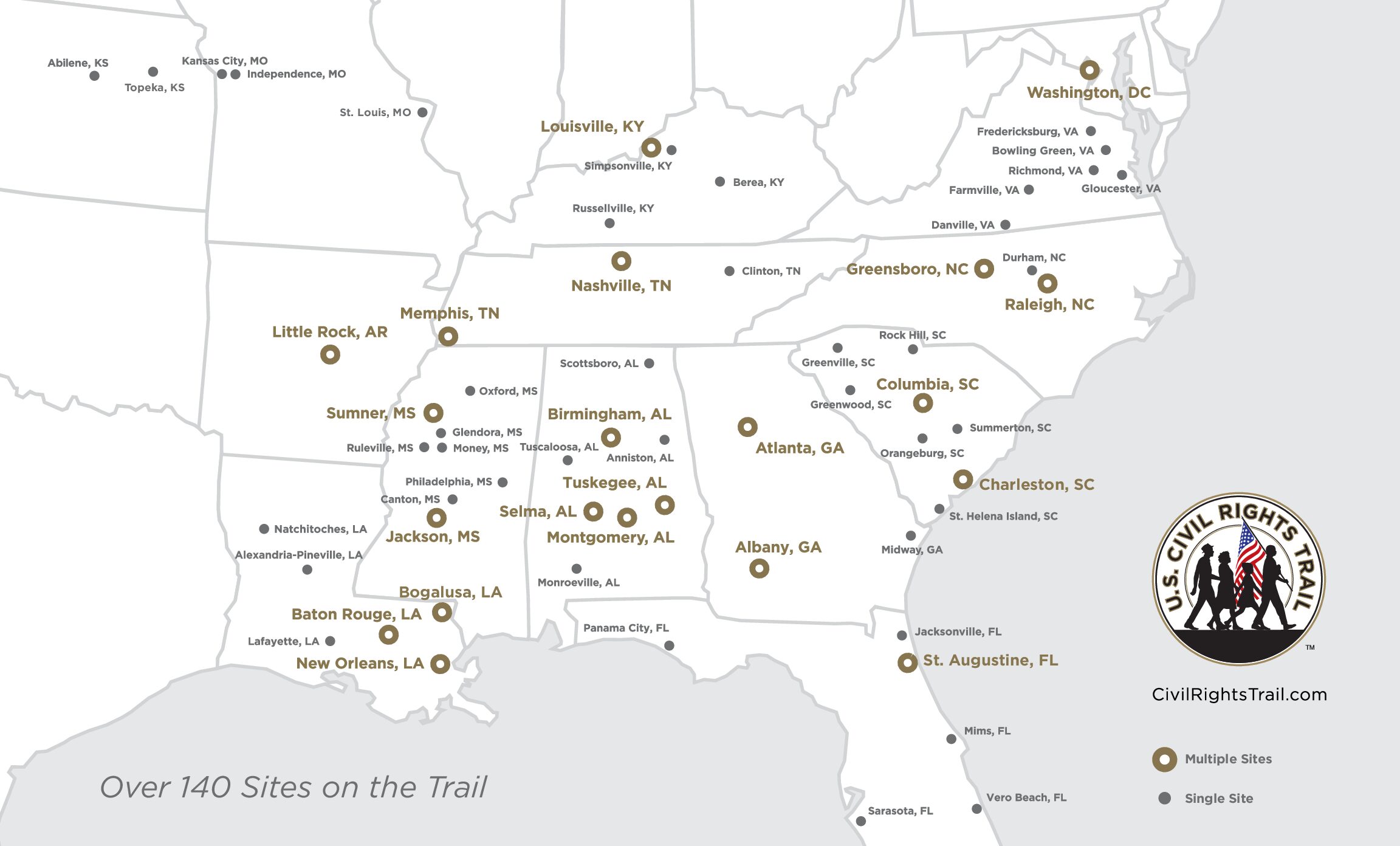
The historic courthouse, sheriff’s office and old jail in Bowling Green are being added to the U.S. Civil Rights Trail.
Trail officials added the sites because of their affiliation with the landmark Loving v. Virginia Supreme Court case that overturned laws banning interracial marriage.
A press release from the Trail noted that on Jan. 6, 1959, Richard and Mildred Loving were arrested, tried and briefly jailed for violating the Racial Integrity Act, the lawn banning interracial marriage in Virginia.
“This campus illustrates the beginning of a legal fight that reshaped the meaning of marriage and equality in the United States,” the release notes.
A state historical marker telling the story of the Loving case sits at the corner of U.S. Route 301 and Sparta Road, which leads to the couple’s home where they were arrested. Bowling Green is one of two locations in Virginia being added to the trail this year. The other is the Gloucester Museum of History. The Trail added 21 stops in the City of Fredericksburg in 2024.
“Every year, the U.S. Civil Rights Trail continues to grow, giving visitors new opportunities to experience the people and places that shaped history,” said Mark Ezell, Chairman of the U.S. Civil Rights Trail Marketing Alliance. “These new sites add unique and powerful stories that will truly deepen our understanding of the civil rights movement.”
The Trail added a total of six new sites in four states this year.
In addition to Bowling Green and Gloucester, new sites include the Texas and Pacific Railway Depot in Natchitoches, Louisiana, the Jefferson Street Sound Museum and the Museum of Christian and Gospel Music in Nashville, Tennessee, and the Jacksonville Civil Rights Trail in Jacksonville, Florida.
The Trail, a collection of more than 130 churches, courthouses, schools, museums and other landmarks primarily in southern states, was launched in 2018. It’s meant to highlight areas where activists challenged segregation in the 1950s and 60s to advance social justice.
For more information, visit CivilRightsTrail.com.