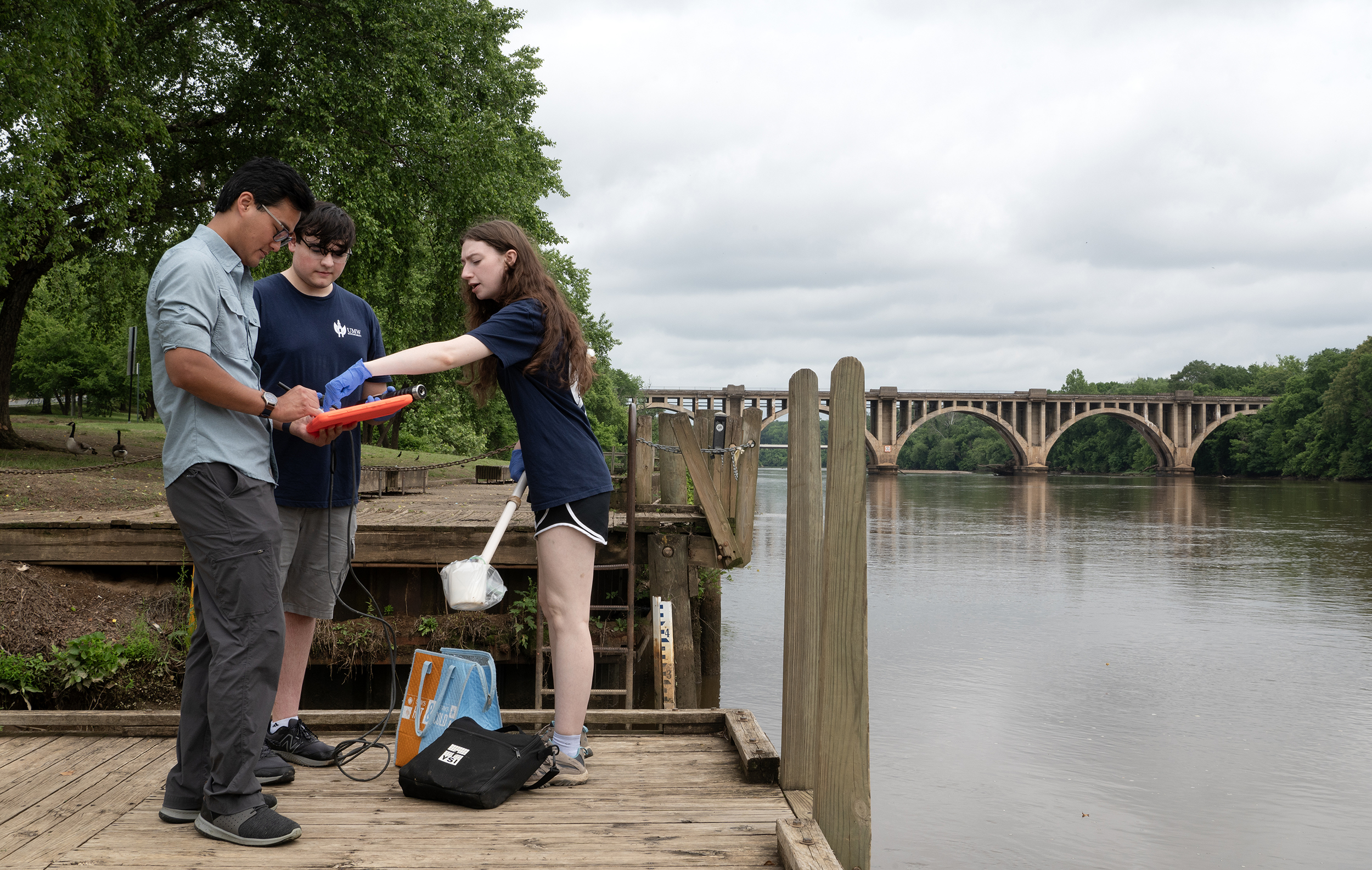
Two University of Mary Washington students lower a pole into the Rappahannock River at City Dock. They collect a cupful of water and pour it into a small bottle. Next, another device is lowered into the river to measure dissolved oxygen, temperature, pH and salinity.
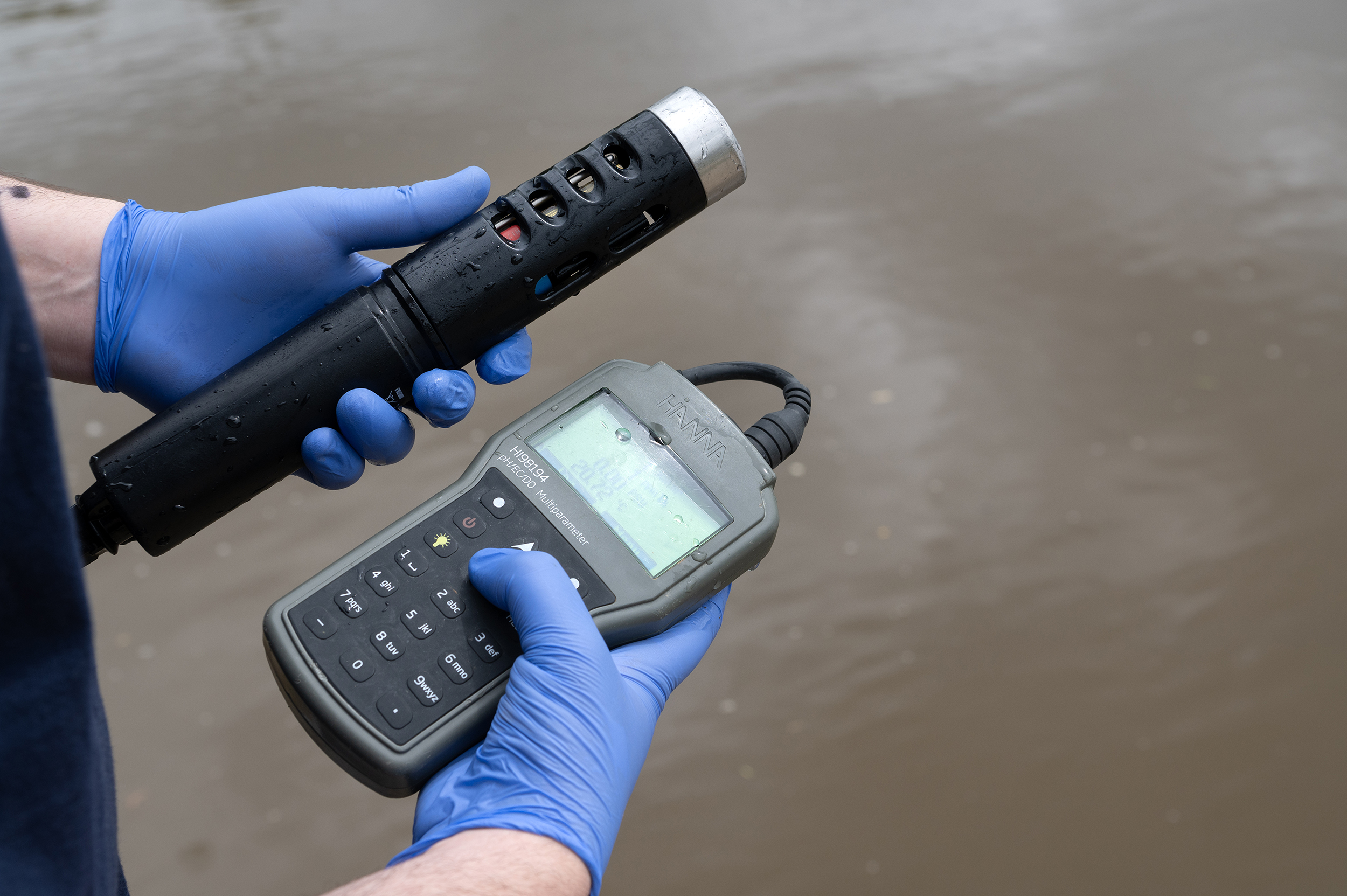
University of Mary Washington student Garrett Driscoll shows some of the equipment used to test for bacteria levels in the Rappahannock River Wednesday May 27, 2026. (Photos by Jeff Kearney.)
The sample, collected on a recent Wednesday in May, will be taken to campus and analyzed in a lab.
What are these students looking for? Harmful bacteria, similar to what was discharged into the Potomac River just a few months ago.
The students are part of a new program testing the river weekly for fecal coliform bacteria and releasing results to the public so they can make informed decisions before swimming, fishing or paddling on the river.
“There isn’t really a program that exists like that for the Rappahannock where the public can get access to weekly data sets,” said Tyler Frankel, associate professor of environmental sciences at UMW.
 Frankel has a long resume of researching the effects of pollution on waterways. He worked closely with the Potomac Riverkeeper, which samples waterways regularly and was heavily involved with the Potomac Interceptor spill, in which the collapse of a pipe caused overflow of more than 200 million gallons of wastewater into the Potomac River.
“I saw a real need for that type of information,” Frankel said.
Regular water quality testing can be expensive, so Frankel sought the required financial support from the university’s undergraduate research grant program and the JF Environmental Trust Foundation.
Hannah Reents, 21, and Garrett Driscoll, 20, are both environmental science majors under Frankel. As part of UMW’s summer science institute, they’ll gain hands-on research experience doing field sampling and laboratory analysis.
And they will see real-world impacts from the data they collect.
“It’s really important that they [the public] are able to get accessible information about the fecal coliform levels,” Reents said.
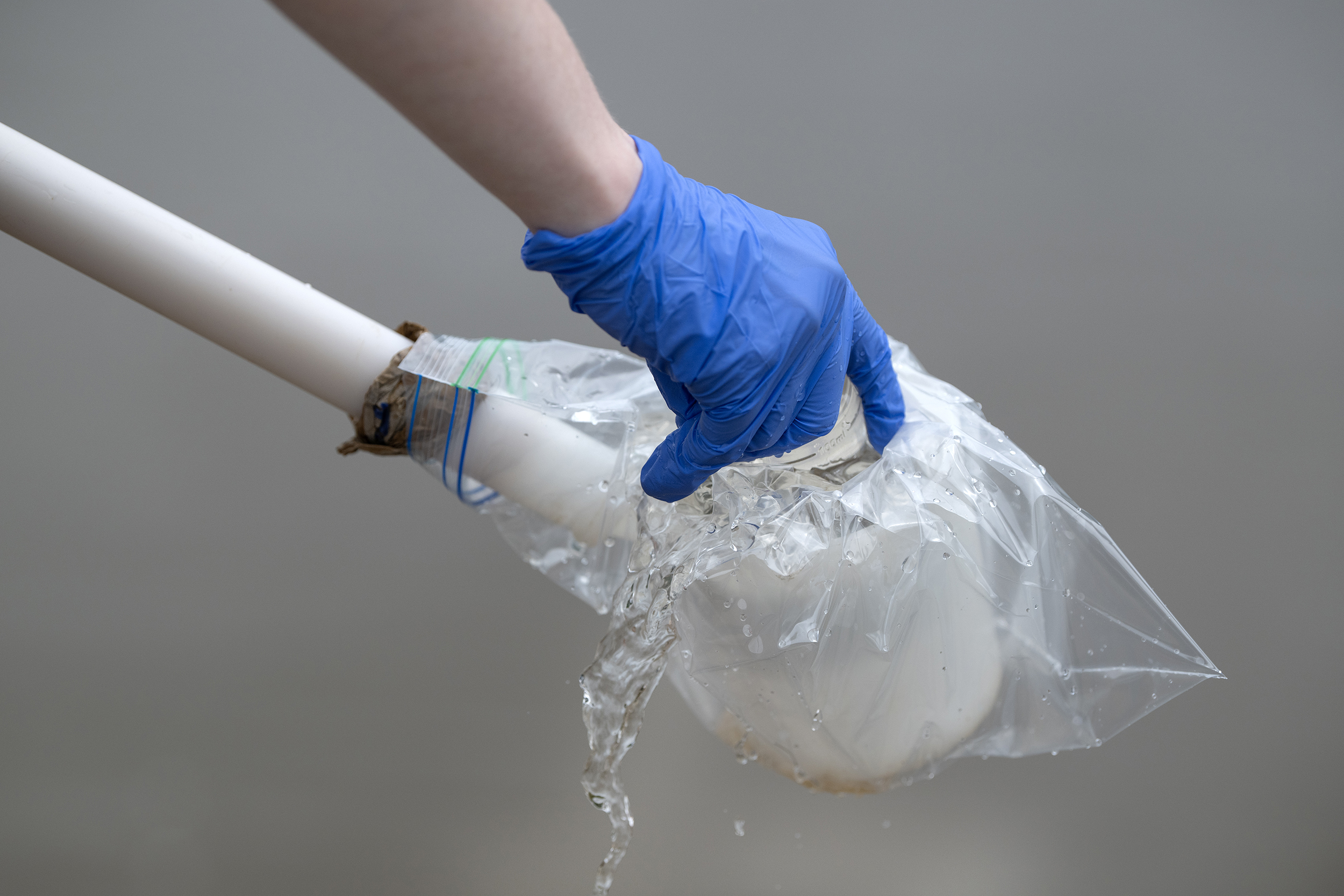
Students from the University of Mary Washington take water samples from the Rappahannock River to test for bacteria levels Wednesday May 27, 2026.
The gap in monitoring is a real problem.
Existing testing on the Rappahannock is limited, and bacteria levels can change quickly after a heavy rain — levels are known to spike after any rainfall event greater than one inch. Government agencies simply don’t have the resources to test every week.
“That,” said Frankel, “is kind of the gap that I’m seeing us fill.”
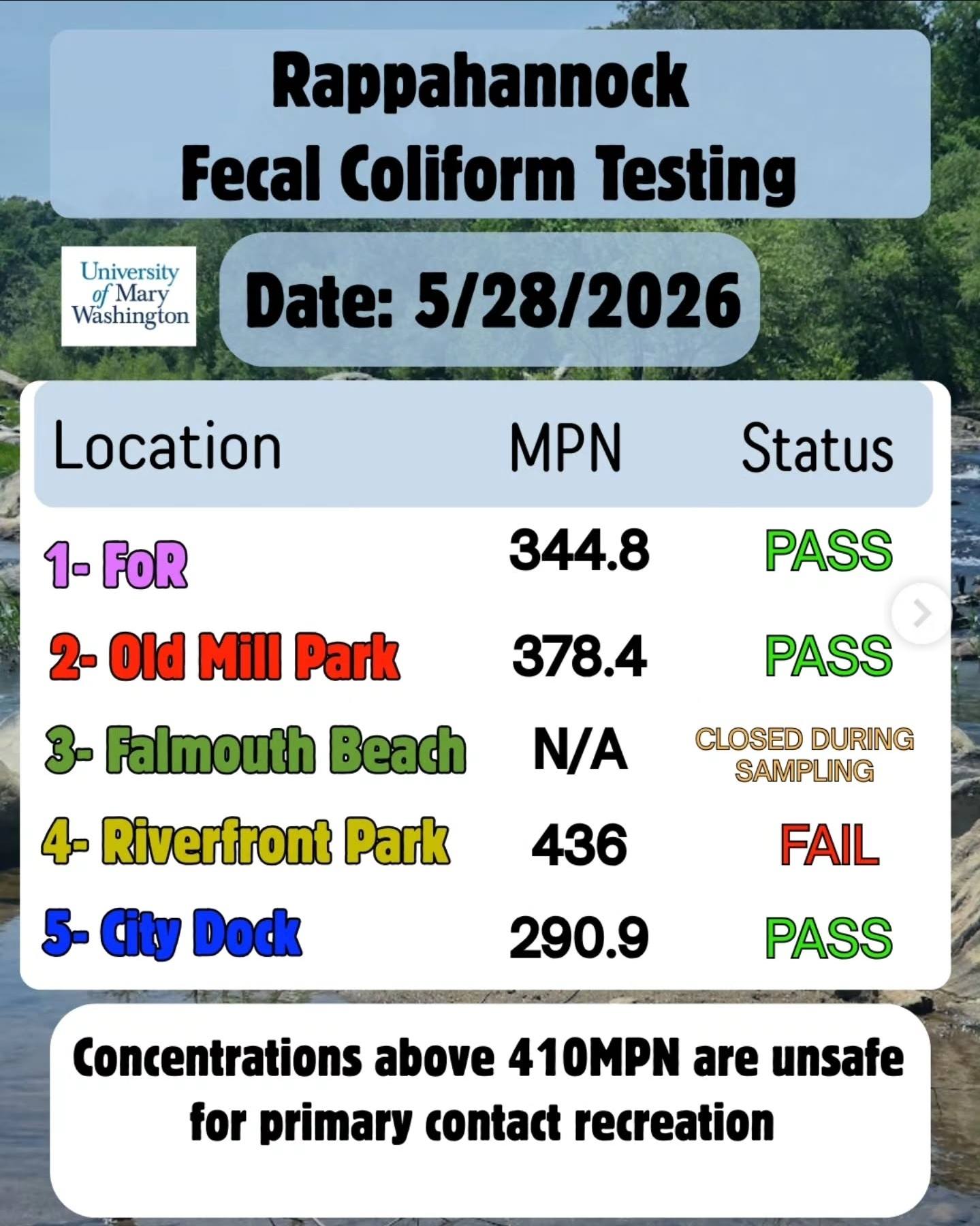
The team is currently testing five sites along the river: Falmouth Beach, Old Mill Park, the Friends of the Rappahannock office, Riverfront Park and City Dock.
The sites were chosen intentionally. Falmouth Beach and Old Mill draw swimmers. City Dock is a hub for kayakers and paddlers.
The goal isn’t just to post numbers online — researchers want to build a long-term database that can help identify where contamination is coming from in the first place.
Fecal coliform bacteria (like E. coli) are microorganisms found in the intestinal tracts of warm-blooded animals. They enter our waterways through sewage, leaky septic systems, livestock, pets or wildlife. Contact at high levels can cause fever, vomiting and diarrhea, with symptoms typically hitting within 24 to 72 hours. Bacteria can enter the body through the mouth, ears, nose or an open wound.
“These are the ones that can make you sick if you come in contact with them,” Frankel said. “It doesn’t always mean sewage. It can also come from agricultural runoff or even just the wildlife that lives in the area.”
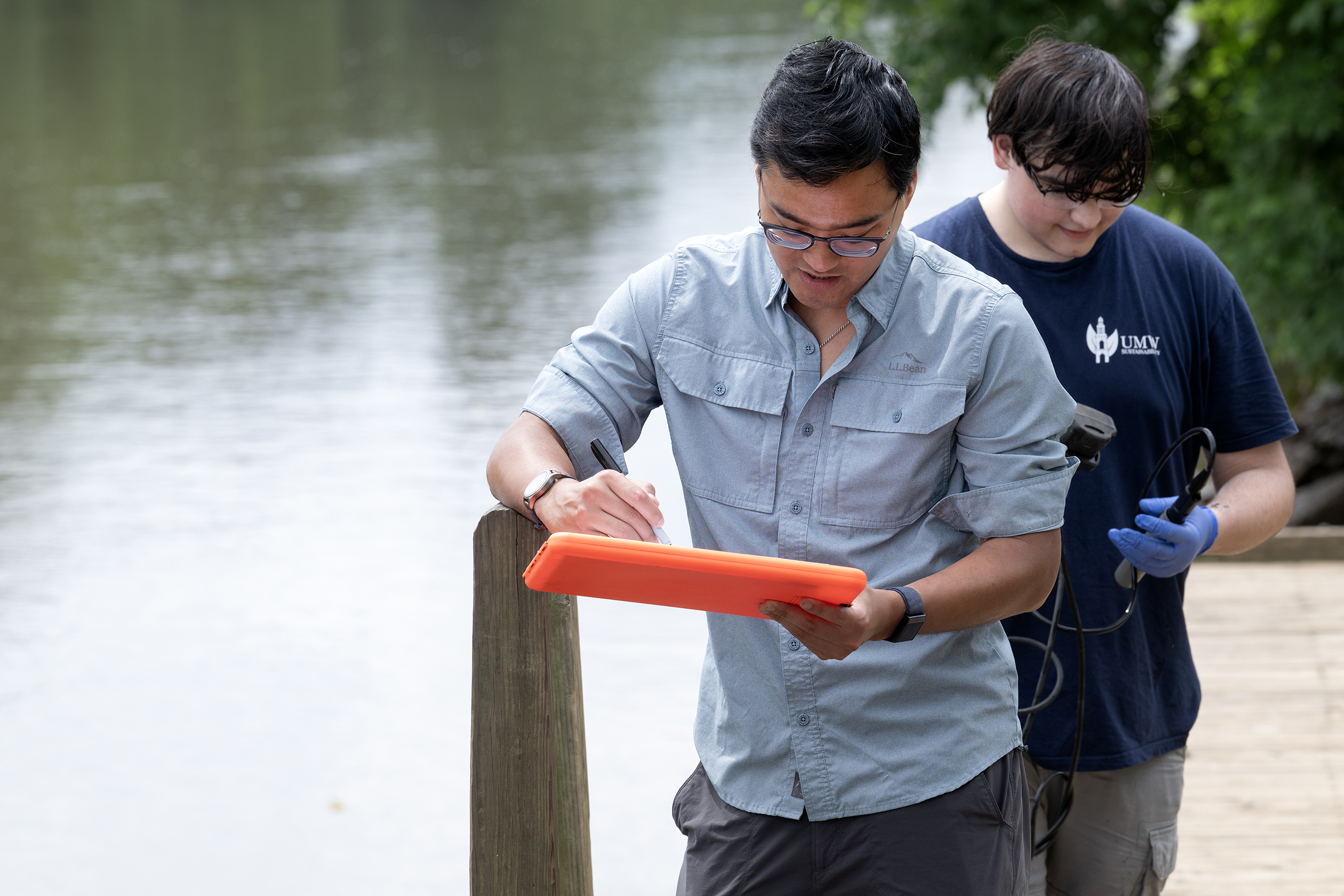
University of Mary Washington students test the water content of the Rappahannock River at City Dock Wednesday May 27, 2026.
Look around at City Dock on any given morning and the evidence is everywhere — Canada geese. Even they can drive the bacteria counts up.
The team measures results against EPA recreational thresholds. The key number to know is 410 MPN — most probable number — the point at which a single exposure in the water poses a meaningful health risk.
There’s also a lower threshold of 126 MPN for people with repeated, prolonged exposure. The team mostly focuses on the 410 mark since most people are planning a weekend outing, not a daily swim.
Notably, swimming in the Rappahannock is legal. Swimming in the Potomac, by comparison, is not. That makes this kind of public-facing water quality data even more important for Fredericksburg-area residents who use the river regularly — and for their pets, too.
Everything is processed at the UMW campus lab. Samples are collected and spend about 24 hours in the incubator before results are uploaded online.
For Driscoll, who did the preliminary groundwork last summer, and Reents, who has since taken the lead on weekly sampling, the hardest part during the school year is simple: finding the time.
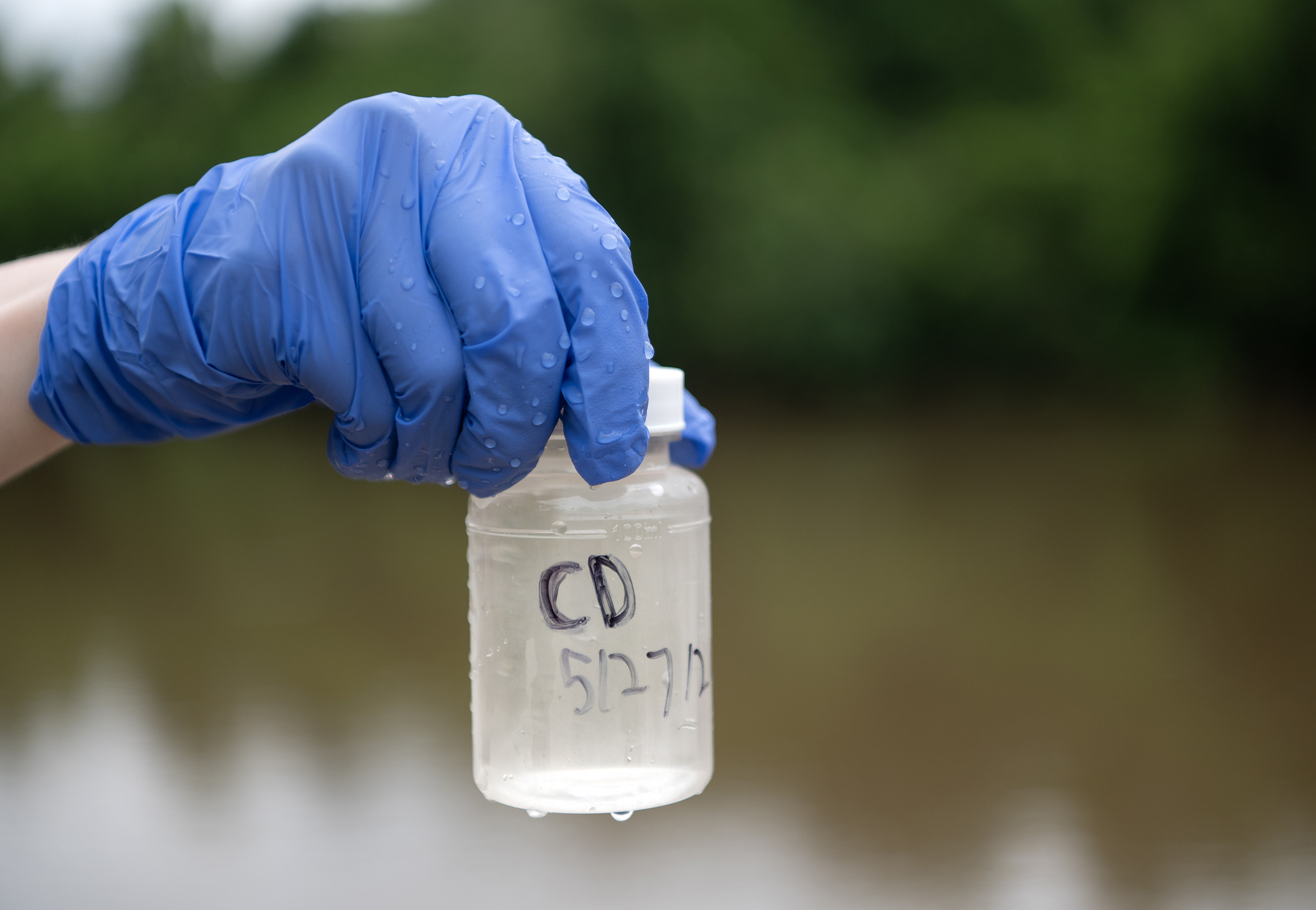
University of Mary Washington’s Hannah Reents displays a water sample taken to test for bacteria levels in the Rappahannock River Wednesday May 27, 2026.
“Figuring out a time that we can get away,” Driscoll said.
Summers are easier, though triple-digit heat and thick Fredericksburg humidity have a way of making even meaningful fieldwork feel like a lot.
The long-term vision goes beyond a single season of data. Frankel wants more years of monitoring, a better grasp of seasonal patterns and the ability to flag something truly unusual. The team has also partnered with Bevans Oyster Company, running water quality samples from the oyster operation through the same campus lab — a practical partnership that gives the program added real-world stakes.
“If we ever see that fecal coliform is really spiking when there hasn’t been heavy rainfall … we’ll be able to see that that’s not normal for our river,” Frankel said.
The team hopes to eventually expand into citizen science, bringing community members in to help collect samples and extending the reach of the study further up the river.
“The hope is this becomes kind of a permanent situation,” Frankel said.
For now, residents can check weekly results on Swim Guide where all five testing sites are listed on a simple pass/fail basis. The Rappahannock Chapter of the Sierra Club posts the weekly results on its Instagram page. Frankel shares the results on Facebook every Wednesday. For those who want more detail — pH levels, temperature, the actual bacteria count — the Chesapeake Monitoring Cooperative has it all.
The Rappahannock has long been a recreational and environmental centerpiece for the region. Now, week after week, a pair of college students are wading in before the kayakers and swimmers arrive to make sure the public knows what’s in the water before they do.
“It’s good for the public good,” Frankel said.