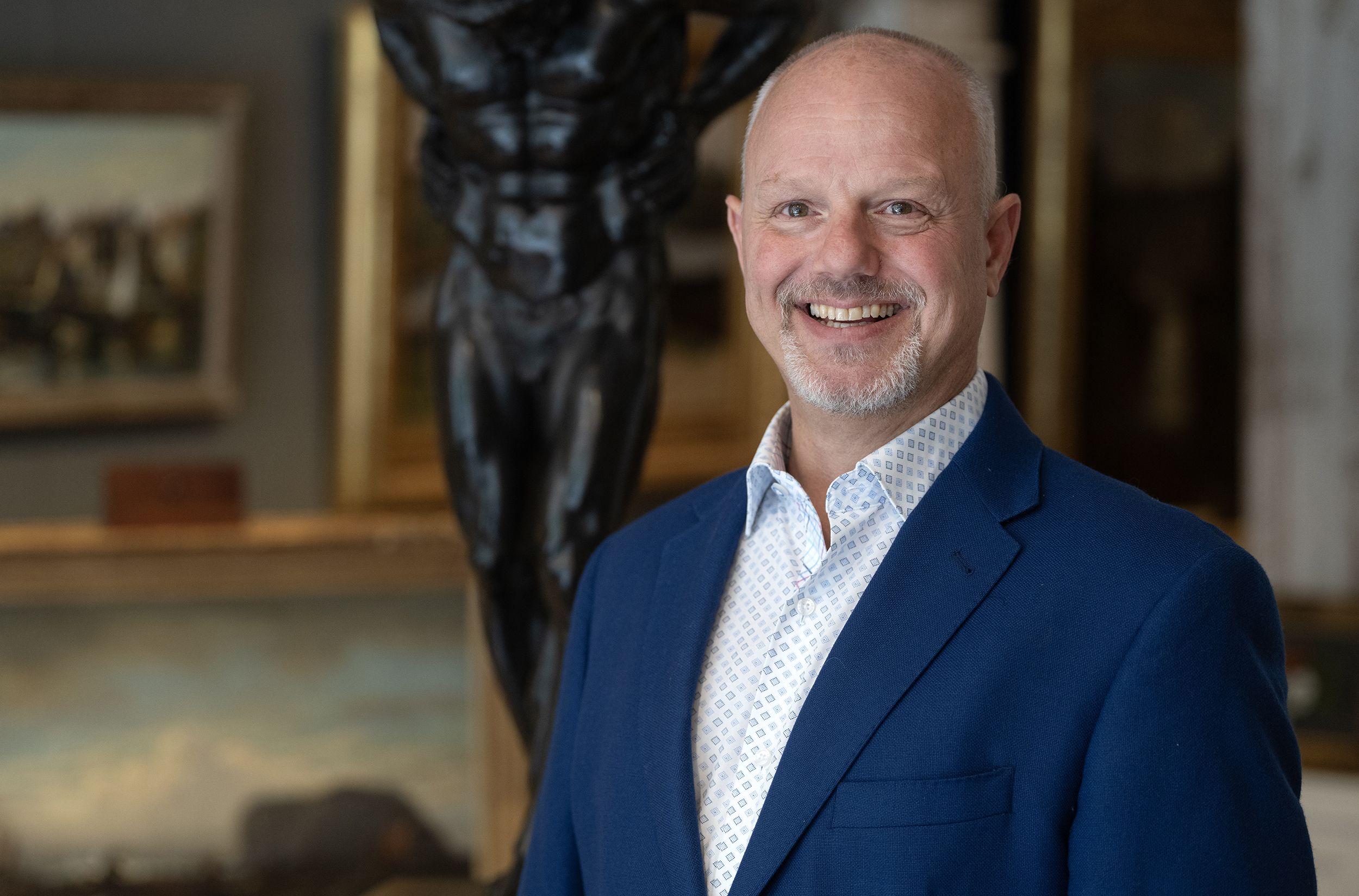
Stepping into Meyer Fine Art gallery, you may forget that you are in small-town-but-big-art Fredericksburg.
The period gilded frames, billiards table, antique furniture, and large landscape paintings first draw the eye, but the story behind every artwork is what sets this collection apart. And it’s part of the reason gallery owner and art historian and dealer Mike Meyer has set up shop on Caroline Street.
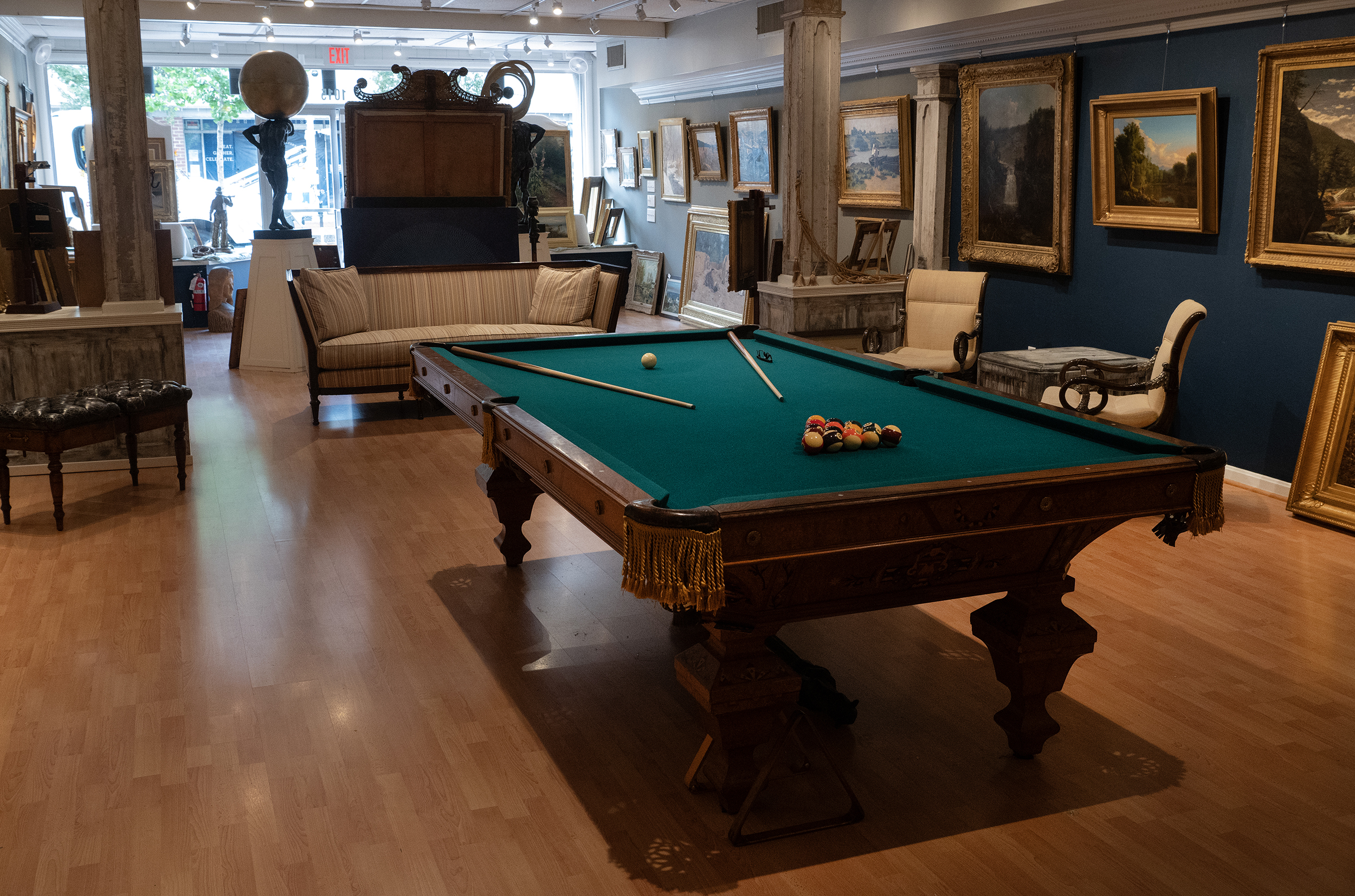
An ever rotating menagerie of artistic creations ranging from sculptures to paintings to furniture are always on display and available to own at Meyer Fine Art Gallery (located at: 1015 Caroline Street) Wednesday October 8, 2025. Photo by Jeff Kearney.
Meyer got his start in the art world nearly 30 years ago in New York at an auction house and later as a private dealer along with his wife, Julie. But during the pandemic, they got the itch to leave the area.
The Meyers moved to Virginia because he always considered this “home.” “It’s where I did my biggest growing as a human being,” he said. Wife Julie is a University of Virginia alumna, where she was a champion diver.
“The more I looked at this community, I realized this is the best spot in the state of Virginia,” Meyer said. “We are the only town from Washington, D.C., to Richmond that is a walking community — that is shocking, amazing. It’s a beautiful place with cafes, wine bars … and a great main street called Caroline.”
In 2023, they opened their gallery on Caroline Street. An avid historian, Meyer is drawn to works of early America, presidential art, artists from the Hudson River School, western landscapes and works that tell a story.
He feels it is his job to preserve those stories and the artwork.
“I am only a steward,” Meyer said. “My job is to preserve this stuff because a lot of these paintings I buy don’t come in looking like this. There’s a lot of restoration work, there’s a lot of framing, there’s a lot of stuff behind the scenes to make a painting look like this but we have to remember, we only preserve this for the next generation because we’re not going through the eye of the needle carrying any of this stuff.”
The crown jewel in his collection are the works of Robert S. Duncanson, a Black Hudson River School artist who primarily painted landscapes.
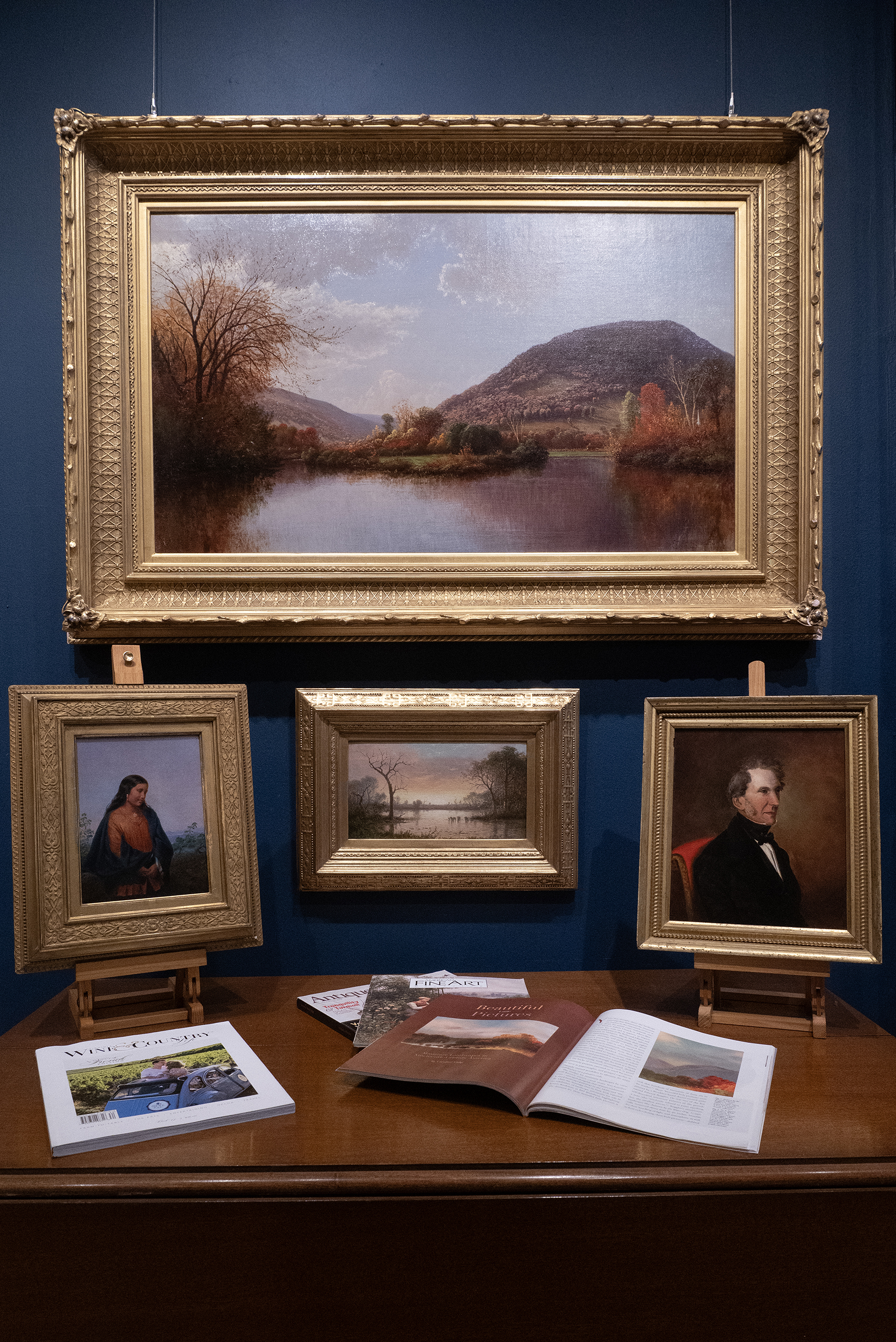
This piece (top) is also by a Hudson River School artist, “Autumn New York Landscape” by Edward Willard Nichols, along with a portrait of President John Tyler (bottom left).
“We’re known for our collection of Robert S. Duncanson, one of the first academically trained African American artists,” said Anne Flythe, marketing and public relations manager for the gallery. “In June 2023, we did our first exhibition, which was on Duncanson and his southern travels. We were the first people to tell his story about his travels through the South in the antebellum period. A Black man before the Civil War, painting all over the South. You can imagine how crazy hard that is.”
The exhibition included 36 of Duncanson’s paintings and drew worldwide attention.
Meyer is something of an expert on all things Duncanson. “It’s never been known that he was an Underground Railroad artist,” he said.
Through researching the artist, Meyer explored what he calls the false narrative that Duncason “left his race”, a theory that was popularized among scholars. “In every single census, being a light-skinned Black man, his skin tone was actually called sallow. Sallow is a very interesting color. You can never pass (as white) because people know you’re something,” he said, referring to racial classifications of the period.
Duncanson self-identified in census records after 1850 as mulatto because of his mixed heritage. “In the census of the 19th century, you are either white, you’re Black or mulatto and there is no exception to the three,” said Meyer. “I know because I did the work.”
American abolitionist art has been largely overlooked by institutions, Meyer said. His gallery includes several examples of paintings with subtly coded imagery of bondage and freedom. “A Friend of a Friend,” painted by Hudson River School artist Richard Hinsdale in 1855 depicts a Black man talking to a group of white children. Meyer says the man is a runaway slave asking children how to find a contact in the Underground Railroad — the reactions on the faces of each child communicate suspicion on seeing a Black man traveling alone in the antebellum period.
A painting by Quaker Francis Williams Edmunds depicts a hidden room with a poster of a Black boxer above a white family’s living area. “We are looking at a hiding spot,” Meyer said. “This is a famous American artist who’s a Quaker. Why hasn’t he ever been researched for his Black imagery and meaning?”
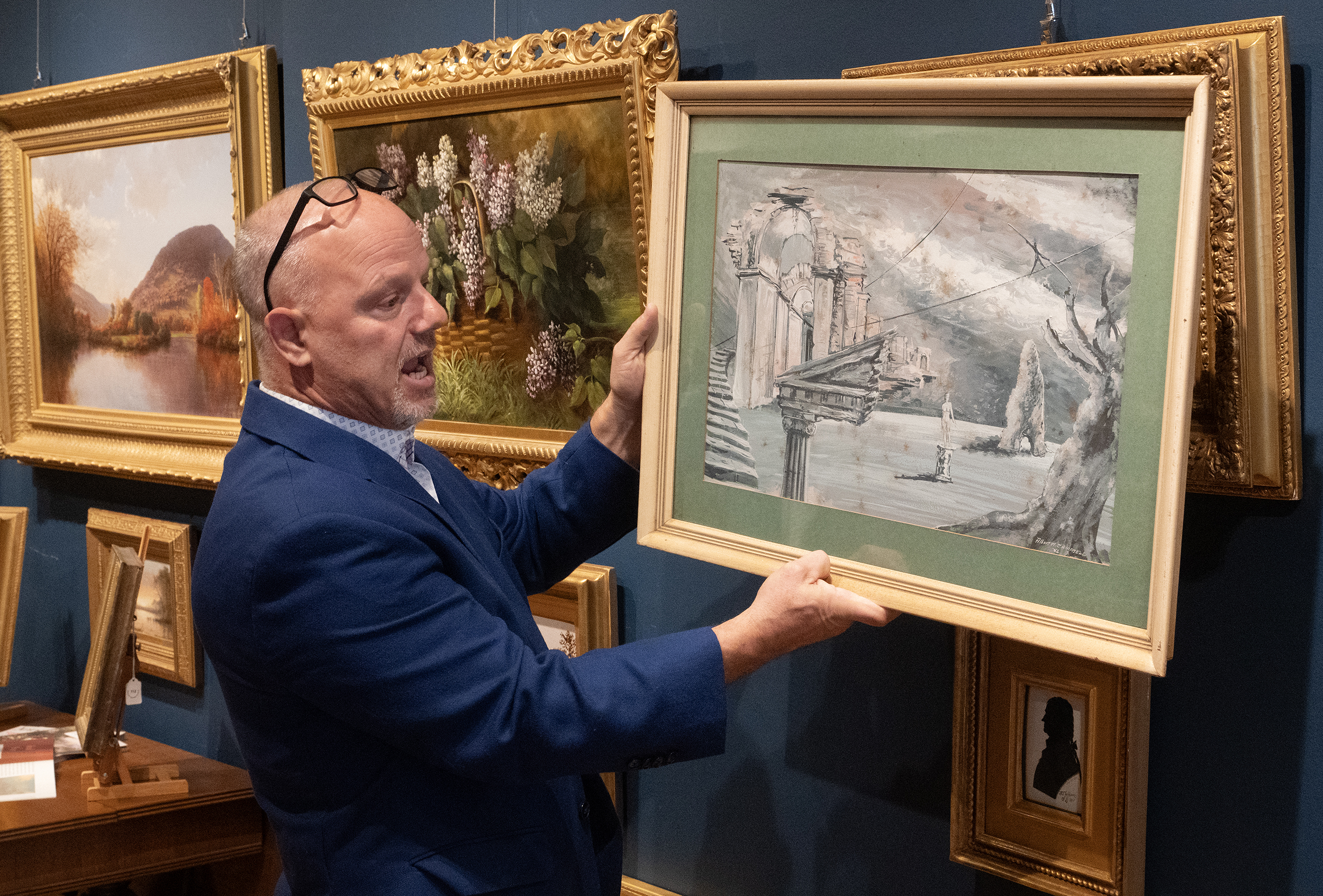
Gallery owner Michael Meyer discusses a painting that’s available for purchase done by a local artist who had been influenced by Salvador Dali’s early 1940s stay in Caroline County. Photo by Jeff Kearney.
Meyer hopes to one day give the abolitionist movement more exposure through a dedicated exhibition in the future.
In the meantime, Meyer and Flythe are undertaking a new initiative to make collectors of us all.
Their latest initiative is educating would-be art collectors on how to start their journey at any budget, with a curated selection of master works focused on quality and timeless elegance. The goal is to serve as a resource and guide to aid aspiring collectors grow their investment.
“We had a lot of visitors when we first opened who would ask us how we got all these paintings and they were asking the questions that somebody wanting to start a collection would ask,” Flythe said.
The gallery began with a social media series on questions to ask when buying a painting and things to consider when collecting. The gallery website now features a digital collectors guide and will host a holiday exhibit called A Season for Collection beginning Nov. 7.
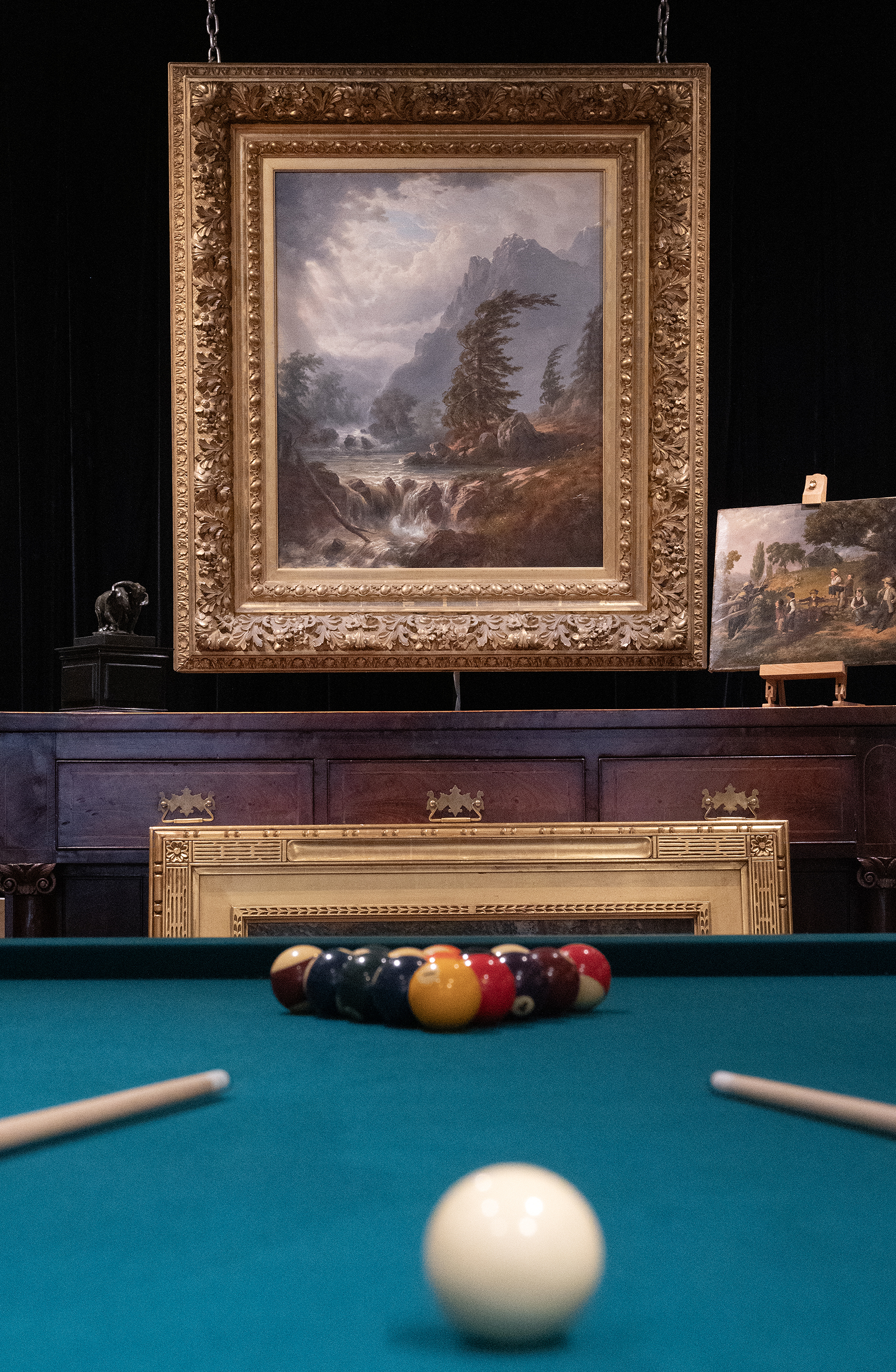
A painting by Alexander Francois Loemens, “The South Sister Mountain, Oregon” is one of Meyer’s favorite pieces in his gallery because of the depth seen in the clouds. Photo by Jeff Kearney.
This seasonal exhibition celebrates the art of collecting: whether taking the first step toward building a personal collection or refining one over time. The Start Your Collection category on the gallery website features paintings under $5,000 for new collectors.
“It’s really targeted to our visitors,” said Flythe. “And we add new information based on questions new collectors ask us, like recently someone asked about buying unsigned paintings.”
“You don’t want to be the person that walks past the Mona Lisa, right”” Meyer said “It’s not a signed painting — and let me tell you, somebody great painted it.”
Meyer hopes visitors to the gallery take a chance on bringing art home. “It’s about the beauty and how it hits you.”