After moving the former Potomac Nationals to the city of Fredericksburg in 2021, the Silber family sought to learn more about the history of baseball in the region.
Fredericksburg Nationals President Seth Silber told a group of baseball players and enthusiasts during a meeting at Virginia Credit Union Stadium earlier this spring that he was immediately intrigued upon learning about the Fredericksburg Frogs — a local all-Black team that starred on ball fields throughout the region from 1919 through the early 30s.
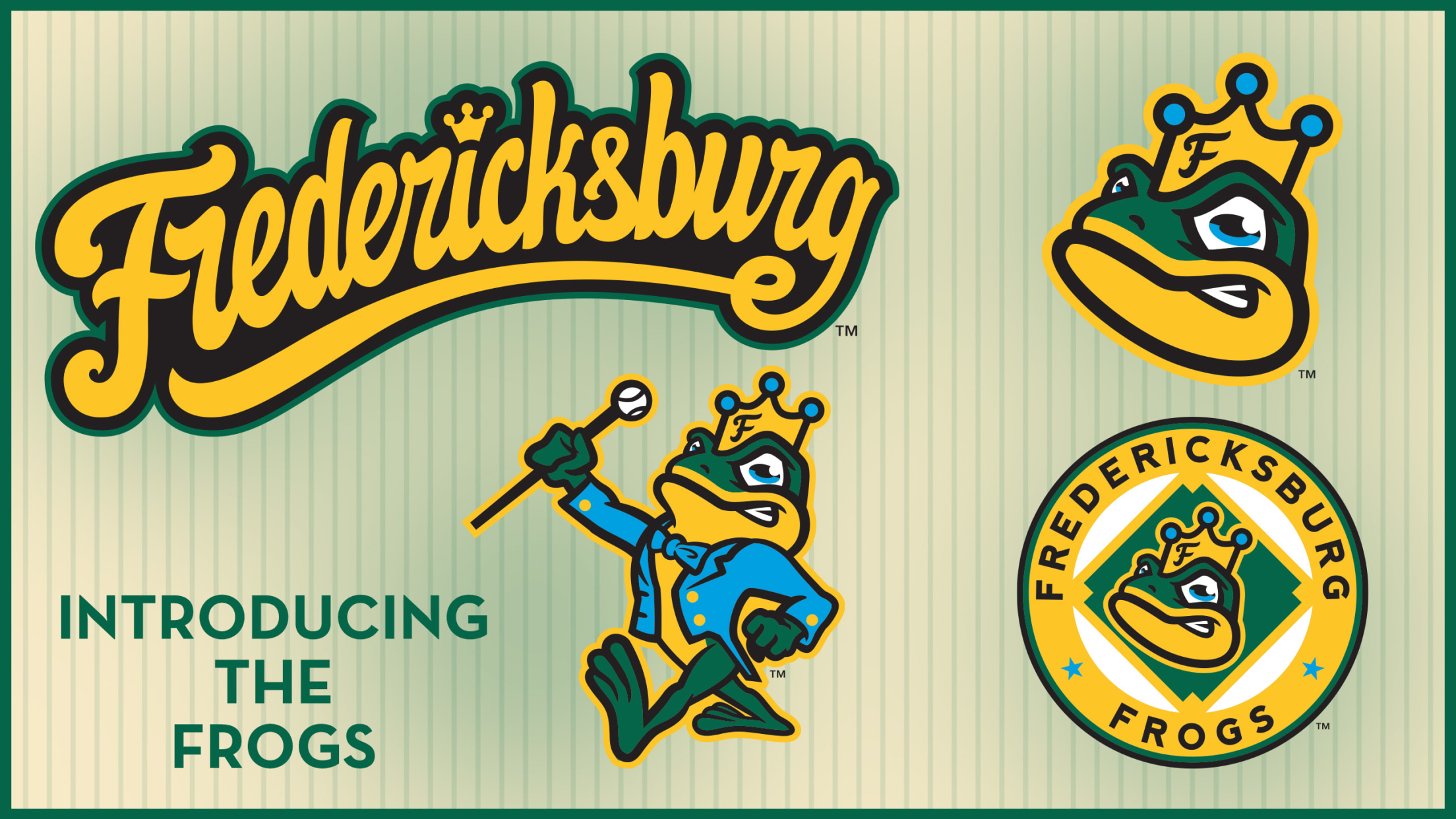
The FredNats went on to create a logo and began periodically playing games as the Frogs in 2025. But Silber was even more inspired when area history buff Eunice Haigler informed him that the Frogs weren’t alone.
There was a tradition of talented Black baseball players from counties in the Fredericksburg area gathering on Sunday afternoons after church for ultra-competitive games that united the communities.
“It’s a great tradition,” Silber said. “When I met Eunice a year ago, I learned that [the Frogs were] just the tip of the iceberg. There were all these other community teams and then I learned about Eunice as a child going to these games next to the Red Robin. I went and visited and stood by the property and it’s just an incredible story.”
Silber and Haigler are working on a project called: “The Intersectionality of Black Baseball, the Juke Joint, and the Community.”
Their goal is to produce a documentary and a book about how baseball was an integral part of the Black experience in the Fredericksburg area during segregation. Silber and Haigler are also working to identify possibly as many as 60 fields in the region that hosted the contests — and they hope to restore one into a baseball diamond.
“It’s going to be an ongoing process until we get these stories told and get it recorded,” Haigler said, “because if not, we’re going to lose this history.”
Several members of the Black baseball community during that era talked about the role the sport played in their respective upbringings during a forum at the Fred Nats’ stadium in April on Jackie Robinson Day.
Of particular significance was Red Robin, a former restaurant off U.S. Route 1 in Caroline County, just south of the Spotsylvania County border, which hosted games, and served its famous fried chicken.
“If the bag wasn’t greasy, the chicken wasn’t hot,” Haigler said.
They also mentioned Walker’s Inn — now the site of Stafford Hospital — and the Terrell property in Orange County, among other fields.
Bruce Tyler, a Caroline native, noted that his father started baseball teams called the Red Robin Hornets and the Red Robin Yellow Jackets, which played from the 1940s through the 70s.
“Black baseball was the thing that unified us through the counties of Spotsylvania, Caroline, King George, Culpeper, and Orange,” Tyler said. “That was the language that unified us.”
While the rivalries were often heated, the players bonded after being selected for the regional all-star team, which played against teams from other areas. Tyler said every locality had approximately 10 teams, and the games on Sunday was a social outlet during a time Black people had to rely heavily on one another.
“It was more than just the game of baseball, the socialization we had been counties,” Tyler said. “It wasn’t only a rivalry between the boys in the country and the boys in Fredericksburg. But when Sonny Dyson started the high school all-star team, we had players from [all around] all on one team. So, we got to know each other in a different kind of way and we became friends. We didn’t have that intense rivalry anymore. So, it did more than just develop our baseball skills.”
Area fans were able to see future Major League Baseball all-star Al Bumbry, a King George native, as well as Lew Beasley, a Caroline native, who was drafted by the Baltimore Orioles in the second round of the 1967 MLB Draft, and had a 25-game stint with the Texas Rangers in 1977.
His nephew, Tony Beasley, later became the third base coach of the Rangers when they won the World Series in 2023, and now coaches for the Pittsburgh Pirates. While Bumbry and Lew Beasley were unique talents, they weren’t the only standouts.
“There should’ve been a lot more guys in our area to play professional baseball,” Tyler said. “But the time wasn’t right for a lot of African-American players.”
Tyler and others noted that baseball was no longer the sport of choice for Black athletes in the area in the 1970s. Softball took over the recreation scene in the region because it was more family friendly, they said. Basketball also grew in popularity and eventually baseball became more expensive to play.
Spotsylvania native James Dyson also said integration inadvertently had a negative impact.
“Not that integration in and of itself is bad,” Dyson said. “But it did a lot to decimate our resources and our reliance on each other, and the community.”
The FredNats play every other Friday night as the Frogs. That includes the contest against the Salem RidgeYaks this Friday, which is also Juneteenth. Haigler noted that many of the Black all-stars of yesteryear have thrown out the first pitch on Frogs nights, including 96-year-old Johnny A. White last month.
Friday’s game will also feature the Epsilon Rho Boule Foundation hosting an evening of Community, Legacy, and Celebration honoring the Fredericksburg Frogs and raising support for community-based initiatives.
Tyler expressed gratitude that Silber, Haigler, and others are working to keep the story of the Frogs and other Black amateur teams alive.
“It was about to be a lost story if you had not grabbed us and held on to it because I was trying to think of how many guys are still left,” Tyler said. “There’s not a lot of us.”
Seth Silber is the board co-chair of the Free Press. Board members do not influence newsroom operations.