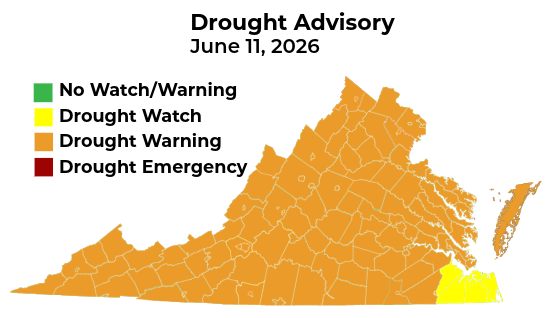
The drought goes on, and the outlook for relief is not especially bright.
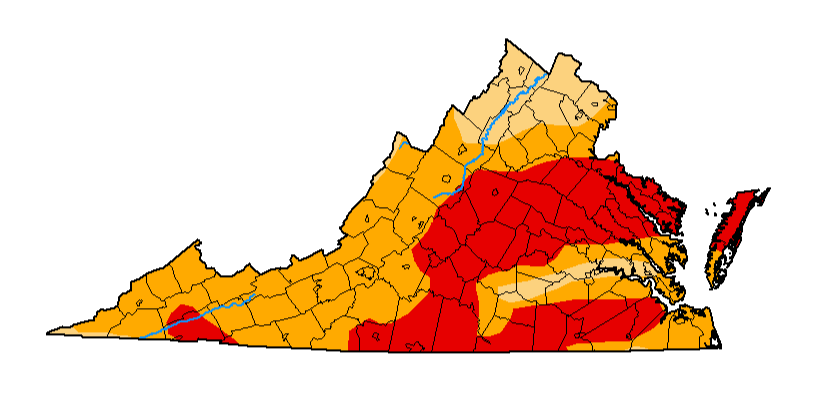

(Weekly NOAA-USDA Drought Monitor for June 9, 2026)
With only about half of its normal rain over the last 90 days, the Fredericksburg region has been in extreme drought, which is a category 3 out of 4 from the NOAA-USDA Drought Monitor, for about a month. Fredericksburg is not alone, as streams and rivers are flowing dramatically lower than normal statewide, with small exceptions in the Shenandoah Valley and a few tributaries into the Potomac.
Using the Drought Monitor standard, known as the Palmer Drought Severity Index, Virginia is in its worst drought since 2008. Going back a little bit further, there were similar droughts in 1999 and 2002.
The Drought Monitoring Task Force at the Virginia Department of Environmental Quality met this week to assess whether or not parts of the state have moved into a drought emergency. For the moment, the current DEQ Drought Warning status continues in all areas of the state except for southern Hampton Roads, where a less critical Drought Watch continues.
Four criteria are considered by the DEQ when assessing drought: precipitation, groundwater, streamflow, and reservoirs. The lack of rainfall has been obvious, streamflow continues to decline, and more than half (13 of 24) of the state’s groundwater monitoring wells are dramatically below normal this time of year – specifically, below the lowest 10 percent of their lifetime observations.
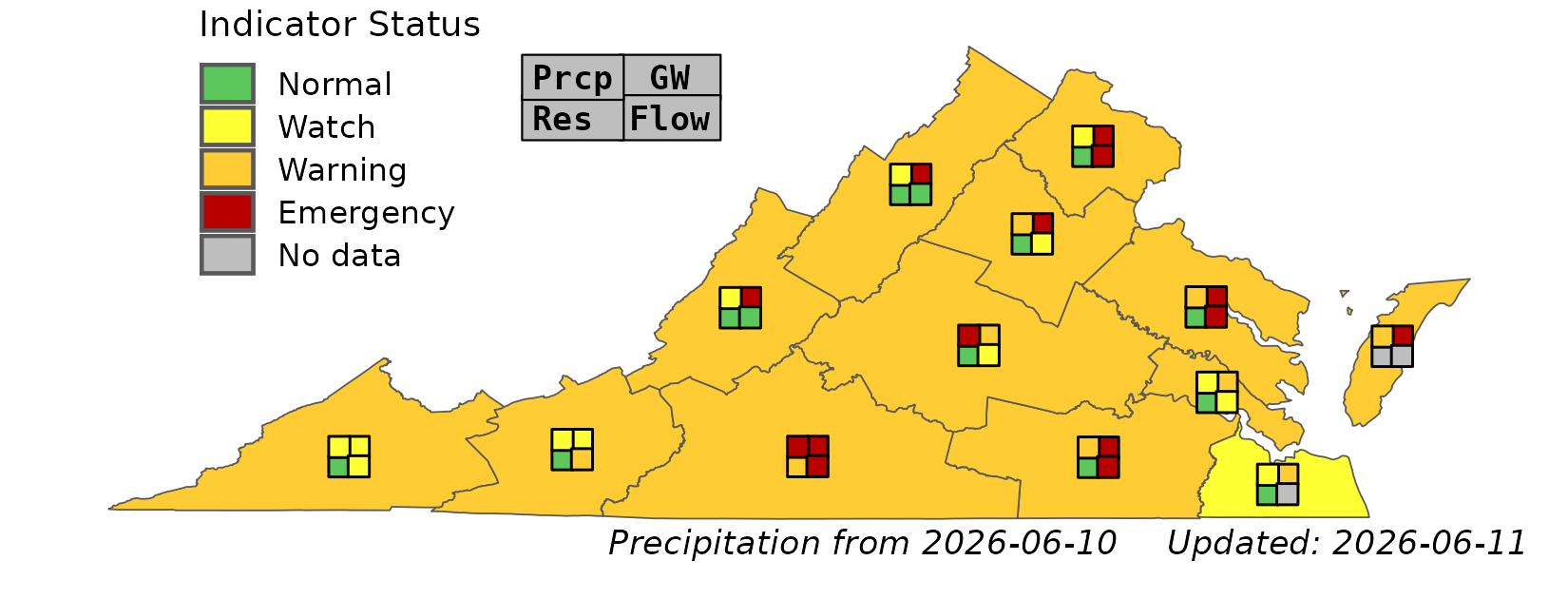
Virginia DEQ Drought Indicators by region as of June 11, 2026. Fredericksburg is immediately below the top, slightly offset to the left. (Image by DEQ)
Just west of Fredericksburg, moisture levels in the top three feet of soil are also below the lowest 10 percent of lifetime observations in most of Culpeper, Fauquier, Orange, and Spotsylvania Counties.
The heat of summer and the high sun angle increase evaporation rates, making soils dry out even more rapidly. As a result, the small scattering of showers and thunderstorms in the Fredericksburg region Friday and Sunday may give some temporary relief, but there is no obvious sign of a prolonged, multi-hour soaking rain into early next week.
To fully end the drought, 10 to 12 inches of rain would need to fall over the next month. A larger system will approach Fredericksburg toward the end of next week, but it is too soon to count on a significant amount of rain from it. Looking at trends over the next two weeks, the general weather pattern does not favor frequent rainfalls, so expect the drought to continue through the end of June.
The longer-term outlooks for July and August do not suggest especially wet conditions returning. There are hints in the long-range forecasts that July might be a little wetter than normal, so the drought would not necessarily deepen, but that would not provide enough rain to substantially improve it. As a result, Virginia will likely be in some level of drought for the rest of the summer.
On occasion, a tropical system will move into Virginia in late summer or early fall to help end a drought, but that is beyond any level of forecasting skill this far in advance. You may have read about the building El Nino, which has two noticeable impacts for Virginia. First, it tends to make the hurricane season less active than normal, cutting down on the chance of getting some drought-relieving rain. Second, it tends to make winters wetter (not snowier), giving optimism that this will not be a drought that lasts into next spring,
However, that does not do farmers much good in the short term.
The DMTF meets again in two weeks to reevaluate the status of the drought, and may upgrade to a drought warning in some regions of the state, triggering potential water restrictions.
Sean Sublette is a Virginia-based meteorologist and owner of Sublette Weather and Consulting.