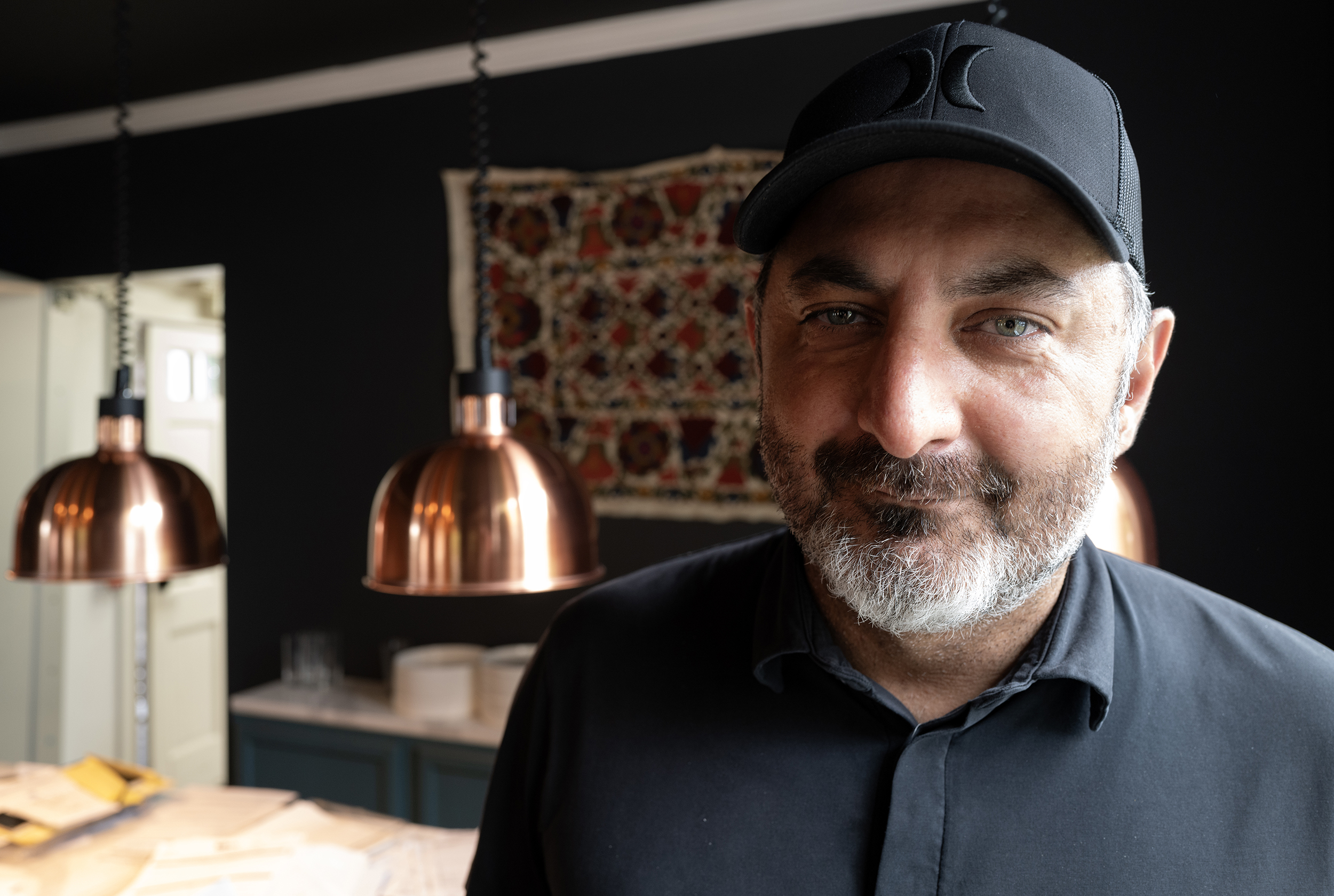
Centered along the dining room wall at Zadran’s Kitchen is a photo of roughly two dozen men.
They are clustered and carrying whips, and they sit mounted atop horses who appear more or less impervious to the desert sand churning beneath their hooves.
The scene depicted, explains Humayun Zadran, is buzkashi, the national sport of Afghanistan.
“Back in the day, when they killed a goat, they would fill up the skin with hay,” Zadran says of the carcass/ball, which is ultimately deposited in a scoring circle (provided you can get past the guys with whips).
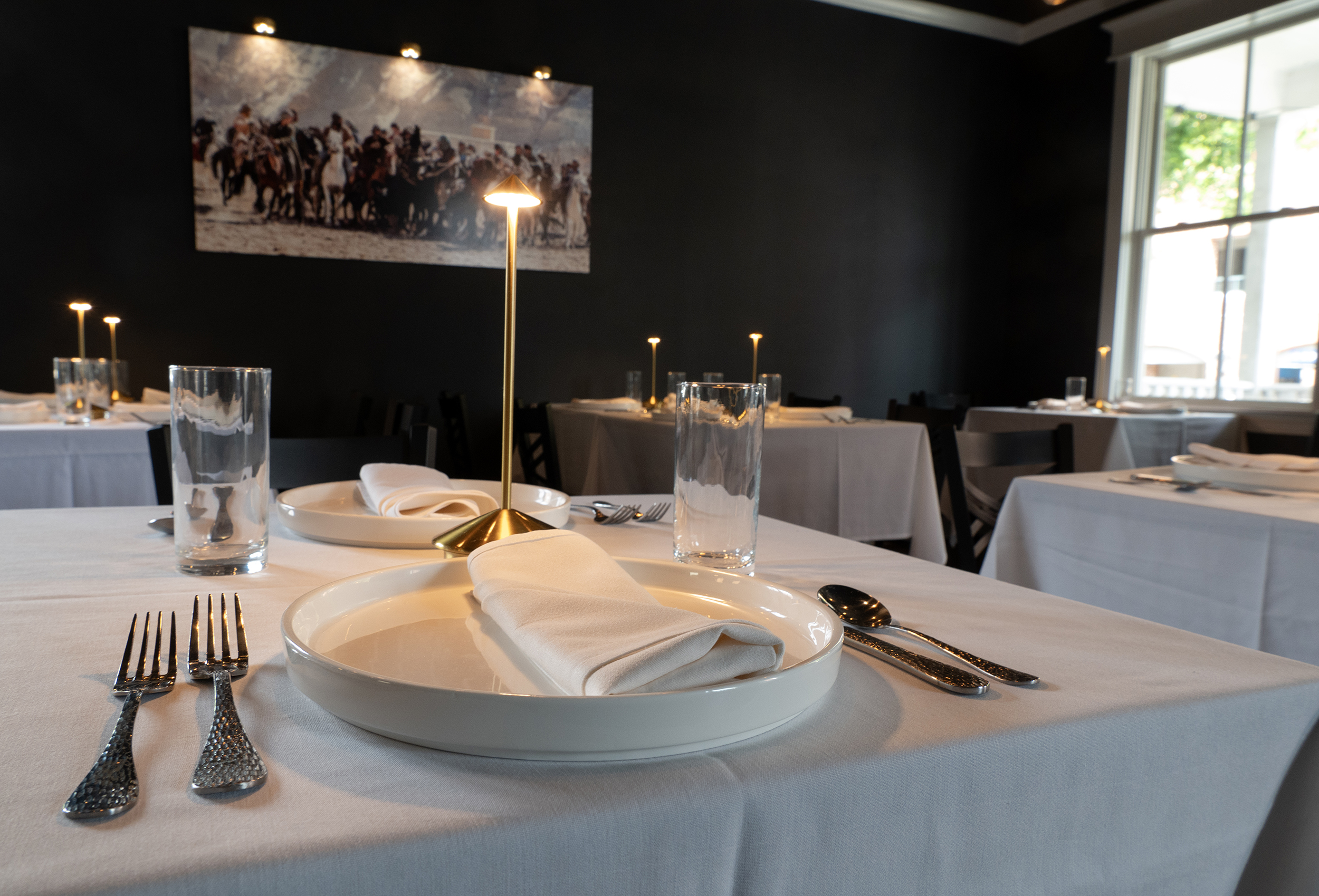
Zadran’s Kitchen, located at 104 Wolfe Street in Fredericksburg, Thursday, June 18, 2026. (Photo by Jeff Kearney.)
It’s clear Zadran appreciates the traditional, even if he hasn’t always been drawn to it professionally.
Here is a man whose first restaurant, Taste, specialized in burgers and pizza — in Kabul.
Here is a man who once opened a rock ‘n roll artists’ collective called the Venue in that capital city, which is not always known for its enthusiastic embrace of Western influences.
And, as of a month ago, here’s a man who is serving upscale Afghan tapas in downtown Fredericksburg.
A measure of success
Zadran’s eclectic tastes can be explained at least in part by his upbringing, the bulk of which was spent not in Afghanistan but in the Peshawar region of Pakistan, where his family settled after fleeing the Taliban decades earlier.
His family vacationed in Islamabad, the Pakastani capital city replete with fast food, chow mein and — at least in his recollection — a somewhat reasonable facsimile of Italian cuisine.
At home, cooking was a joyous endeavor — and one that transcended typical family roles.
“Everybody in my family used to cook,” Zadran says, “But seeing your father in a society like Afghanistan, where men do not cook at home, all the time kind of gives you this, how do you say, motivates you and you’re like, ‘This is something cool if he’s doing it.’”
Rice was a constant discussion piece: where to procure it, how long to age, soak and cook it.
“Even when I train my staff here,” he says, “I tell them you measure the hospitality of an Afghan host by the length of its rice.”
When Zadran returned to Afghanistan in 2001 following the American overthrow of the Taliban, “I started missing a lot of things that were not there,” he said.
Family-cooked meals, for one, but also the pizzas, burgers, tacos and Thai food of his youth. One day, while sitting in a Kabul park with three friends and not much to do, he hatched the idea for Taste, a fine-dining restaurant.
It was 2004.
The concept was solid, but “We didn’t know how restaurants worked,” Zadran admits. “We had always gone to restaurants, but never run a restaurant. So we had to shut it down and sell it after a while.”
His next venture appealed to Kabul’s artistic appetites as well. According to a 2015 episode of NPR’s Weekend Edition, Humayun opened the Venue in 2012 as a restaurant rock school and venue “with its blue lit stage and Led Zeppelin posters on the walls.”
The Venue quickly attracted expats like Humayun himself, filling open mic nights with the rare sonic blend of classic rock and traditional Afghan songs.
“All the younger generation, the artistic community and everyone started coming in,” he says. “Started painting the walls.”
This time, it wasn’t economic forces but political ones that forced Humayun — whose press attention had since grown to include Rolling Stone and USA Today — to pivot.
In fact, he relied on his journalistic connections to stay abreast of the Doha peace talks that preceded the Taliban’s looming takeover.
“I knew this was going to happen,” he says.
Cooking up a comeback
Nearly a decade after the NPR piece came out, Zadran was living in Arlington, by way of Kuwait, driving Uber and settling into life as a resettled Afghan refugee.
He’d left Afghanistan hours after the Taliban re-captured Kabul. Zadran originally planned to leave the country with an Indian visa, but that country revoked all visas when the Taliban took over the Indian embassy.
With each ride and passenger, the call of the kitchen — of running a restaurant — became harder to suppress.
“From day one, it was on my mind that this is the only thing that I know, and it can work in the U.S.,” Zadran says.
He heard about a contest in Washington, D.C. The event, hosted by Common Hood Hospitality, promised a free food-hall stall for the winner. Zadran knew the chicken qorma of his youth could win over American palates.
There was only one problem.
“I never cooked Afghan food back home,” he says, smiling.
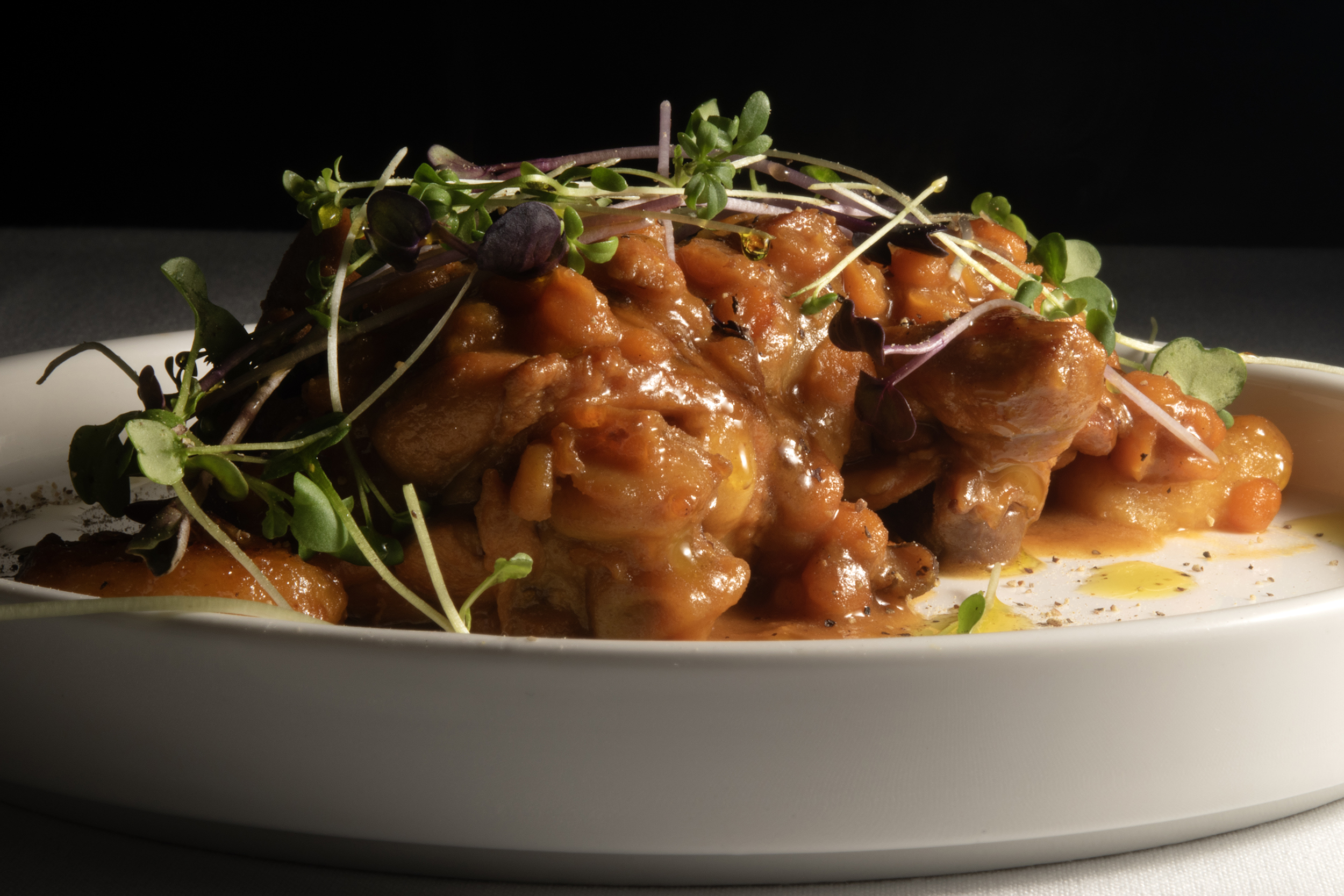
Zadran’s Kitchen Chicken Qorma is an iteration of the dish that he prepared for a contest in D.C.
Still, he finished in the top three, and parlayed the momentum of his performance into holding pop-ups with DC’s Hill East Burgers. The burger resulting from that partnership is faintly reminiscent of Afghan chapli kebab, with dried plum sauce and green chutney in place of, say, mayonnaise.
He launched a successful catering business through a shared kitchen in Lorton, anchoring the menu around his Qabeli palaw (Kabuli pulao), an indulgent rice dish featuring braised beef shank.
It was around that time that Zadran’s sister, Nargis Zadran, mentioned the booming farmer’s markets in Stafford and Spotsylvania counties. He joined both as a vendor last year.
The location on Wolfe Street came to fruition due to an owner who Zadran says believed in his vision for the space, a converted single-family home that last sold for $472,000 in 2002, according to Zillow. He also has a financial partner in the project, who wishes to remain anonymous.
“They wanted to work with me,” he says of the owners. “They knew about me. I didn’t spend a lot of money. I just painted the walls.”
‘He comes from the markets’
Those walls are dark blue, and beyond the sports photography, they convey a formality that’s obvious well before you scrutinize the linens and flatware.
At the appointed hour for our interview, Zadran’s kitchen help isn’t due to arrive for a couple of hours. He disappears behind a set of swinging kitchen doors through which only a bouquet of cilantro is visible.
When he reemerges, he’s carrying a plate of beet borani. The dish marries a familiar Afghan preparation — “you can take any vegetable,” he says, “and serve it on top of garlic yogurt. It becomes a borani.” — with the unlikely choice of beetroot.
The resulting experience is one of beautiful deconstruction; with each bite, the beets leech their color until the entire plate is overcome with swirls of sangria-toned cream. Pine nuts and dill fronds offer a grounding texture amidst the indulgence.
“Everything is made from scratch,” says Christian Zammas, the former owner of Katora Coffee who now works as Zadran’s general manager. “And I just, I had so much respect for that. And the concept of, you know, he came from the markets.”
To that end, Zadran has established relationships with the Fredericksburg Food Co-Op and several local farms.
“That’s the beauty of his lived experience,” Zammas says. “And he has all these different ingredients and preparations.”
Zadran’s point about the ubiquitousness of boranis is underscored by the second dish he presents. Like its cousin, the eggplant borani is also served cold, highlighting the freshness of the ingredients.
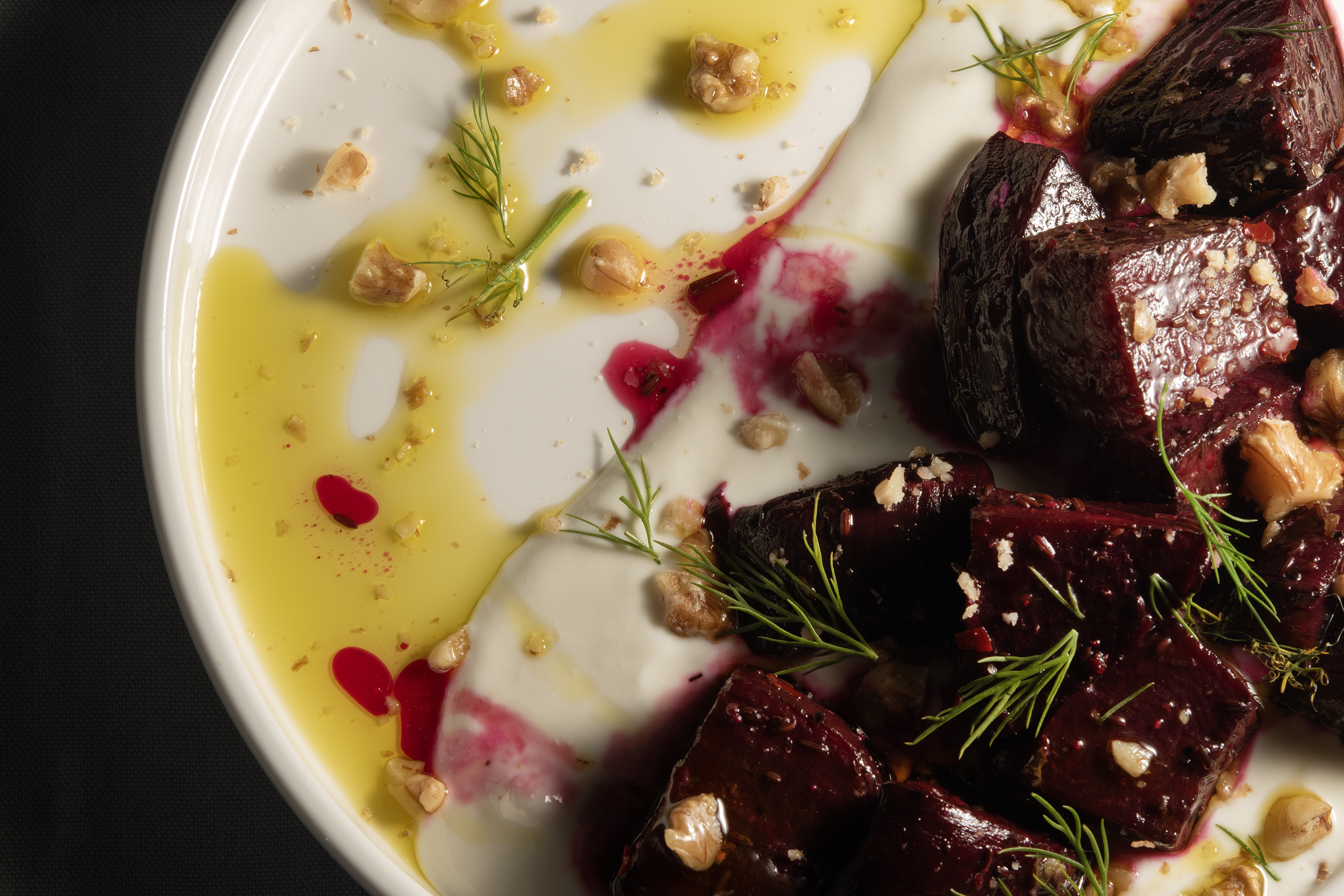
Zadran’s Kitchen’s beet borani is an example of a small plate served atop garlic yogurt and served cold.
His qorma is the textural treat, but surprisingly chicken isn’t the standout protein here; that honor belongs to the split lentils that stud the dish uniformly. They’re cooked al dente, he says, the antidote to a mushy curry.
Those in the local Afghan diaspora community will find themselves at home, Zadran assures.
But it wouldn’t be his restaurant if there wasn’t one small, subtle deviation from the traditional; in the weeks since opening, Zadran has transitioned the kitchen away from producing individual dishes to shareable ones.
“The food is Afghan, but the way I serve it, we Afghans want big plates,” he says with a laugh.