Not everyone considers themselves a history person. Kylie Thomson, Curator of Collections at the Fredericksburg Area Museum, hears that a lot — and she doesn’t buy it for a second.
IF YOU GO
What Remains: America 250 is Thursday, July 30 at 6:30 p.m. at the Fredericksburg Area Museum. Tickets are $9 for FAM members and $13 for non-members, with registration required. Proceeds support the museum’s programs, acquisitions, and the ongoing work of caring for its collection.
“I love when people come to me and they’re like, ‘I’m not really a history person,'” she said. “Oh, challenge accepted. I bet you are. Let’s figure it out.”
That playful challenge is at the heart of “What Remains: America 250”, the next installment of the museum’s ongoing event series, happening July 30, at 6:30 p.m. at the Fredericksburg Area Museum.
This event ties into Witness to a Revolution, the museum’s current exhibit exploring Fredericksburg’s role in the American Revolution and how the city has remembered that legacy over time.
“What Remains” is Thomson’s brainchild — a storytelling event built around a simple problem: the museum owns far more than it could ever put on permanent display.
“We only have so much space to put things out on display,” Thomson said. “So, I thought, what if we picked a topic and brought out some of that stuff that wasn’t out?”
Past installments have covered Dark History, the Civil War, women’s history, and the Masonic Lodge. There’s also a companion podcast of the same name, where Thomson and FAM’s acting president Clarissa Sanders spend 15 minutes digging into a single artifact at a time.
This round’s theme is Fredericksburg’s role in the American Revolution — a trickier subject than some of the series’ past topics, since Revolutionary-era artifacts are far rarer than, say, Civil War relics. Thomson has had to work with a much smaller pool of objects for this event, pulling together what she could find.
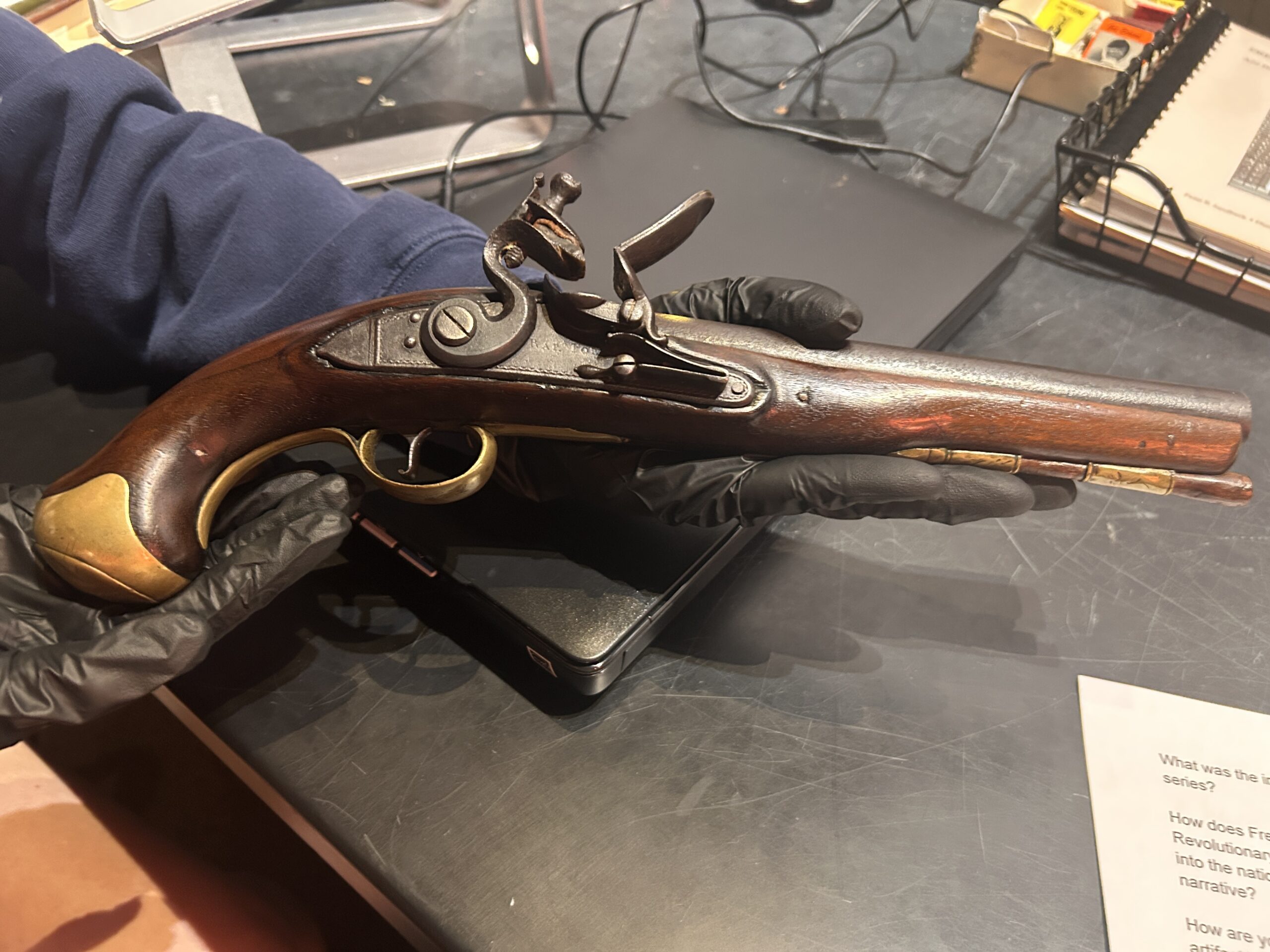
Even so, what she’s pulled together tells a rich story. Among the featured pieces is a 65-pound tobacco weight from Hunter’s Iron Works, a Fredericksburg foundry and forge that played a quiet-but-critical role manufacturing weapons for the American cause. There are letters from General George Weedon to the Marquis de Lafayette, tying the town directly to some of the Revolution’s most recognizable figures. And there’s a Rappahannock Forge pistol, purchased at auction by an anonymous donor who felt it belonged back home in Fredericksburg.
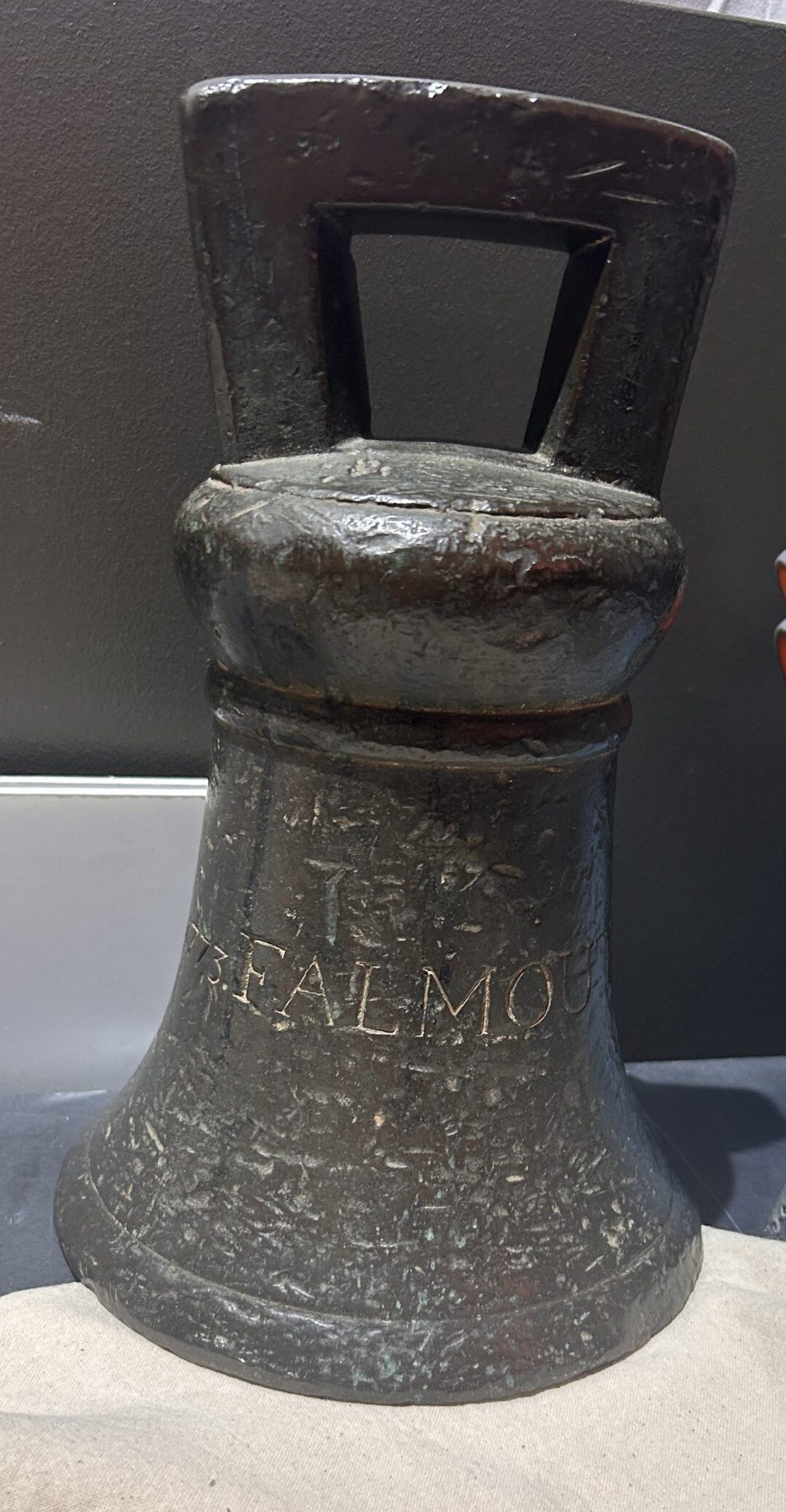
A tobacco weight from FAM’s archives.
One of the newest additions has its own origin story. A woman in Pennsylvania called the museum after a family member passed away, saying it had been his wish that a musket in the family’s possession go to Fredericksburg.
When she offered to ship it, Thomson refused.
“No, no… I’ll come and get it,” she said. She drove to Pennsylvania and back to retrieve it personally.
“It was the longest drive of my life,” she said. “Every little bump, I’m like, no, no, no.”
But “What Remains” isn’t only concerned with what survived — the project is equally focused on what came after. Thomson wants visitors to consider the parts of the story that often get glossed over.
“A lot of times we don’t talk about what happens after the war,” she said. “We’re just, yes, it happened.”
Witness to a Revolution traces how the Revolution’s ideals of freedom echoed forward into the Civil War and the Emancipation Proclamation, and examines how local loyalists fared once the fighting ended — not particularly well, as it turns out.
For the stories where artifacts simply don’t exist — a reality for many communities history hasn’t always preserved fairly — Thomson doesn’t let that stop her from telling them.
“These invisible artifacts are just as important as the tangible ones,” she said.