Chuck Frye has never been a big fan of action movies.
Frye, the vice mayor and Ward 4 representative on Fredericksburg’s City Council, didn’t give much thought to that specific aversion until he was in his mid-30s, and a spate of shootings rocked the city.
“I really started putting everything in perspective, like, hold on, wait a minute,” said Frye of the incidents, which took place in 2013. “I just kind of had a breakdown.”
Frye was 8 years old when he witnessed a murder. The then-third grader was playing in his grandmother’s yard in Fredericksburg’s Mayfield neighborhood when an argument ensued between two men.
“A guy shot another guy, and he dropped, and that was it,” he recalled.
Only, the trauma endured. Frye felt like no one was doing anything to stop gun violence or to help those it affected.
He started to wonder: “What if there was a gun somebody didn’t want around,” he wondered.
Frye was first elected to City Council in May 2014, took office July 1 and shortly thereafter marched in the office of then-City Manager Bev Cameron.
“I went right into his office, and said, this is what I wanna do,” he said.
The City held its first gun giveback event in December 2014, and in the past dozen years, residents have turned in more than 260 firearms. On July 1, a new state law took effect that uses Fredericksburg’s program as a template for localities across the state.
House Bill 702, patroned by Del. Joshua Cole (D-Fredericksburg), “allows for any county or city law-enforcement agency and any town law-enforcement agency to develop policies and procedures to implement either a firearm give-back program or a firearm sell-back program by January 1, 2028, and annually thereafter.”
The law also requires law enforcement agencies to send an annual report to the state police.
‘The option is there’
The city’s first giveback event netted 64 firearms over the course of four hours, recalled Frye.
“That was the buy-in right there for me. But,” he added, “And I’m serious about this, too — if we held an event, and had zero turned in, I think it’s still great. Because the option is there.”
Frye remembers another year when a heavy snowstorm forced the cancellation of the scheduled giveback event.
“But then I was thinking, what if people were holding a gun, waiting to bring it?” Frye said. “Because we had this date set. And I went up there and just hung out at the lobby of the police department up front.”
Sure enough, he recalled, a couple of cars made their way slowly up the snow-covered driveway. Their drivers were armed: the giveback event netted 11 forfeited weapons that day despite the inclement weather.
“When that happened, I was like, ‘Oh buddy,’ because we weren’t really expecting anything,” he said.
The guns are ultimately destroyed, explained Frye, but not before being sent to a state forensics lab that tests to see if they’ve been reported stolen or used in a crime.
During the giveback, the city’s police department has an armorer or firearms instructor on hand to receive the weapons. Free gun locks are also available.
While it started as an annual, standalone event, Fredericksburg’s gun giveback program has since evolved into something that’s accessible all year long.
“People can walk into the police station at any time,” said Fredericksburg Police Chief Betsy Mason. “If there’s guns lying around the house or there’s guns for whatever reason, they can turn them in, no questions asked.”
Aiming for a bigger impact
No sooner had Fredericksburg established its own program — first overcoming a legal challenge — than Frye began thinking bigger.
“I had exhausted all my energy, because from day one I had reached out to any and everybody,” he said. “I was reaching out to the governor’s office. I was reaching out to the President of the United States, you know what I’m saying? And yeah, nobody wanted to listen.”
It took several years, but Frye finally found a sympathetic audience with Cole, who was first elected to the General Assembly in 2020.
Cole recalls Frye reaching out to him shortly after his election asking how to take his program statewide.
“I was like, ‘Oh, the only thing we need to do is just put the bill in,’” Cole said. “Well, I reached out to the drafters, and they didn’t have any label. They didn’t know what to do with [the program].”
Nothing happened with the bill, so when Cole was re-elected in 2024, he tried again.
This time, the bill received pushback from both the National Rifle Association and Virginia Citizens Defense League, Cole said.
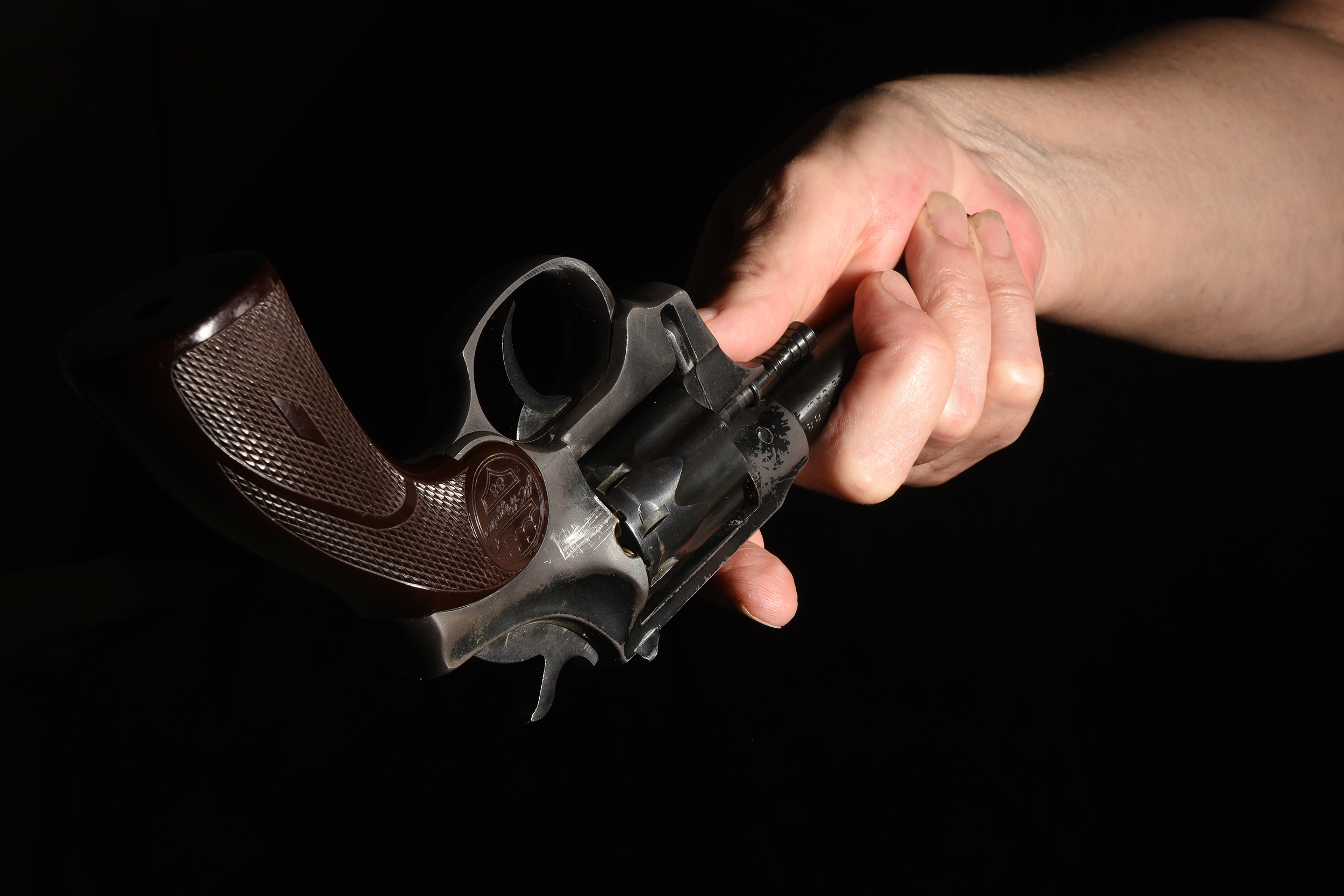
Fredericksburg’s gun giveback program was started by City Councilor Chuck Frye back in 2014. (Photo by Jeff Kearney.)
One concern centered around how proceeds from a gun buyback program could be utilized by law enforcement agencies; another dealt with the prospect of scanning weapons’ serial numbers to determine if they’d been stolen and could be returned to their rightful owner.
Cole said that the legislature addressed both in the House version of the bill. Its text states that “proceeds generated from the sale or auction of a returned firearm shall be deposited into the locality’s general fund or used solely for the administration of the locality’s firearm give-back program or firearm sell-back program.”
The opposition didn’t surprise Frye; he noted that the city was sued back in 2014 and had to overcome a legal hurdle before holding its first giveback event.
Mason, meanwhile, stressed the voluntary nature of the program.
“You know, we’re not taking people’s guns, but it is something that people do utilize,” she said.
‘We are the example’
In June, Frye was in Richmond for a ceremonial bill signing that marked the culmination of a cause he’s championed for more than a dozen years.
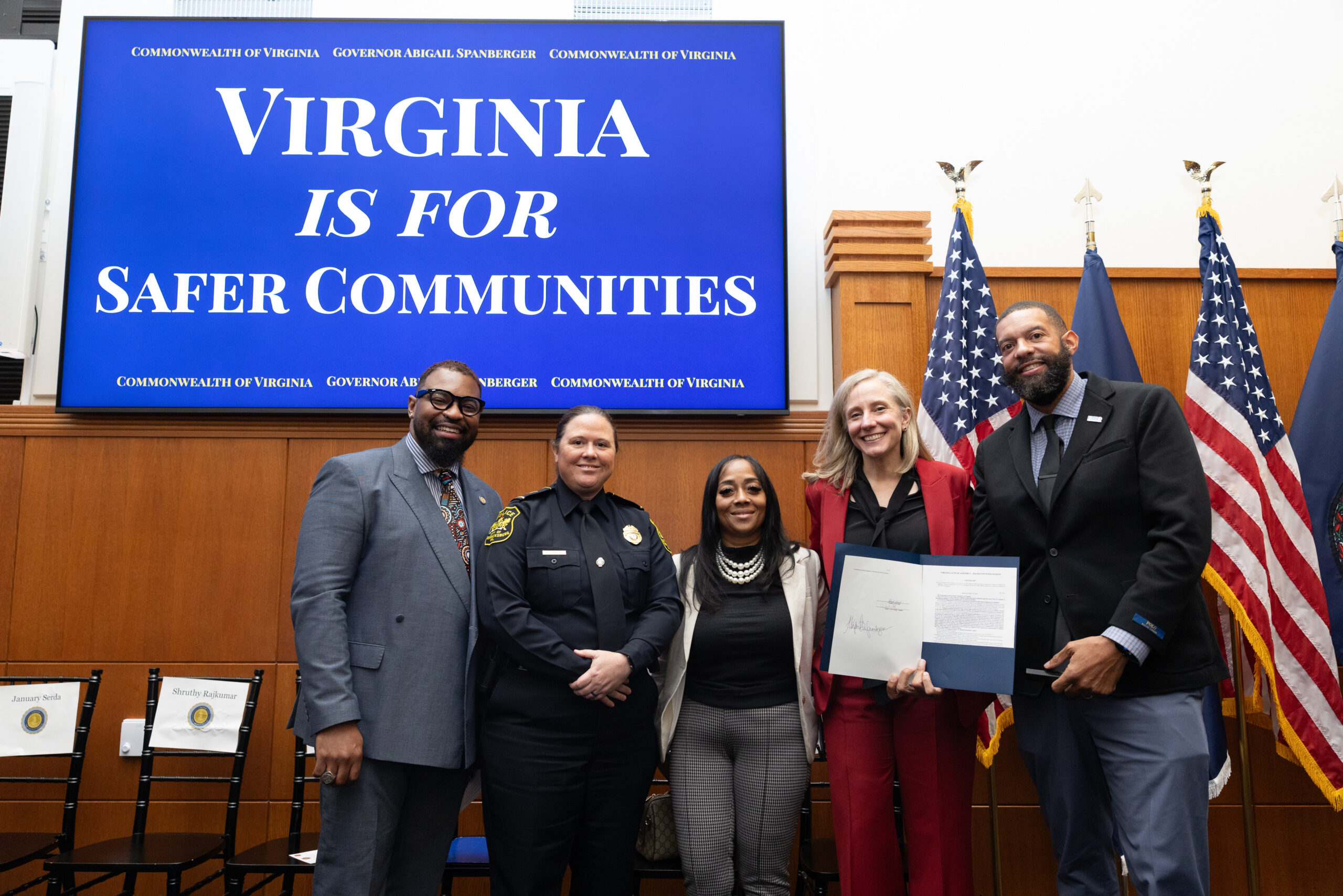
In a posed photo, Frye stands shoulder-to-shoulder with Gov. Abigail Spanberger, with Cole and Mason also in the frame. The program he created — the issue that drove him to pursue public office in the first place — was finally in the spotlight in a meaningful way.
What bothered Frye the most about how governments typically respond to gun violence was their reactive nature, a press conference convened in the wake of a tragedy.
By contrast, he views the gun giveback as a preventative measure.
“In my mind, it’s something that you can do before the act, before something bad happens, right?” he said. “And if there is some type of issue happening within a household or a family or your surroundings — what do you do when a kid finds a gun? Do you get your kid arrested because he found it?”
The city’s gun giveback has received some media coverage over the years, and, if localities are curious about how to get their version off the ground, Frye encourages them to witness the program in action.
“I think that the best part of us doing it is that we are the example,” he said. “So, instead of folks sitting around a roundtable saying, ‘the governor said we have to do this, right?’ They can actually sit down and say, ‘Well, what did Fredericksburg do? How did they do it?’”
Editor’s note: This is an installment in a series of stories about youth gun violence in the Fredericksburg area and what is being done to address the issue. See previous reporting here.