Three years ago, when former Mary Washington Healthcare CEO Mike McDermott approached University of Mary Washington President Troy Paino with the idea of starting a medical school, Paino was hesitant.
“To be quite candid with you, I said I didn’t think we had the bandwidth,” Paino said Tuesday, during the Fredericksburg City Council work session. “Coming out of the pandemic, a lot of challenges on our plate. I thought it was a heavy lift, and I didn’t think it was something that we really had the resources at that time to undertake.”
His stance was initially the same when McDermott’s successor, Dr. Christopher Newman, broached the subject after taking the helm of the healthcare nonprofit earlier this year.
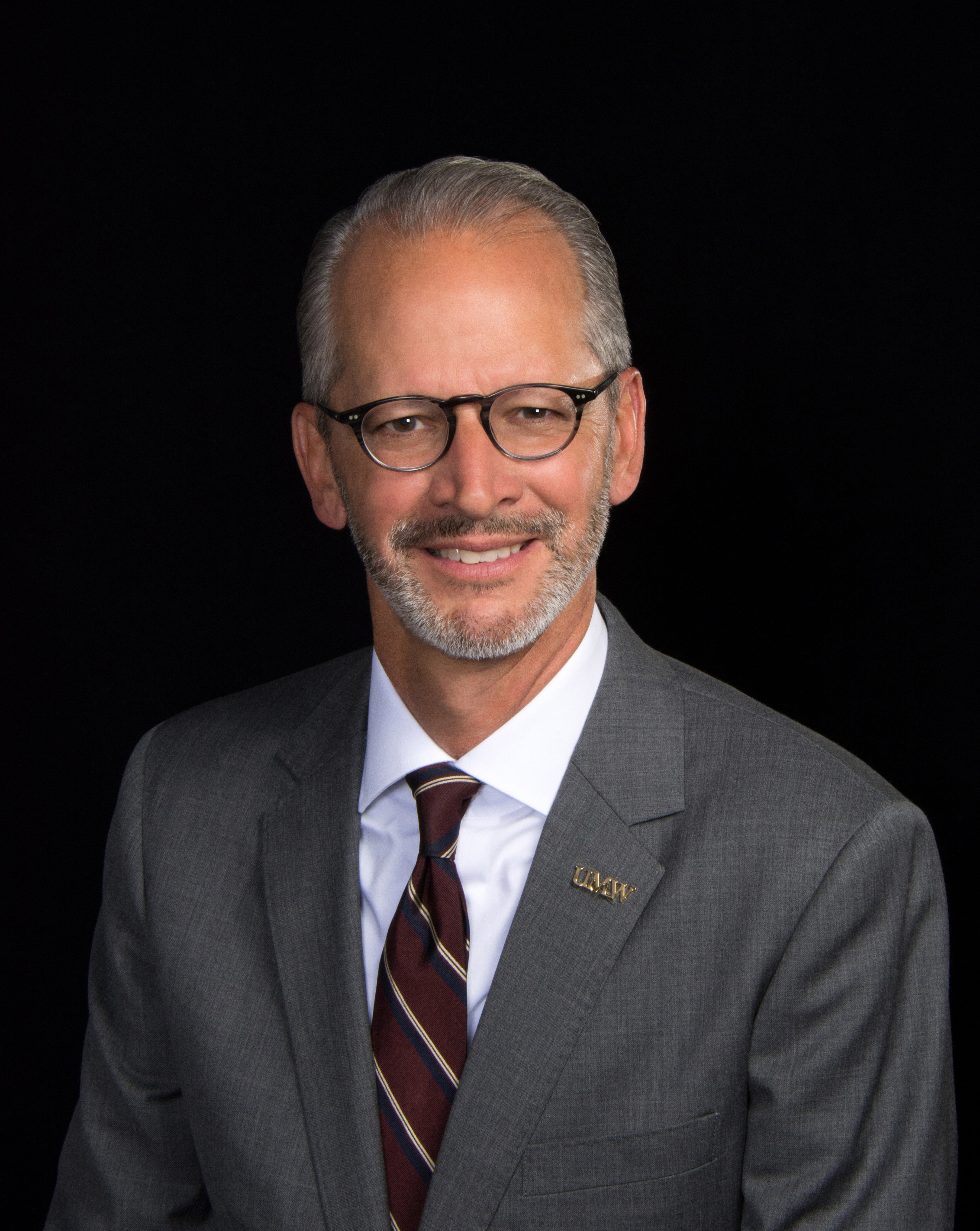
UMW President Dr. Troy Paino
But then, Paino said, he started reflecting: about UMW’s role in the community, its status as the only four-year degree institution in the Fredericksburg region — and a pressing community need.
According to Newman, the Fredericksburg region ranks in just the second percentile nationally in physicians per capita.
“For every 100,000 residents, we have roughly 40 positions,” Newman said Tuesday. “The average community, which is short-staffed in itself, has about 80… Anybody here who is looking for a primary care physician or a certain specialist and where your doctor requires that you move to the area, you realize how difficult it can be to find access to care in this region.”
The Mary Washington College of Medicine (tentatively named) will look to change that. On Tuesday, Newman and Paino said that their organizations have pursued a feasibility study about launching a medical school focused on training community physicians.
The feasibility study “came out very favorably,” said Newman, who also sits on UMW’s Board of Visitors. “Not only in the assets of the health system, we have what it takes to train future physicians, resources of the university, and the need. So when you pair all those together, it’s imperative.”
Newman said that the medical school will be the first in Northern Virginia and will differ from more research-oriented institutions, like the UVA School of Medicine. Those medical schools, which are generally housed at “R1” research institutions, are highly specialized, and only 25% of their graduates return to practice in the Commonwealth, he added.
“It’s a very different thing,” Newman said. “So UVA is training cardiologists that may go and practice at Hopkins or Harvard or train the next generation. They are not training, for the most part, community physicians. They’re going to be committed to taking care of patients in the community. And there’s nothing wrong with being an academic center or at least academic research.
“That’s all great. But that does not solve the problem that we have.”
Dr. Stephanie Goldberg, MWHC’s Vice President in charge of medical education, said that the new medical school presents an opportunity to diverge somewhat from established models, which have traditionally placed a heavy emphasis on diagnosis.
“I joke with people that at some point — I know we don’t have a Whole Foods here — but if you put your hands on the thing and you can pay for your food that way,” Goldberg said. “At some point, we’re going to walk into the doctor’s office, we’re going to put our hands on something, and it’s going to say, here are all the diagnostic things that you have. So the whole focus of medicine is going to change.
Newman said that partnerships between similarly-sized entities have thrived elsewhere, including a collaboration between Cape Fear Valley Health and Methodist University in Fayetteville, N.C.
Added UMW provost Tim O’Donnell: “We’re resisting the notion that there’s a model out there that we want to adopt because we want to be innovative.”
Paino emphasized that the joint venture “is in the bottom of the first [inning], adding: “it’s early days.”
In an interview following the work session, the university president said that the upcoming General Assembly session will be critical as UMW seeks state funding for its end of the venture. Then, there’s the matter of building a curriculum and hiring faculty.
“They [MWHC] have already been saving quite a bit of money on the private side and will continue to,” Paino said. “We need some money to help toward that effort on the public side. We’ll work on those sorts of things over the next 12 to 18 months.”
Disclaimer: Mary Washington Healthcare is a sponsor of the Free Press. Sponsors do not influence newsroom operations.