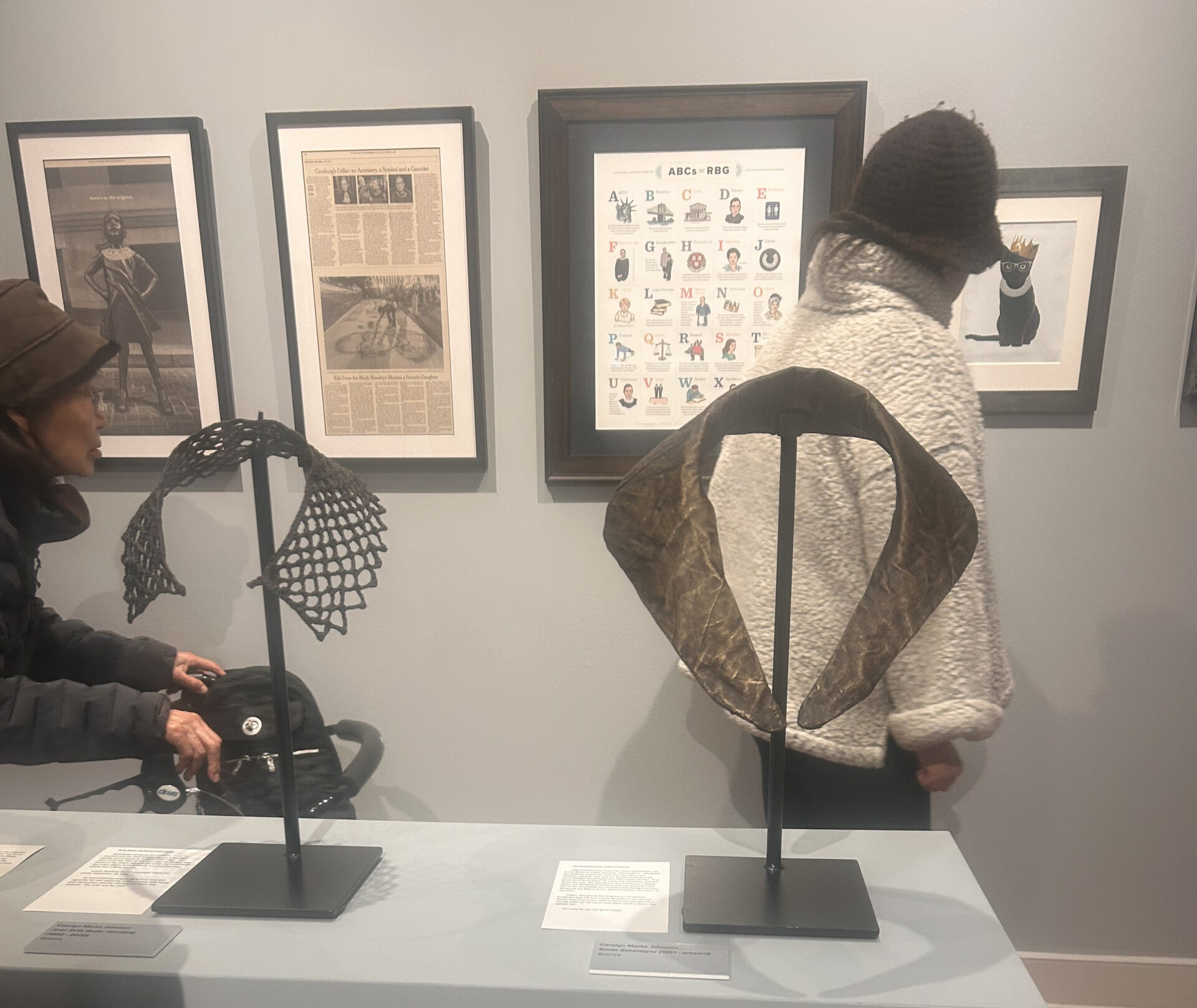
Carolyn Marks Johnson has had a prominent career in many fields: law, journalism, research and education.
A retired judicial judge in Texas, she has authored a series of eleven books, was awarded a fellowship to study the presidential papers of Lyndon Johnson, taught at the University of Houston and now teaches as an adjunct professor at South Texas College of Law.
IF YOU GO
Carolyn Marks Johnson: Woman, the Spirit of the Universe is on display thru March 15. UMW Ridderhof Martin Gallery, Wed-Sat 10 a.m.-4 p.m.; the galleries will host “20 Women in 40 Minutes,” a Lunch and Learn on March 11 at noon.
Perhaps her accomplished past is what prompted her to showcase other women’s accomplishments in her exhibit currently on display at UMW’s Ridderhof Martin Gallery.
“Carolyn Marks Johnson: Woman, the Spirit of the Universe” features 23 collars, hand-stitched and cast in bronze. Each collar honors the lifelong achievements of brave women who contributed to equality for all. In addition to the collars, this traveling exhibition includes newspaper articles, books and paintings that invite further exploration and conversation about the achievements of women such as Margaret Brent, Dorothea Lange, Ruth Bader Ginsburg, and Harriet Tubman, among others.
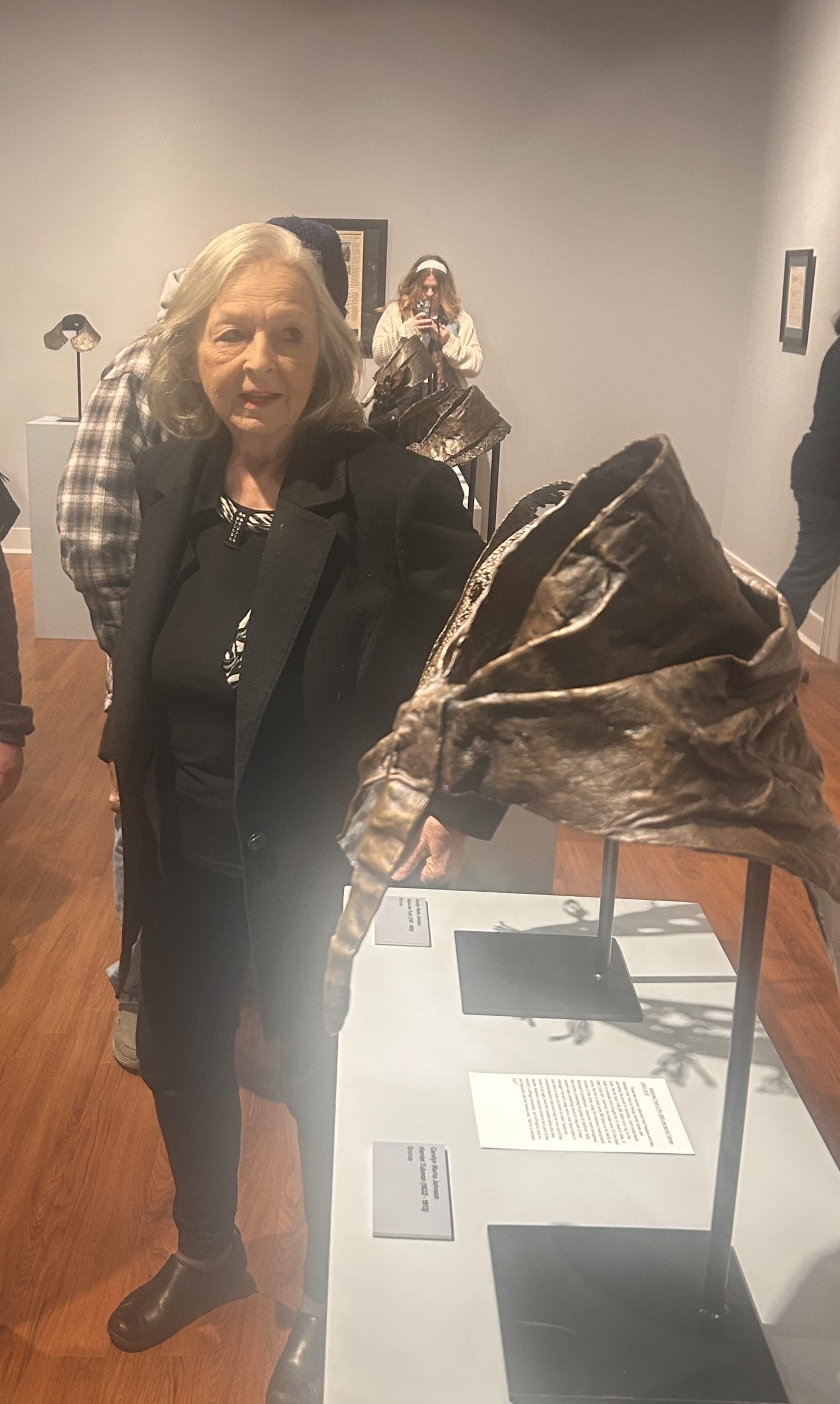
Artist and retired judge Carolyn Marks Johnson talks to guests at the opening of her exhibit at UMW Ridderhof Martin Gallery. (Photo by Kathy Knotts)
Johnson sees her role as a storyteller whose mission is to educate the public on lesser-known female figures in American history. She conveys the stories of overlooked women like Deborah Sampson Gannett, who fought with Patriot forces during the Revolutionary War, and Elizabeth Blackwell, who applied to a dozen medical schools before she was admitted and became the first woman to earn a medical degree in the U.S. in 1849.
Johnson said she is continuously looking to add more influential or interesting women to her exhibit.
“I have to do biographies of them first,” she said in a conversation with Tracy Stonestreet, UMW director of galleries, last month. “And then I have to reduce it down to a page. That’s the hardest part of my work.”
She hinted that Betty Ford or Elizabeth Dole may inspire the next sculpture she adds to the collection.
From the stories of the women she encounters, she works on creating a collar that represents either something that woman wore or was from that time period. With help from her family, she crafts a cotton collar that is then cast in bronze.
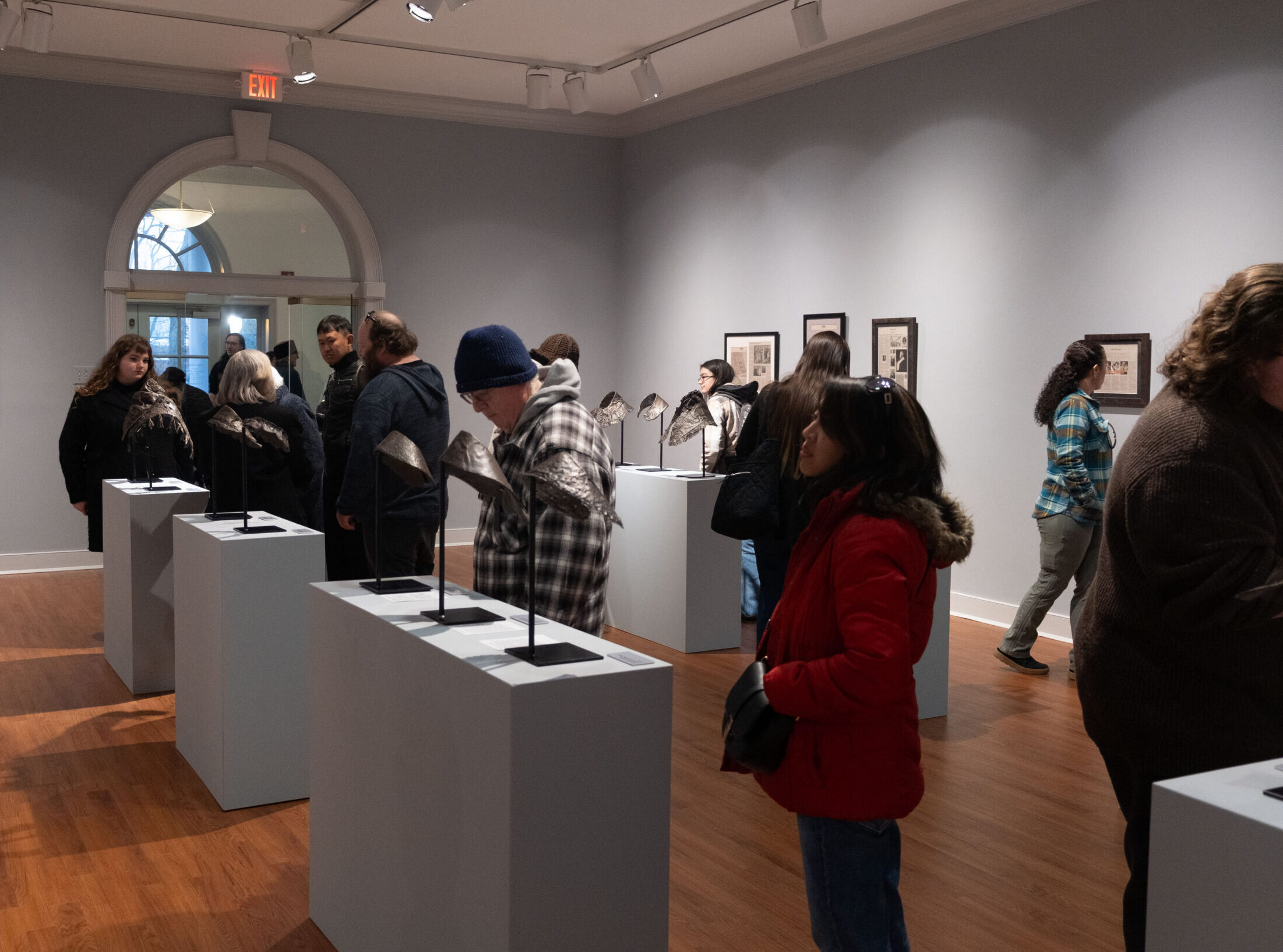
(Photo courtesy UMW Galleries)
“I wanted something that was permanent,” Johnson said. “The entire thing should be dedicated to my mother because she was a seamstress… and at the age of 17, she became the legal guardian for her six brothers and sisters. She was barely out of childhood herself and she took on that responsibility. She was just a remarkable woman.”
Johnson took art classes at the Glassell School of Art in Houston in the early 1990s and writes in her artist statement that “everything in her life became richer just from the experience of making art.”
At her first sculpture class, she recalls thinking she would need to drop the class because she “didn’t do well with machinery.” So, she made collars.
Turning the collars into bronze sculptures is an extremely labor-intensive, hazardous and time-consuming process that involves dipping them repeatedly into wax, burning away the original fibers, casting in bronze, firing in kilns and then extensive cleanup. With every piece, Johnson works through the process deliberately and thoughtfully, knowing that the destruction of the original textile is an appropriate sacrifice that mirrors the struggles and endurance of the women she is honoring.
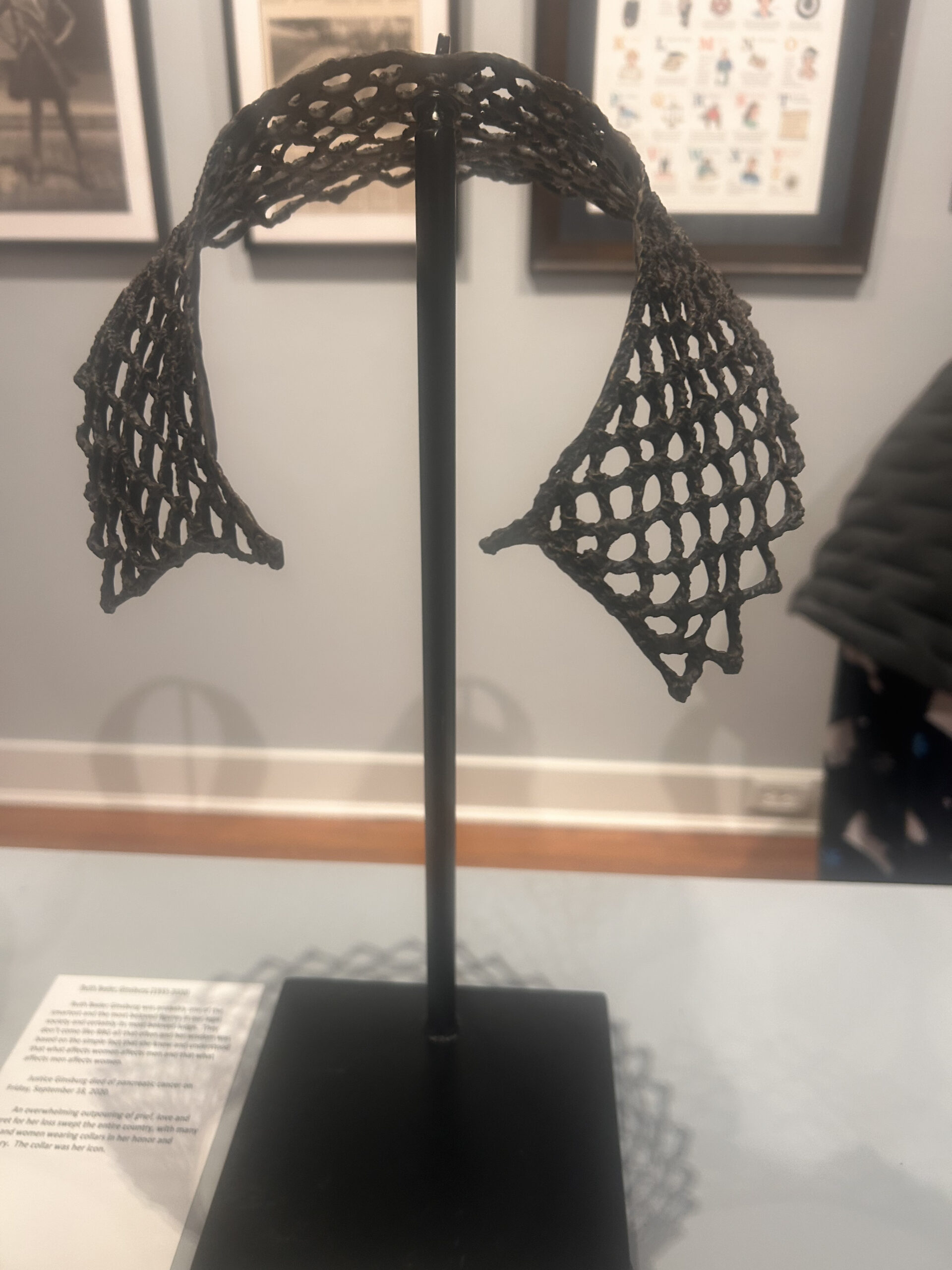
Ruth Bader Ginsburg collar. (Photo by Kathy Knotts)
While some of the collars are replicas of actual clothing worn by her subjects, some are more metaphorical. Ruth Bader Ginsburg’s collars on her Supreme Court robes became iconic and gave Johnson something to replicate.
A teacher advised leaving them as cotton and ribbon creations, but Johnson knew “these women deserve something more.”
So she cast her creations in bronze so that they — and their stories — would endure. She calls the collars priceless, not commodities, and they are not for sale.
She hopes that word of mouth will get these women’s stories out, and guests will see the art as a vehicle for collective memory, inspiration and social progress.
The women, she said, have waited 400 years for somebody to listen to them.