Correction: A proposed data center project in southern Virginia is expected to be valued at $100 billion, not $100 million as previously reported.
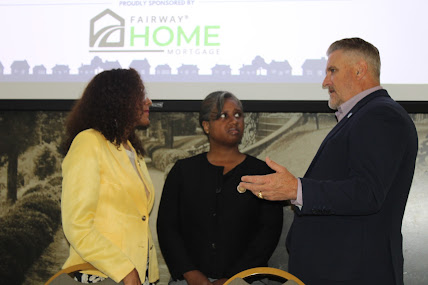
Members of the General Assembly representing the Fredericksburg area gathered at Gari Melchers Home and Studio in Stafford County Wednesday morning to discuss their views on the affordability crisis that drove much of the debate during the most recent legislative session.
Republican Sens. Bryce Reeves and Tara Durant were joined by Dels. Phillip Scott (R-Spotsylvania), Stacey Carroll (D-Stafford), Joshua Cole (D-Fredericksburg), Nicole Cole (D-Spotsylvania), and Margaret Franklin (D-Prince William).
At the event sponsored by the Fredericksburg Regional Chamber of Commerce, the lawmakers opined on a litany of issues facing the region and the Commonwealth, including the cost of housing, childcare, healthcare, workforce development, and rural transportation.
However, Reeves, who represents part of Spotsylvania County, said it’s all moot if the General Assembly doesn’t pass a budget soon.
Reeves said an impasse on data center tax credits between the House and the Senate is part of what’s preventing a budget from being passed.
“The House, to their credit, is holding fast on trying to keep those tax exemptions or cuts into the budget,” Reeves said. “However, the chairman of Senate Finance is pretty strong-headed about trying to backfill those money deficits. The governor has vetoed every bill that potentially could come through that would give us revenues from marijuana to gaming. You name it; she’s vetoed it. So, we’re at an impasse and I can’t tell you when we’ll have a budget, and for the first time in 15 years, we might actually shut the government down.”
Local governments and school divisions remain in flux awaiting the final budget from the state.
But Franklin, who represents part of Stafford in addition to Prince William, said Reeves’ assertion about a potential government shutdown is unfounded.
“There’s no talk of shutting the government down,” Franklin said. “We obviously are having some very high-level, important discussions around the budget, but that is to be expected with the kind of economic situation we’re in here. Other states are looking at the same challenges with regards to some of the federal cuts.”
Reeves acknowledged that “Trump economics is hurting Americans right now” because of the conflict in the Middle East.
However, he noted that former Gov. Glenn Youngkin left a $2.7 billion surplus when he departed office. He said that, in his opinion, a recent decision to rejoin the Regional Greenhouse Gas Initiative, and the passing of a landmark Paid Family and Medical Leave program will damage Virginia’s economy in the long run.
“It sounds good, but it’s going to cost everyone in this room who’s an employer quite a bit,” Reeves said of paid family and medical leave. “I think it’s a tax, quite frankly, that’s going to hurt a lot of businesses.”
Reeves shared some anecdotes that cause concern for the economy in the Commonwealth. He said one developer of a $100 billion data center project in southern Virginia is prepared to walk away if the General Assembly changes the tax structure for the industry.
“We’ve got to do some things to sure up for our business community that the promises that were made in other administrations — regardless of party — we’re going to hold to those and not just yank the rug out,” Reeves said.
The moderator of the forum asked each panelist to describe one piece of legislation from this past session that was most important to them.
Joshua Cole talked about HB1279 which was folded into SB388 and co-sponsored by Sen. Jeremy McPike (D-Prince William), who was invited to be a part of the panel but didn’t attend.
The bill aims to address affordable housing by allowing churches and nonprofit organizations that own land to build affordable housing on the property by-right, avoiding a rezoning process dictated by local governments.
Cole nicknamed it the “Faith in Housing” legislation and the ‘Yes, in God’s Backyard Bill.”
Fredericksburg-based Micah Ecumenical Ministries Executive Servant Leader Meghann Cotter proposed the bill to Cole, “and here we are almost six years later, and we were able to finally get it across the finish line,” he said.
“I wasn’t expecting that bill to take off as much as it did during this session,” Joshua Cole added … “It has a four-year sunset, so we’re going to see what some of these churches and non-profits can do in four years. Hopefully we’ll make it law permanently by 2030.”
Nicole Cole highlighted HB422, which prohibits a public utility authorized to furnish water and sewer service from filing an application for a rate increase more than once in any three-year period.
Aqua Virginia, Inc., a water and wastewater utility company that services part of Caroline County, was the impetus for the bill. A group of Caroline residents, particularly in the Lake Land’Or and Lake Caroline subdivisions, have expressed displeasure for several years about the cost and quality of the water from Aqua.
Nicole Cole also joined residents by testifying to the State Corporation Commission, which regulates utilities, about issues with Aqua. After Nicole Cole’s November election and subsequent swearing in ceremony, the former Spotsylvania School Board representative had no idea utilities would be one of the first issues she’d tackle as a delegate.
She said she was taken aback by the cost of Aqua water — as high as $105 per month for a one-person household — and the safety and quality of the water, which is often described as brown or discolored.
“This is really an affordability issue for our most basic and essential need for water,” she said … “High water and sewer bills impact your businesses by increasing housing costs and decreasing appreciation, reduces tax revenue for the locality and it impacts a family’s ability to afford other essential services. That is one [issue] I’m going to be continuing to work on throughout this year so we can provide some relief to our communities in House District 66 but also throughout the Commonwealth.”