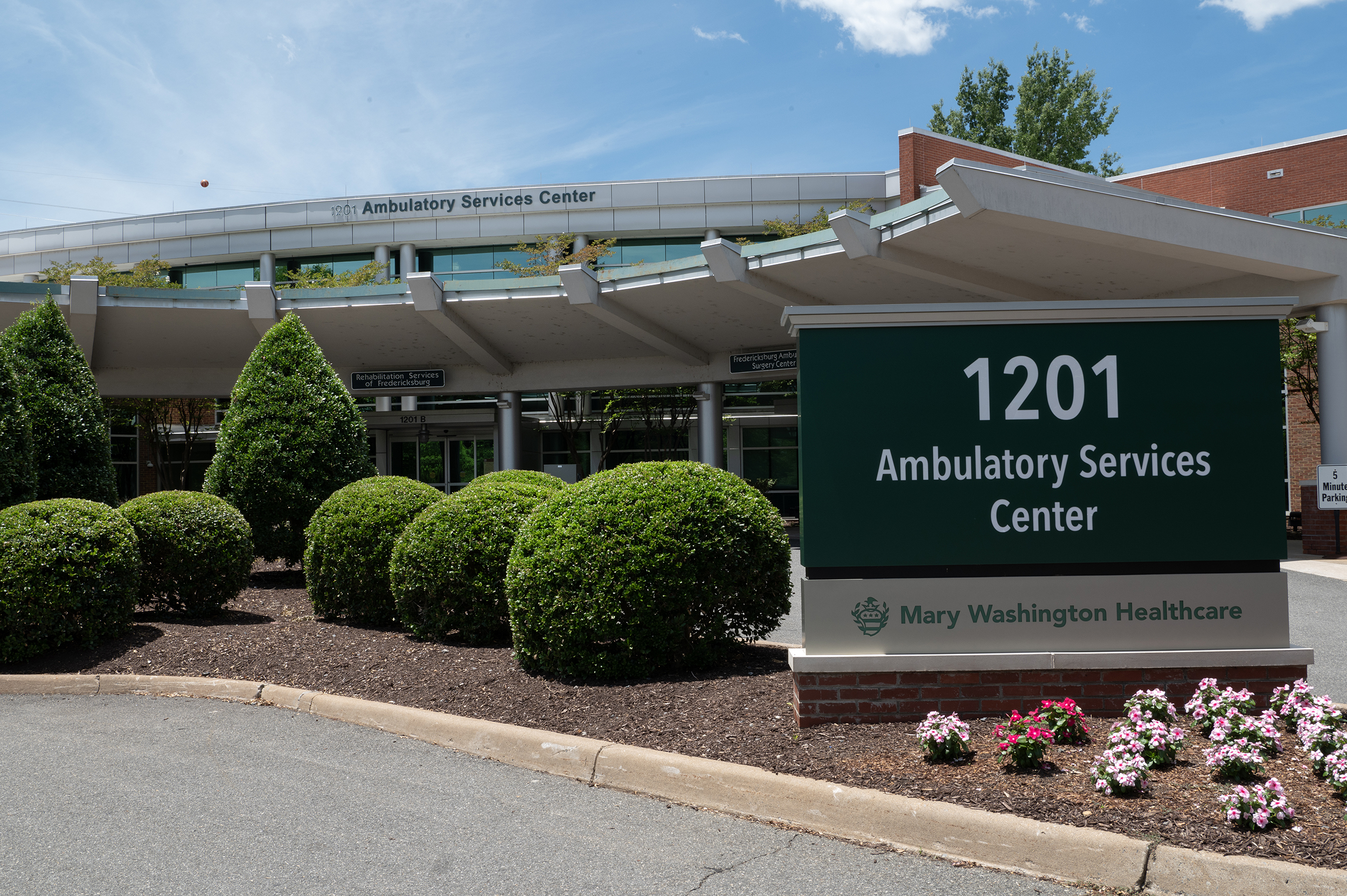
The first week of July 2025 brought chaos to the emergency department at Mary Washington Hospital.
“I left work and when I came back the next day, I was in the ER hearing people yelling at physicians that they had been there waiting 12 hours for radiology results,” said a former employee of Mary Washington Healthcare, who has knowledge of the radiology department. “I was told that patients left to go to other ERs, that they walked out to seek care elsewhere.”
June 30, 2025 was the last day that physicians employed by Radiology Associates of Fredericksburg provided diagnostic and interventional radiology services at Mary Washington and Stafford hospitals, including in the emergency rooms.
Starting July 1, and over the next few days, wait times to have medical imaging read by RAF’s replacements stretched for so long that, “People were almost rioting in the ER because they were not getting their results,” said a radiologic technologist with 30 years of experience, who worked for MWHC during that time and recently retired.
A year later, the delays have shortened somewhat, but radiology services at Mary Washington and Stafford hospitals are still suffering without the RAF doctors, according to several sources who spoke with the Free Press.
The sources include local physicians in private practice, former members of the healthcare system’s medical staff, and former employees of the interventional radiology department who left or retired in the past year.
Sources described inconsistency in the quality of patient care; difficulty scheduling patients for procedures; extended wait times for medical imaging to be read in inpatient and emergency room settings; missed diagnoses; and a disconnect between referring physicians and the radiology department that has resulted in patients being turned away after arriving for a scheduled procedure.
“The patient care in our community has suffered greatly,” said a radiologic technologist with 30 years of experience, who recently retired from MWHC, and who is being granted anonymity out of concerns about retaliation.
“Before [the split with RAF] we were all like a team. But there’s no cohesiveness any longer.”
The Free Press reached out to MWHC with a list of specific questions regarding the concerns raised in this story. The healthcare system sent the following statement in response:
“Mary Washington Healthcare remains fully staffed with board-certified radiologists. There have not been, nor will there be gaps in coverage, including in women’s health services.
“Our patients and community should be reassured that we remain committed to providing high-quality radiology services now and for the long term.
“Our hospital-based imaging programs have received full accreditation from the American College of Radiology, demonstrating our dedication to maintaining the utmost standards of quality and patient safety.
“This is a core part of delivering healthcare services and central to our mission of improving the health of all people in the communities we serve.”
The Free Press also requested interviews with MWHC CEO Dr. Christopher Newman or another executive officer and received no response.
Radiology services are ‘crucial’
For 50 years, RAF — a locally-based and physician-owned group of doctors — partnered with MWHC to read imaging and perform interventional radiology services at Mary Washington and Stafford hospitals.
The service agreement between the two parties ended on July 1, 2025, after both sides were unable to agree on terms. Specifically, RAF had requested that its radiologists be permitted to work remotely — a very common practice and one that helps with recruitment in a competitive job market, according to the group’s CEO, Ian Gass.
MWHC instead wanted to institute a model in which radiologists would be employed directly by the healthcare system. In February 2025, it sent employment offers to all RAF’s partner physicians, but none of them accepted the offer, according to Gass.
In June, Virginia Medical Imaging, a partner in the company Medical Imaging of Fredericksburg, sued MWHC for $2.25M, alleging that the healthcare nonprofit engaged in “self-dealing and harmful conduct.”
Interventional radiology is a relatively recent medical subspeciality that involves minimally invasive diagnostic and therapeutic procedures.
There are over 200 different procedures that interventional radiologists can perform, said Shanna Pace, a registered nurse who worked in Mary Washington Hospital’s interventional radiology department for two years, both before and after the split with RAF.
“Everything that we do is through single needle sticks and a series of wires,” Pace said. “We don’t cut anybody open and we can access anywhere in your body from any given artery. We do a lot of biopsies. We pull blood clots from limbs. We put in ports for chemo treatment, and we also do very unique cancer treatments for patients who are not candidates for surgery. We can use microwave radiation or cryoablation and directly kill tumors in peoples’ livers and kidneys and prolong their life.”
The services that skilled interventional radiologists provide in the hospital are “crucial,” said a surgeon and former member of MWHC’s medical staff, who is being granted anonymity due to concerns about retaliation from the healthcare system.
“Radiology is a cornerstone of [surgery,]” the former medical staff member said. “Particularly in some specialties like mine, it is critical to have good interventional radiologists. These are the people that do the image-guided biopsies. They put in catheters, drainage tubes.
“I’ve been practicing for 35 years and when I started, that specialty was kind of nonexistent. Some of the things they do now for us we would have had to do operations on. Their services are crucial.”
The former medical staff member said that when RAF physicians were providing these services, “if we needed something, we knew exactly who were the guys to go to, and we knew our patients were going to be well-cared for.”
Cindy Marrow, a physician who has practiced in the area as a partner in Colonial Internal Medicine since 2007, said the RAF physicians “are amazing doctors.”
“When I [or any other doctor] had a question, we could call them and they would call us right back,” Marrow said. “We could talk to them in real time.”
Pamela Mancini, a pediatrician who practiced in the Fredericksburg area for 37 years before retiring in February, said the RAF doctors “always provided extremely high-quality services.”
“They were very prompt, very professional, and always available — and I mean kind of around the clock in terms of availability for me to order tests, talk with them about tests, obtain results, and so forth,” Mancini said. “They would follow up on the patient. They would page you or call at the office to make sure you were aware of abnormal results.”
“I really have never had any question during all the time I practiced of them not being an extremely high quality organization in all the services they provided,” she continued.
Pace, who is now studying to become a nurse practitioner in interventional radiology, said the RAF doctors inspired her to pursue further education in the specialty.
“They enjoyed teaching us things,” she said. “Any time we had questions about anything, they were happy to answer. You could tell by the care they gave that they genuinely loved their job. They lived in the community, and they took care of the community.”
The retired radiologic technologist said the RAF doctors were “top notch,” and that a “system of trust” had been built up between them, interventional radiology staff, and physicians from other hospital departments so that “we worked like a well-oiled machine.”
Another former employee with intimate knowledge of radiology, who worked for MWHC for 13 years and is also being granted anonymity out of concern for retaliation, said RAF is “objectively one of the finest groups of radiologists I’ve had the pleasure of working with” in a career that’s lasted 30 years so far.
“The subspecialities within that group, especially when you get to interventional radiology, were extremely competent,” the former employee said. “They were providing an amazing service for the community.”
A ‘huge delay in images being read’
When MWHC leadership began to lay out its plans for transitioning away from RAF last year, the former employee was among employees who expressed concerns.
“We went to management and said this is a bad idea, and here’s why,” the former employee said. “We laid it out, and we forecast things. We were met with blank stares.”
Pace said that no one in the interventional radiology department, including, from her perspective, the RAF doctors themselves, expected the relationship with MWHC to end completely.
The RAF doctors started telling staff, “Hey, just so you guys know, there’s a chance we may not end up being here,” Pace recalled. “But at the same time, we thought in the final minutes that a resolution” would occur.
RAF doctors stopped providing services to the hospitals and the emergency room with the expiration of the service agreement on July 1, 2025. They were replaced, local physicians and former department staff said, by a rotating group of locum tenens, or travelling physicians who work on a contract basis.
“These are people who have no relationship to the community or to the organization,” Mancini said. “It’s never the best solution. It’s also an expensive solution.”
Also, she said, “When you use locums as a provider, [other local physicians] don’t have any way of establishing any kind of ongoing professional relationship with them.”
“Things like that are hard to characterize,” she continued. “It does make a difference in your ability to trust the advice you’re given and to feel a connection in a professional way.”
One of the first issues that staff and patients noticed after RAF left last summer was a delay in receiving imaging results.
Mancini said that a family member was hospitalized during this time.
“They were actually in the hospital an extra three days because there were no radiologists to read the results of the imaging tests which were done over a weekend,” Mancini said. “Which was ridiculous. I have no question about the quality of the eventual interpretation, but that would never have happened with [RAF]. Never. They literally would call within two or three hours of the test, not three days.”
Pace said that following RAF’s departure, the radiology department would get calls “all the time” from the emergency department about patients waiting to be discharged or to consult with the surgery department pending the results of their imaging.
“They’d say, ‘This patient had imaging done but nobody’s read it,’” Pace said. “There was a huge delay in images being read.”
The mounting delays led to incorrect readings and missed diagnoses, among them a misdiagnosed femur fracture and stroke, according to the people who spoke to the Free Press.
“They were trying to hurry up and get this log of images read, so they were feeling the pressure and stuff got missed,” Pace said.
A year later, it can still take several hours for medical imaging at the hospital and its free-standing emergency rooms to be read. Last month, the former MWHC employee’s 87-year-old mother went to the hospital emergency room after developing a hematoma behind her knee following a fall.
“When we got [from the waiting room] into the back, the nurses were fantastic, but they said we have about a three-to-four hour wait time to get imaging test results, and it has been worse than this,” the former employee recalled. “I’m an advocate and I know the system, and they were put in a tough spot to have to tell me it might be three hours to get a reading. With RAF, there would have been less than an hour turnaround time.”
‘They would say “no” to a lot of cases’
The locum physicians who replaced the RAF doctors also brought inconsistency in terms of what interventional radiology procedures they were qualified to perform, or felt like performing on a given day, according to providers and staff.
“We didn’t know who we were talking to first of all — we had no idea where they were trained or what their credentials were,” the surgeon and former member of MWHC’s medical staff said. “A not uncommon scenario that I and others had was, we had a patient who needed a certain interventional radiology procedure. The [locum physician] we talked to at first might say, ‘Oh yeah, I can do that,’ but then a week later we’d be working with somebody completely different and they may say, ‘Oh, I can’t do that procedure.’”
“They would say ‘no’ to a lot of cases,” added Pace, the registered nurse who worked in interventional radiology at Mary Washington Hospital, said. “Placing long-term IVs, they would say ‘no’ to, and little procedures that were not revenue-producing procedures. We would be thinking, ‘But this is what we do! You can’t not do these things because you don’t feel like it.”
The retired radiologic technologist said she once assisted one of the locum doctors in performing a repeat biopsy on an elderly woman with cancer.
“What would have been a 10-minute procedure [with RAF doctors] took over an hour with one of these other doctors,” she said.
On another occasion, she said, another radiology technologist had to “talk [one of the locum doctors] through” the process of removing a pulmonary embolism, or a blood clot in the lung, via catheter — a procedure the department has been performing with increased prevalence since the COVID-19 pandemic, she said.
Another procedure that the hospital’s interventional radiology department used to perform frequently for patients is a dialysis fistula, in which a doctor connects an artery to a vein in a patient’s arm so they can receive dialysis.
According to the Cleveland Clinic, dialysis fistula is the most efficient way for a healthcare provider to access a patient’s bloodstream, and also the least likely to cause blood clots or infection.
However, not all the locum interventional radiologists were willing to work with dialysis patients, the former staff member with knowledge of radiology said.
“The emergency department wanted us to do a study on someone’s arm with a fistula in place, but the [locum interventional radiologist working that day] said, ‘I don’t do dialysis work,” the former staff member said.
Marrow said that because not all the locum doctors are qualified or willing to perform all types of biopsies, it has become more difficult for her and other doctors to schedule these procedures for her patients.
“I had a patient who was trying to get in for a biopsy for possible lung cancer, and he was told he’d have to wait two months to get scheduled,” she said. “With aggressive lung cancer, that could be a death sentence. We ended up sending him down to UVA Culpeper Medical Center. It’s basically a brick wall when it comes to getting things done in a timely manner in interventional radiology at Mary Washington.”
The former staff member with knowledge of radiology said that the procedures RAF’s doctors performed had been developed over time in response to the Fredericksburg community’s specific needs.
“That’s why I asked [MWHC leadership] who they were getting to replace RAF,” the former staff member said. “The response was ‘interventional radiologists.’ I followed up with ‘How do you know they’re qualified?’ The answer was, ‘Well, because they’re interventional radiologists.’ But the procedural pool for our community is different from what you might see” at other facilities.”
RAF also previously operated a clinic for patients who were referred for interventional radiology procedures at the hospital. At the clinic, RAF would assess patients to make sure they were appropriate candidates for the procedure, and review lab work, medical history, and list of medications to ensure they were prepared.
After the separation, patients started arriving at their scheduled procedures without having received the appropriate information — and often, they’d have to be turned away.
“We’d have to cancel their procedures because nobody had done the leg work on finding out their history, and they showed up and were taking blood thinners,” Pace said. “Or they ate a full breakfast because no one told them not to. Or it would turn out they were not candidates for sedation and needed full-blown anaesthesia, and that has to be scheduled ahead of time.
There was a lot of patient dissatisfaction when they would take off a whole day to come in for this procedure, and we had to cancel it because of a safety issue.”
‘I began very quietly sending cases away’
Pace said she and other interventional radiology staff members brought their concerns about how the department was functioning without RAF to MWHC medical staff and administration.
“There was a time when, for a period of weeks, they let us go into the board room and made us feel like they cared,” Pace said. “They’d put food out, and for the first couple of meetings they were taking notes.”
But eventually, she said, “the notebooks stopped coming out.”
“It seemed like their response was ‘You’ve told us this multiple times,’” she continued. “Well, we’re going to keep telling you, because it continues to be a problem.”
The former member of MWHC’s medical staff said that many doctors, even those still working for the healthcare system, started referring their patients elsewhere for care.
“I felt that for many reasons, these patients were going to have better outcomes elsewhere, so I began very quietly sending these cases away,” the former medical staff member said. “Quite a few patients self-selected” to go to other facilities.
“It’s not good for the community. The community needs [MWHC] but needs it to be on the same levels as these other centers.”
Marrow said she and other physicians in her practice are also sending patients elsewhere.
She said that she and many other local physicians, including those who are members of MWHC’s medical staff, are growing frustrated.
“I’m a community physician and I need the radiologists and I need access to interventional radiology for my patients,” she said. “I can’t spend hours on the phone to get people in for scheduling. It’s tying up my time and my staff’s time. And it used to be a very seamless process.”
Mancini said she is “at a loss” to understand why the healthcare system would move away from something that, from the perspective of staff and other local physicians, was working well for the community.
“I’d like to know how this separation from RAF improves the care for the community versus what was done before,” she said. “Not looking at the money or personalities, just tell me — as a nonprofit — how this has actually significantly improved the service you provide.”
New partnership announced
It appears MWHC has a long-term plan to address the issues that arose in the year since its split with RAF. This week, the health care system announced that it will be partnering with Medical Center Radiologists, a radiology practice based in Norfolk — an affiliation that it says will “strengthen and unify radiology services across the region, ensuring continued access to high-quality, reliable care.”
Starting Feb. 1, 2027, Medical Center Radiologists will provide “comprehensive inpatient and outpatient imaging services across Mary Washington Healthcare,” including in the Mary Washington and Stafford hospitals at “any outpatient Mary Washington Medical Imaging facility,” according to a press release from the healthcare system.
Kendra Gerlach, vice president of marketing and corporate communications with MWHC, said in an email to the Free Press that the Medical Center Radiology physicians will provide interventional breast services at the Imaging Center for Women, and that MWHC’s own “employed interventional radiologists will continue providing care for inpatient needs.”
Gerlach said the affiliation with MCR will “allow us to stop using locum tenens radiologists,” in addition to other “strong benefits.”
Disclaimer: Mary Washington Healthcare is a corporate sponsor of the Free Press. Corporate sponsors do not influence newsroom decisions.