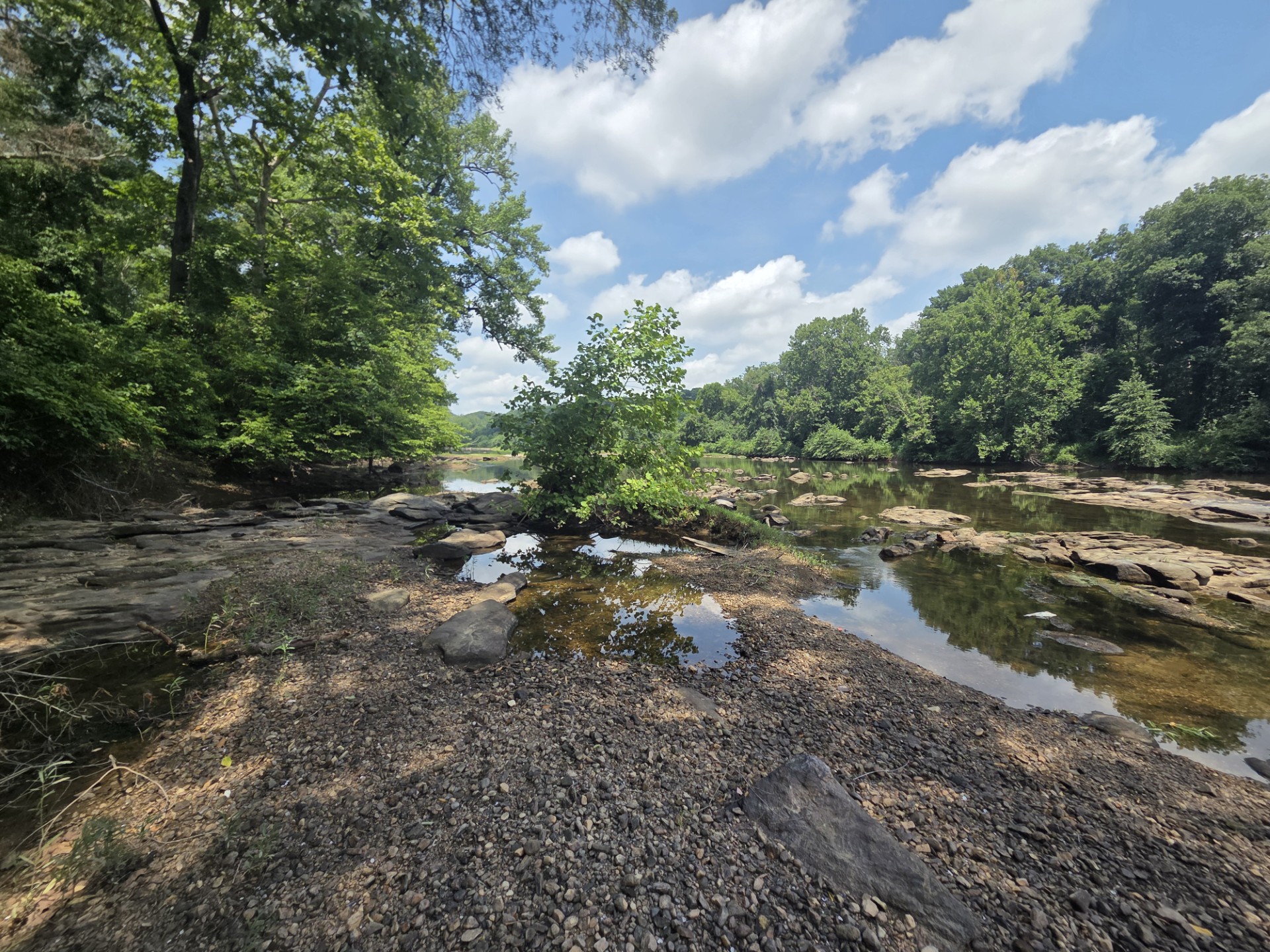
Kids attending the Virginia Outdoor Center’s summer camp this week were met with the sight of dead fish floating in the Rappahannock River.
“Following the July 4th weekend of record-breaking high temperatures, the Rappahannock River is suffering. This morning, a fish die-off was reported near Friends of the Rappahannock’s headquarters just above Fredericksburg,” the FOR posted on Facebook on Monday.
According to John Odenkirk, fisheries biologist with Virginia’s Department of Wildlife Resources, the dead fish are river redhorse, a native species of sucker fish.
“Despite the sort of the general perspective of sucker fish as bottom feeders, they are actually indicators of fairly good water quality,” Odenkirk said. “You will find them in areas that are unpolluted.”
Fish in the sucker family are among the “least tolerant” to stressors such as low water flow and high water temperature, both of which are currently affecting the Rappahannock, Odenkirk said.
Brent Hunsinger, the advocacy and coastal programs director for Friends of the Rappahannock, said the river is going on a few years of low water flow and elevated temperatures.
“We’ve had a bad stretch of it since 2023 — expanded low water and drought-like conditions for parts of the year. So that’s where we’re at,” Hunsinger said. “It’ll stress all fish, but some different types of fish [like suckers] are more susceptible.”
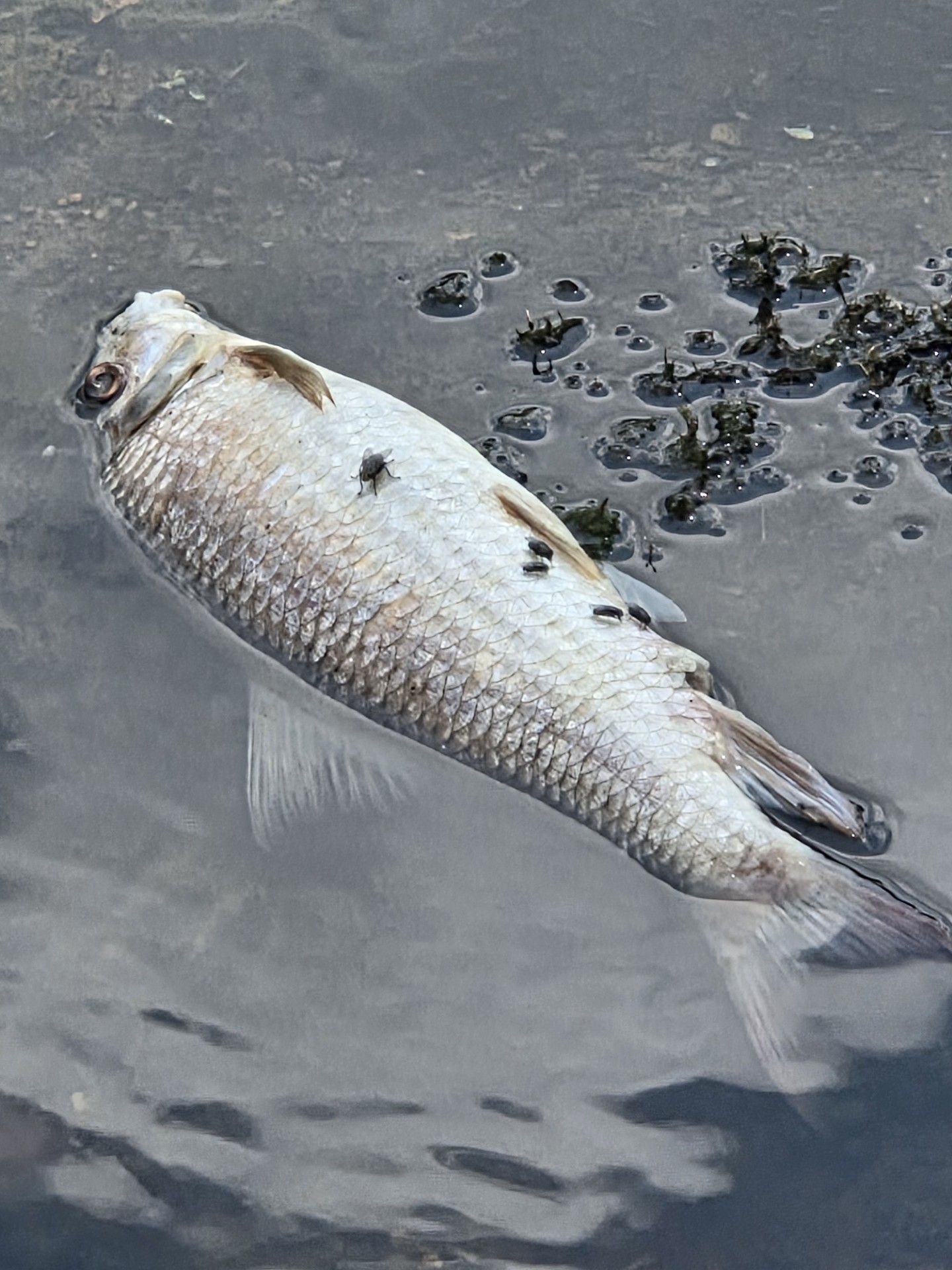
Dead river redhorse, a type of sucker fish, were found in the Rappahannock River on Monday, July 6.
The region, and much of the state, are experiencing an “epic drought,” Odenkirk said. “The river is so low. Almost across the board, the flows in the entire watershed are the lowest ever recorded for this date in history.”
“This is when the streams should be full and feeding the river, but it’s just rocks,” he continued. “There’s no transition of flow, and the sun is just baking … It’s almost a foregone conclusion that we will lose fish.”
Thunderstorms over the past few days brought about an inch and a half of rain, but Hunsinger said the region still needs 10 inches of rain in order to make up the deficit.
“We need consistent days of soaking rains” to help the river and its wildlife, “he said. “Thunderstorms don’t cut it. Plus, a thunderstorm here in Fredericksburg doesn’t fix the flow from upriver. We need lots of rain in the headwaters region.”
Odenkirk said that, luckily, there hasn’t been another fish die-off reported to DWR.
“We’re getting some release [from the record-breaking temperatures], so you hope and think we’re through the worst of it and that we shouldn’t see a whole lot more mortality events like this, but you don’t know for sure,” he said.
“The best thing,” he continued, “is these systems are pretty resilient. Even though these are historic droughts, the native fish here have evolved in this area. That gives us some hope.”
Meanwhile, Hunsinger said, there’s not much the community can do other than “pray for rain.”