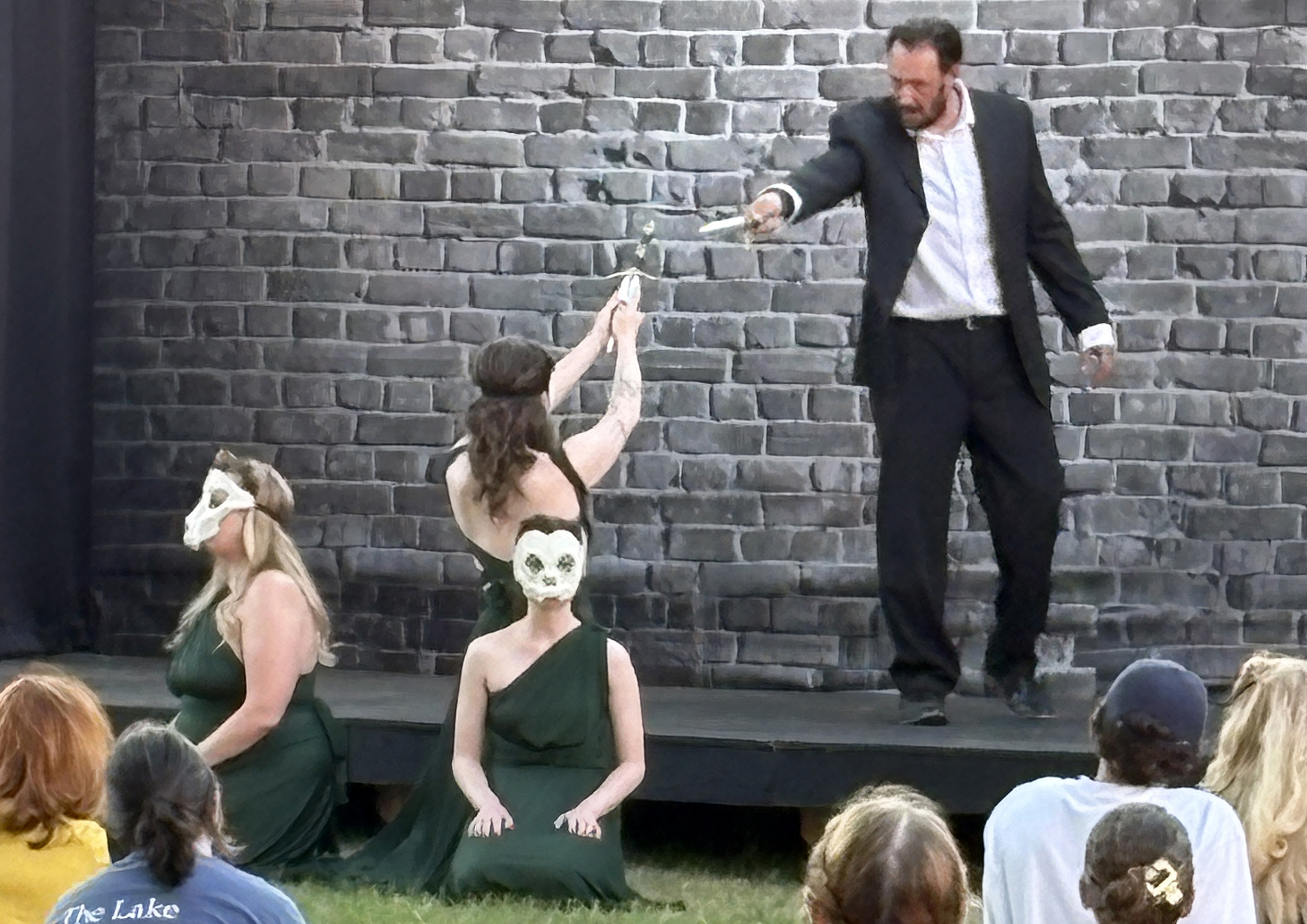
Theatergoers heading to see this year’s Shakespeare on the Lawn at Historic Kenmore will get a mix of gangster noir 1950s New York City with a dash of spiritualism.
IF YOU GO
FTE presents “Macbeth,” Shakespeare on the Lawn at Historic Kenmore, June 13 & 14, grounds open 5:30 p.m., show at 6:30 p.m., $20 w/discounts, get tickets here.
This year’s production hosted by the George Washington Foundation features the Fredericksburg Theatre Ensemble’s reimagining of “Macbeth.” It will be the troupe’s first performance of the Shakespearean tragedy, according to director Heather McIntosh. FTE’s partnership with the foundation goes back to 2021 when it staged a performance of “Much Ado About Nothing.”
McIntosh called the relationship between the two groups “meaningful” because the foundation gave the ensemble a place to perform after the pandemic temporarily shut them down. That relationship has continued to be a benefit, allowing the ensemble to grow and to bring the famous English playwright to local audiences.
“Shakespeare on the Lawn provided an opportunity to safely return to live performance, reconnect artists and audiences, and continue fulfilling FTE’s mission during a period of tremendous uncertainty,” McIntosh said. “The collaboration demonstrated how community partnerships can sustain the arts through difficult times, and we remain grateful to the George Washington Foundation for helping make that return possible.”
The cast for this 1950s NYC-set adaptation of “Macbeth” includes Adrienne Daly as Lady Macbeth, Damian Leone as Macbeth, Tim Leece as Malcolm, Doy Demsick as Banquo, Marcus Lawrence as Macduff, Kylie Clark as Hecate, and Becky Brassfield, Courtney Fox and Ava Spencer as the Weird Sisters.
FTE member Allyson McCormick said the play fits with the ensemble’s theme for the performance season of “Revelation, Reverie and Revolution” due to the sisters’ revelation to Macbeth of his future and his actions in response that affect those around him.
This adaptation is based on McIntosh’s research into New York City’s history but also the rise of spiritualism after World War II. While setting the kingdoms of “Macbeth” in the world of organized crime is not a new idea — it was done as recently as 2025 by the Royal Shakespeare Company — McIntosh’s research gives it a more personal touch.
The production illustrates how seamlessly the concepts come together, and the mysticism of the Weird Sisters not only frames the story but also adds an unsettling element to the already-hard-boiled noir structure of this adaptation.
In her research, McIntosh noted that the structure of organized crime in that time period closely mirrored how the fiefdoms in the political landscape of Shakespeare’s version of Scotland were run.
“The major crime families exerted influence over distinct areas of the city, creating a patchwork of territories, loyalties, rivalries and shifting alliances,” the director said. “In many ways, these boroughs functioned much like the kingdoms and noble houses of ‘Macbeth,’ where power was constantly negotiated, challenged and defended.”
McIntosh also noted the rise of spiritualism not just in the setting but in the world at large in the aftermath of World War II.
“There was a renewed public fascination with spiritualism, fortune tellers, séances, astrology, and the occult. After a generation had endured global war and unprecedented loss, many people were searching for meaning, certainty and connection to forces beyond their control,” she said. “That atmosphere felt like a natural home for Macbeth’s witches and prophecies. Like many people in uncertain times, the characters in ‘Macbeth’ are constantly searching for reassurance about the future.”
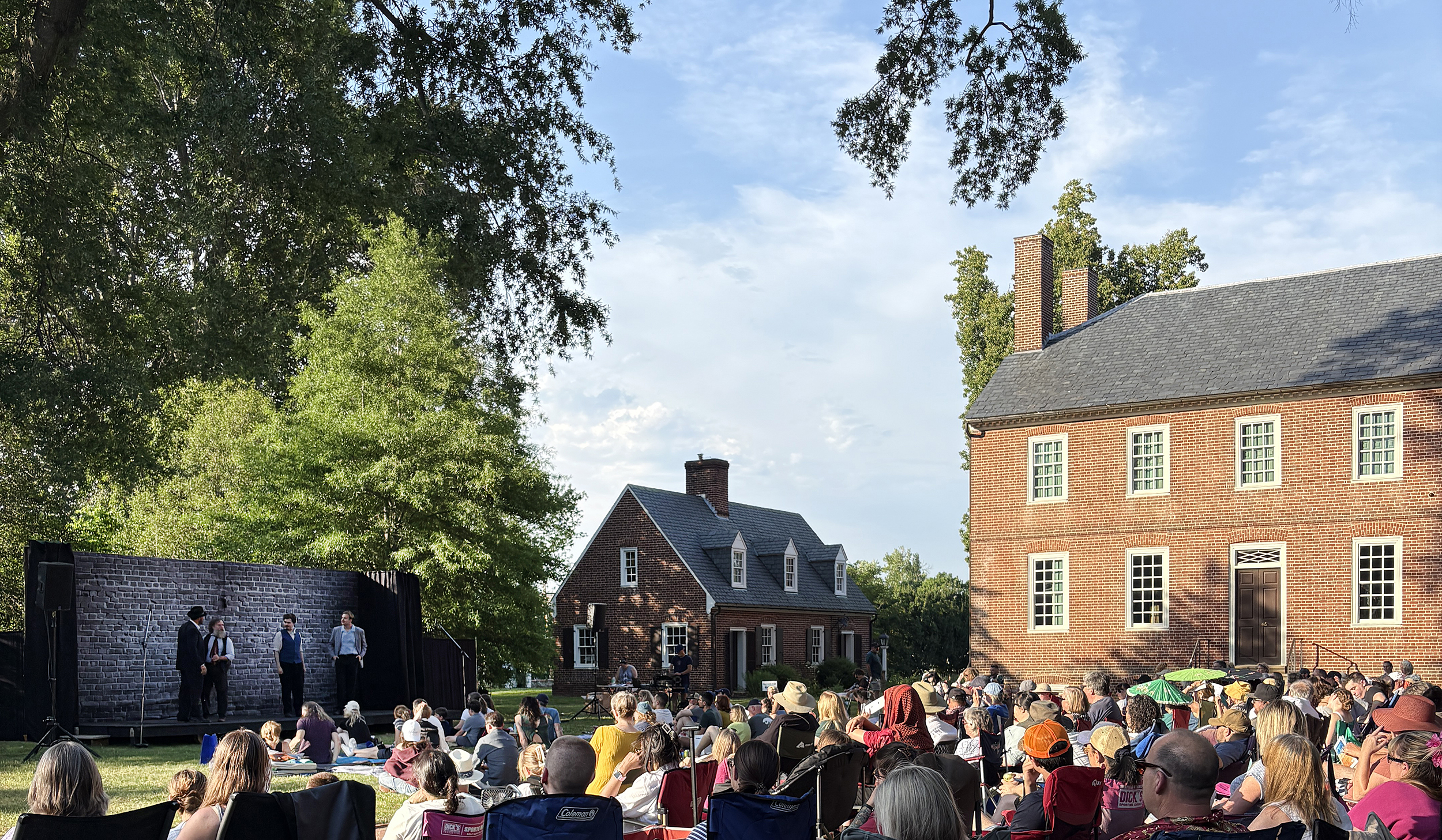 The production has a reputation as a cursed play. In theater circles, that reputation is very much alive, but it’s treated with some humor by FTE. Many players prefer to refer to the play by names such as “That Scottish Play” to avoid the so-called curse, which has been a topic of discussion since the play was first put on more than 400 years ago.
Tradition holds that Shakespeare may have incorporated real witchcraft rituals and incantations into the play, the director said. This action angered actual witches, according to that lore, who responded by placing a curse on the production that has seen more than its fair share of accidents and mishaps.
“Whether people truly believe in the curse varies, but the tradition remains an enduring part of theater culture. Every production seems to accumulate its own stories, which only helps keep the legend alive,” McIntosh said. “We are fortunate to be rehearsing and performing outdoors rather than inside a traditional theater, so perhaps we’re exempt from the curse altogether — fingers crossed.”
For his part, actor Leone (Macbeth) hopes that the audience walks away having experienced a fun time at Shakespeare on the Lawn. He’s participated in the event for the past six years.
“Doing it [performing] here with all these people and outside, this is an experience you don’t get in a theater,” he said.