By Shannon Heckt
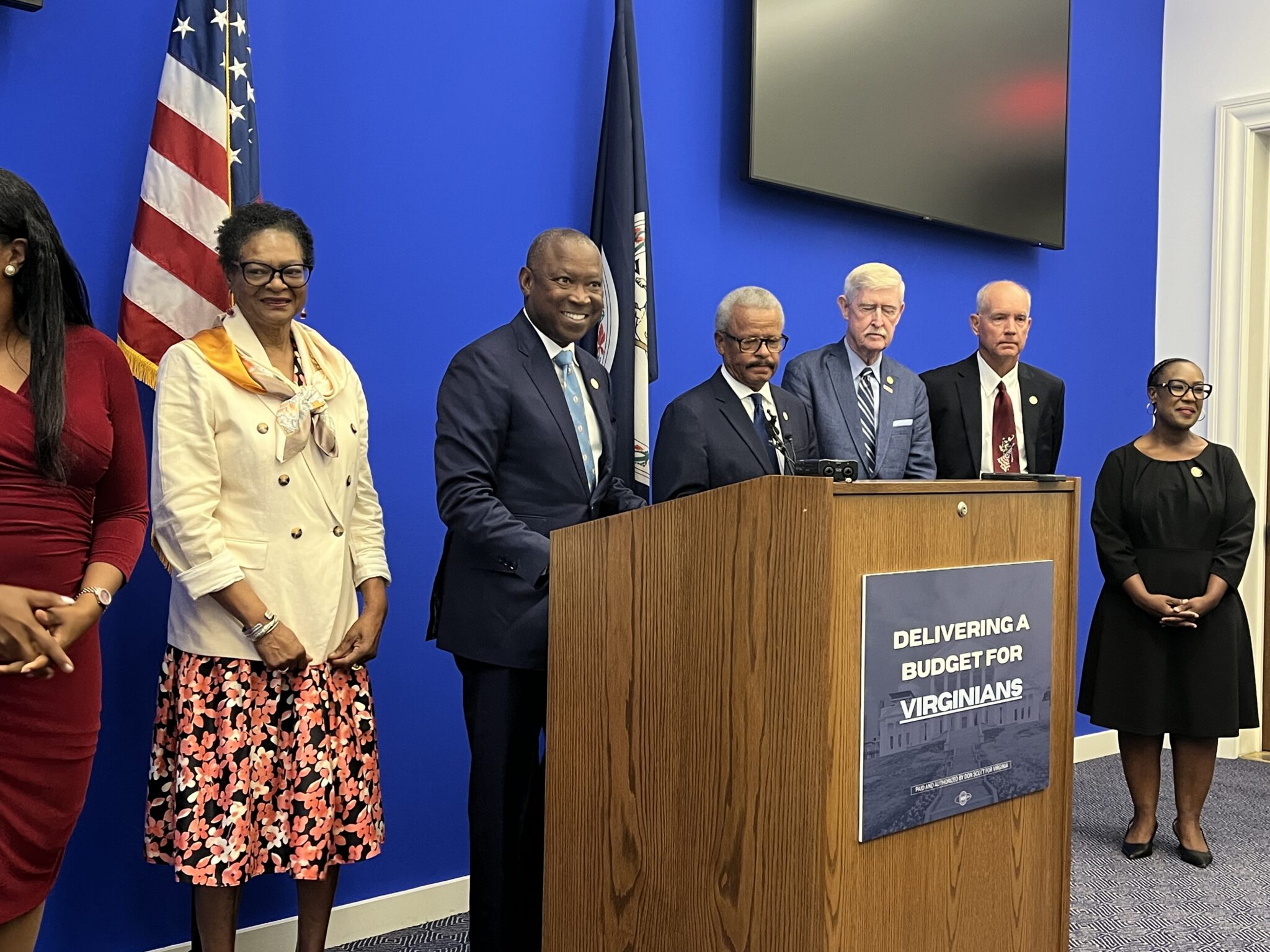
Speaker of the House of Delegates Don Scott, flanked by Appropriations Chair Del. Luke Torian, D-Prince William, and other bipartisan house members, unveiled the chamber’s latest budget proposal in Richmond on Friday, which they framed as a “compromise package” that they urged the state Senate to accept.
The updated spending plan no longer includes environmental standards data centers would need to meet in order to be exempted from the state’s sales and use tax, an issue that has stalled budget negotiations for weeks and sparked speculation about a government shutdown if the parties can’t finalize the budget by June 30.
“This budget comes through for Virginians in a real and meaningful way without introducing a single new tax,” Torian said in a statement. “It anticipates future federal funding cuts by establishing a reserve – so when Washington turns its back again on Virginians we are prepared to step in.”
The dueling House and Senate budget proposals differ over whether data centers should continue to be exempt from the state’s 5.3% sales and use tax. State data shows the industry saves about $1.6 billion annually through the exemption, money Senate lawmakers say the state should recoup by ending the tax break.
Data centers have to routinely upgrade and replace pricey computer equipment, which is the bulk of where they save with the exemption.
The new House proposal removes the previous measures that would have mandated developers limit data centers from co-locating with power facilities that emit carbon emissions.
The previous proposal also outlined energy efficiency requirements for the digital warehouses, including using newer backup generator models that emit less carbon.
The new House budget instead proposes creating a commission of stakeholders and lawmakers to study the impacts and benefits of the data center industry in Virginia.
The commission would be required to report to the General Assembly by Nov. 1 on ways to ensure energy demands don’t put extra costs onto residential utility customers. The commission would also scrutinize local tax revenue impacts and “other ways to generate revenue from the industry”.
“(It will be a) full investigation into energy costs, financial impacts, air quality, water conservation, renewable energy, and community impacts,” Scott said, “So the 2027 General Assembly can pass real national reform. Or if the governor would like, we could come back right after that report … for a special session.”
Scott has staunchly supported preserving data centers’ exemption, he said, because of the local tax revenue the centers generate and the union jobs that come with the construction of the facilities.
Gov. Abigail Spanberger has also publicly supported keeping the exemption, saying the state should “honor its commitments” to businesses that have located in the commonwealth. She praised the updated House budget on Friday.
“This proposal creates a clear roadmap for evaluating the impact of the data center industry in Virginia and for reassessing the state’s incentives into the future, with a focus on fairness to ratepayers and the needs of local communities,” Spanberger said in a statement.
Senate members’ response to the updated House budget was unclear Friday afternoon, with no comment from Finance Chairwoman Sen. Louise Lucas, D-Portsmouth.
Lucas has been adamant about ending the tax exemption for data centers since the Senate spending plan was introduced earlier this year.
“I want (the money) to go towards hard working families. We’ve got people who are struggling to put food on the table, to put a roof over their heads, pay for their car payment, their kids school. I want that money to go back to them,” Lucas said then.
The House is slated to return to Richmond to debate this proposal on June 18, while the Senate, who has not yet released an updated budget proposal, will return on June 22. If a budget is not passed by the end of the month, state services and employee pay will be interrupted.